— Article
How to Choose the Right Drone for Your Mission (2026 Guide)
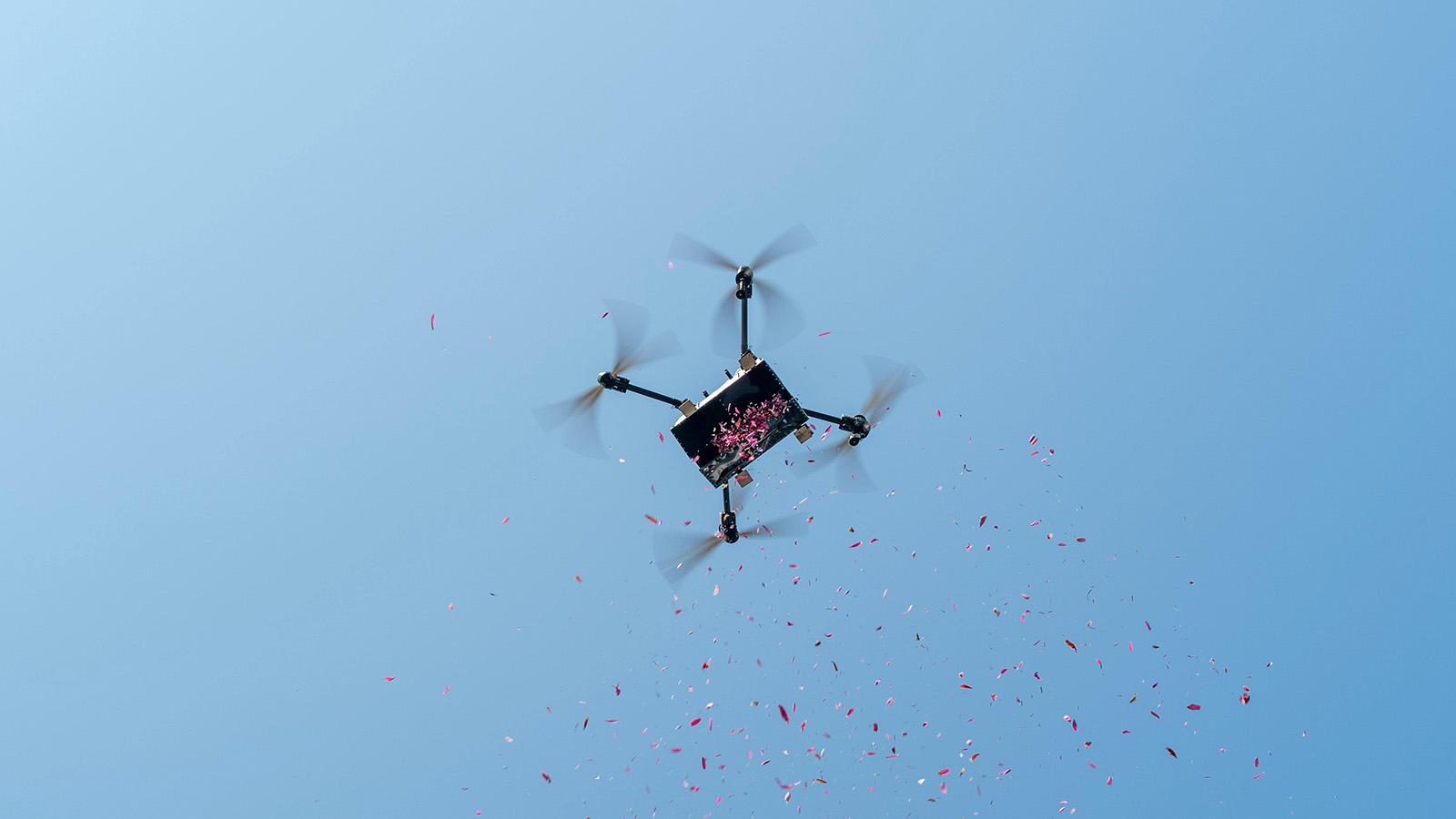
Most agencies that have struggled with their drone programs share a version of the same story. They bought a drone, or a handful of drones, based on what they saw a neighboring department using or what showed up first in a vendor catalog. The aircraft arrived, performed adequately for the situations it was designed for, and then revealed its limitations the first time the team tried to use it for something it was never built to do. A patrol quadcopter that works perfectly for a traffic accident scene turns out to be the wrong tool for a six-hour mountain search. A fixed-wing platform that covers massive ground efficiently on a wildfire perimeter gets grounded at an urban standoff because there is nowhere to land it.
The lesson that experienced programs keep coming back to is simple: the mission defines the drone, not the other way around. If you need a primer on the platform categories themselves — multirotors, fixed-wing, and hybrid VTOL — start there. This article builds on that foundation by walking through the major mission types, what each one demands from an aircraft, and how to translate those demands into concrete platform and feature decisions.
Define the Mission Before You Touch a Spec Sheet
Before comparing payload capacities or flight times, the people making procurement decisions need to answer a set of operational questions that no vendor will ask on your behalf.
What terrain will the aircraft primarily operate over? A flat urban grid, dense mountain wilderness, open water, and wildfire-affected terrain all impose different requirements on a platform. What is the typical mission duration? A five-minute tactical overview and a four-hour SAR grid search are fundamentally different operational profiles. Does the aircraft need to hover and hold position over a point of interest, or does it need to cover as much ground as possible as efficiently as possible? Will it fly in daylight only, or does the program require genuine night capability? What weather conditions will it be expected to operate in, not under ideal conditions, but on the average bad day when a call comes in?
Answering those questions honestly before evaluating any specific aircraft will eliminate more wrong choices than any amount of head-to-head comparison shopping.
Tactical Law Enforcement and Drone as First Responder
The defining characteristic of tactical law enforcement work is that time is the most critical variable. When a 911 call comes in reporting an armed suspect, a vehicle pursuit in progress, or a barricaded individual, every second between dispatch and aerial coverage matters. The drone needs to be airborne immediately and on scene fast.
This mission profile puts a premium on rapid deployment above almost everything else. A platform that lives in the trunk of a patrol car, unfolds in under a minute, and can be in the air while officers are still en route delivers a fundamentally different operational value than one that requires unpacking a dedicated equipment case and performing a multi-step setup procedure.
For Drone as First Responder programs, the platform also needs to be capable of autonomous or semi-autonomous deployment from a pre-positioned dock, so that a remote pilot can launch immediately when a call is dispatched without anyone physically present at the launch site. This requirement points toward compact, dock-compatible aircraft with reliable cellular or LTE connectivity for remote operation.
Payload requirements for this mission type center on optical and thermal cameras with powerful zoom capability. The ability to identify a subject’s hands at distance, confirm whether a weapon is present, or follow a fleeing suspect through a residential neighborhood without losing the feed are the capabilities that matter operationally. Two-way audio, useful for communicating with individuals on scene, and spotlights for night operations round out the sensor picture.
For most tactical and DFR applications, a compact hexacopter or ruggedized quadcopter with a strong IP weather rating, integrated thermal and optical cameras, a reliable obstacle avoidance system, and a flight time in the 30 to 45 minute range covers the majority of what the mission profile requires.
Search and Rescue
SAR operations present a different set of demands than tactical law enforcement work, and the differences run deep. Where a DFR deployment might last five to fifteen minutes, a SAR deployment routinely runs for hours. Where a tactical flight operates over a known, bounded area, a SAR flight may need to cover hundreds or thousands of acres across terrain that is actively hostile to navigation.
For SAR teams, the most important single capability is thermal imaging that performs reliably in the conditions where searches actually happen: cold mountain nights, humid forests, open water at low ambient temperatures. A thermal sensor that struggles to distinguish a human heat signature from ambient noise in the kind of environment where the subject is actually likely to be is not a SAR asset, it is a source of false confidence.
Flight time matters enormously in this mission type. A quadcopter offering 30 minutes of airtime needs to return to the launch point, have batteries swapped, and launch again multiple times to sustain even a moderate search operation. Over the course of a multi-hour deployment, that time on the ground adds up and represents coverage gaps that could make a difference in outcome. Agencies running serious SAR programs typically maintain multiple battery sets to minimize turnaround time, but they also evaluate whether a longer-endurance platform makes more operational sense for the area coverage requirements they face.
For wide-area initial searches over open terrain, a hybrid VTOL platform or a fixed-wing aircraft with thermal capability offers coverage rates that a multirotor simply cannot match. Covering the high-probability areas in the first hour of a search is often the most consequential phase of the entire operation. Choosing the right search pattern for the terrain and subject profile is what makes that coverage systematic rather than ad hoc, and a platform that can clear or prioritize large areas rapidly allows coordinators to focus ground team resources where the data actually points.
For confined area searches, technical terrain, or situations where the aircraft needs to hold position while operators assess what the feed is showing, a multirotor remains the right tool. Many experienced SAR teams operate both, using the fixed-wing or hybrid for initial area coverage and a compact thermal multirotor for detailed work once a probability area has been identified.
Wildfire and Structure Fire
Fire operations split into two different mission profiles with different requirements. Structure fire support is primarily a situational awareness and crew safety mission conducted over a compact area in real time. Wildfire support is a large-area mapping and monitoring mission that may span hours and cover enormous geographic footprints.
For structure fire work, a compact aircraft that can be deployed quickly from a responding apparatus, carries a thermal sensor capable of identifying hotspots and structural temperature anomalies, and can fly safely in smoky and degraded visibility conditions is the right tool. The aircraft needs to get overhead fast, survive the thermal and particulate environment around an active fire scene, and deliver a live feed that incident commanders and company officers can use to make tactical decisions. IP rating matters significantly here: smoke, heat, and the water from suppression efforts all impose environmental demands that consumer-grade platforms are not built to handle.
For wildfire perimeter mapping, the mission demands are closer to the SAR large-area search profile. Endurance and coverage rate are the primary variables. Fixed-wing and hybrid VTOL platforms are frequently deployed in this role for the same reason they are deployed for large-area SAR: they simply cover more ground per flight than a multirotor can.
Airspace coordination is also a critical consideration for wildfire operations in a way that is less central to other mission types. Active wildfire scenes routinely involve multiple manned aircraft including air tankers, helicopters, and observation aircraft. Any drone operating in that environment needs operators with a clear understanding of the airspace and compliance requirements and platforms that can operate safely within defined altitude and geographic constraints.
Disaster Assessment and Emergency Management
Post-disaster assessment from the air is one of the most operationally straightforward drone missions in terms of what it demands from the platform. The primary outputs are high-resolution imagery and video that can be used to assess damage, identify survivors, map debris fields, and prioritize resources. The primary platform requirements are coverage rate, image quality, and the ability to operate in conditions that are by definition not ideal.
After a flood, an earthquake, a hurricane, or a wildfire, the terrain is altered, access routes may be blocked, and the environmental conditions during the initial assessment window may be challenging. A platform that performs well in controlled conditions but goes unserviceable when dust, wind, or humidity exceed certain thresholds is not the right tool for the job. Weather rating should be treated as a mission-critical specification, not a secondary consideration.
Fixed-wing and hybrid VTOL platforms earn their place in disaster assessment because the scope of what needs to be documented frequently exceeds what a multirotor fleet can cover in the time available. For close-in work, structure entry assessment, or survivor location in confined rubble environments, a compact multirotor takes over. Operations involving multiple drone teams across a large disaster area need the coordination infrastructure to match.
Crime Scene and Accident Documentation
Documentation missions are defined by precision requirements rather than speed or endurance. A traffic collision scene, a crime scene, or an incident site requires imagery accurate enough to support investigation and legal proceedings. The aircraft needs to deliver georeferenced, high-resolution imagery that can be used to reconstruct the scene in 3D if required.
Platforms with GPS accuracy sufficient to produce reliable mapping outputs, stable hover capability to minimize blur at the resolution levels needed for evidence-quality photography, and camera systems that perform well in the full range of lighting conditions from midday sun to artificial light at night are the relevant selection criteria here.
Portability also matters for this mission type because documentation calls are not always predictable in location. A platform that can be carried in a single bag and deployed without specialized support equipment gives investigators flexibility that a larger, more capable aircraft cannot match.
NDAA Compliance and the Procurement Landscape
Any public safety agency purchasing drones with federal grant funds or operating in federal contracting contexts needs to understand the National Defense Authorization Act compliance requirements that now shape the procurement landscape. Under the FY25 NDAA, Chinese-manufactured drones including models from DJI and Autel face restrictions that will limit their long-term viability for agencies relying on federal funding, with restrictions on future models receiving FCC equipment authorization already in motion.
The practical effect is that agencies evaluating platforms now need to assess not just current capability but long-term supply chain and software support viability. NDAA-compliant domestic alternatives including Skydio, BRINC, Teal, Parrot ANAFI USA, and others have closed the capability gap considerably over the past two years. Building a program around compliant platforms from the outset avoids the disruption and additional procurement cost of a forced transition later.
Building a Fleet That Matches Your Actual Mission Mix
Most agencies that have developed mature drone programs did not get there by finding one aircraft that did everything adequately. They got there by understanding which mission types they run most frequently, what each of those missions genuinely requires from a platform, and then building a fleet composition that matches that reality.
The crawl, walk, run approach works here. Start with the mission type your agency runs most frequently, acquire the platform that best fits that specific use case, build operational competency around it, and then evaluate where the gaps are before expanding. An agency that starts with a compact thermal hexacopter suited to its primary patrol and DFR mission will learn more about what it actually needs from a second platform by operating the first one for six months than it would from any amount of advance specification comparison.
The software layer should be hardware-agnostic so that as your fleet grows to include different aircraft types, you are not rebuilding your coordination infrastructure for each new platform. A C2 platform that manages multirotors, fixed-wing, and hybrid VTOL from a single interface is what lets a mixed fleet operate as a coordinated program rather than a collection of independent tools.
The right drone for your agency is the one that performs reliably in the conditions your team operates in, carries the sensors your operators need to do their jobs, fits within the regulatory and procurement constraints you are working under, and can be maintained and supported over a realistic program lifespan. Start there, and the spec sheets will start to make sense in ways they simply do not when you approach the question the other way around.
We’re building TacLink C2 to manage whatever you fly — multirotors, fixed-wing, and hybrid VTOL from a single platform with unified telemetry, tasking, and compliance logging. If you’re building a fleet around your mission mix, join the early access waitlist.
— Related
Keep reading
Written by
TacLink C2 Team
TacLink C2 Team builds a modern desktop ground control station for independent and commercial drone pilots. Writing here covers mission planning, multi-drone operations, airspace, and the software that keeps serious UAS programs running.