— Article
Drone Types: Multirotor vs Fixed-Wing vs Hybrid VTOL
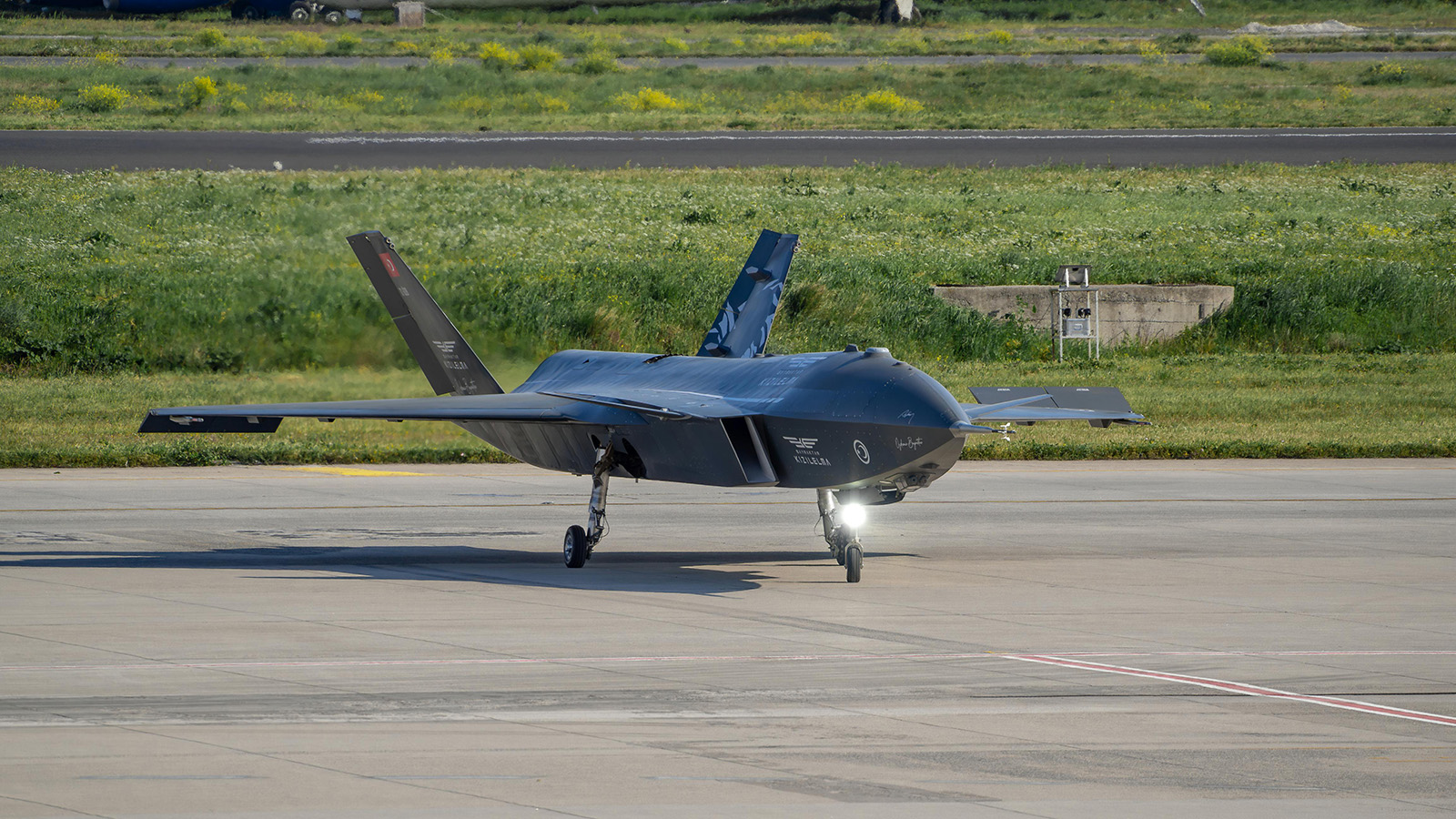
When people picture a drone, they almost always picture the same thing: a small four-armed aircraft hovering steadily in place, camera pointed down, rotors buzzing. That image is accurate for a large portion of the drones used in public safety today, but it represents just one branch of a much wider family tree. Fixed-wing drones, hybrid platforms, and the many variations within each category bring genuinely different capabilities to the field, and choosing the wrong platform for a mission is one of the most common and costly mistakes an agency can make.
This article breaks down the three main categories in plain terms, explains what each one does well and where it falls short, and connects those capabilities to the kinds of missions public safety teams actually run.
The Multirotor: The Workhorse of the Field
Multirotors are the platform category most operators encounter first, and for good reason. They are intuitive to fly, easy to deploy from almost any location, and capable of hovering in place for as long as their battery allows. That combination of stability and flexibility makes them the default choice for the majority of public safety missions, from a quick aerial overview at a traffic accident to a sustained thermal search on a hillside at 3 in the morning.
The category itself covers a range of configurations defined by rotor count. A quadcopter uses four rotors arranged in an X or plus pattern. It is the most efficient and affordable multirotor configuration, which is why it dominates both consumer and entry-level professional markets. A typical professional quadcopter can stay airborne for somewhere between 20 and 40 minutes, depending on payload and conditions. The tradeoff for that efficiency is redundancy. If a single motor fails on a quadcopter, the aircraft will lose stability and fall. For many routine missions that is an acceptable risk, but for high-stakes deployments over crowds or difficult terrain it becomes a meaningful consideration.
Hexacopters add two more rotors and gain two things in return: more lift capacity and a meaningful safety margin. If one motor fails on a six-rotor platform, the flight controller compensates across the remaining five and the aircraft can still be landed safely. That redundancy makes hexacopters the standard choice for professional operations where the drone is carrying expensive sensors or flying over areas where a crash would have serious consequences. The additional motors do reduce flight efficiency, bringing typical flight times down to around 15 to 25 minutes compared to a comparable quadcopter.
Octocopters push the logic further. Eight rotors can absorb the loss of two motors in some configurations and still return home. They can carry significantly heavier payloads, including large-format LiDAR scanners or combined sensor packages that would exceed the lift capacity of smaller platforms. The cost of all that redundancy and lifting power is shorter flight time and considerably higher operational complexity. For most frontline public safety applications, octocopters represent more platform than the mission requires.
The aerodynamics behind all of this are worth understanding at a basic level. Multirotors generate lift entirely through their rotors spinning at high speed. Every second they are airborne, those motors are working constantly to hold the aircraft in place. That is fundamentally inefficient compared to a wing generating lift through forward motion, which is why battery life is the defining limitation of the entire multirotor category. Advances in battery chemistry have pushed endurance slowly upward, but physics imposes a ceiling that multirotor designs cannot fully escape.
The payload the aircraft carries — thermal, optical, LiDAR, or multi-sensor — interacts with these endurance constraints directly. A heavier payload reduces flight time, so the tradeoff between sensor capability and time aloft is always present.
What multirotors do in exchange for that limitation is hover. The ability to stop, hold position, and point a sensor precisely at a target is enormously valuable in public safety work. An aircraft that can station-keep over a subject, hold steady at a window level, or maintain altitude above a search grid while operators review the feed is doing something a fixed-wing platform simply cannot do. That capability is central to why multirotors dominate the drone as first responder model, tactical reconnaissance, and close-range search and rescue operations.
The Fixed-Wing: Built for Distance and Endurance
Fixed-wing drones operate on the same aerodynamic principles as conventional aircraft. Their wings generate lift as they move forward through the air, which means the engines or motors are only responsible for thrust rather than simultaneously generating all of the lift. That distinction makes them dramatically more energy efficient than multirotors and translates directly into flight time.
Where a professional multirotor might stay airborne for 30 minutes on a good day, a fixed-wing drone can routinely operate for an hour or more on a single battery. Some platforms designed for long-endurance missions achieve several hours aloft. In area coverage terms, a fixed-wing drone mapping at altitude can photograph a square mile in a single battery where a multirotor would need five or more battery swaps to cover the same ground, each requiring the aircraft to return to the launch point.
That endurance profile makes fixed-wing platforms the natural choice for missions requiring large-area coverage. Wildfire perimeter mapping, wide-area search operations in open terrain, border surveillance, coastal patrol, and post-disaster damage assessment over large geographic footprints all benefit from a platform that can stay up and cover ground for extended periods without interruption.
The limitations of fixed-wing drones are the direct flip side of those strengths. They cannot hover. Once forward airspeed drops below the minimum needed to generate sufficient lift, they fall. That means every fixed-wing flight begins and ends with the same fundamental challenge that manned aircraft face: finding an appropriate place to take off and land. Some platforms use catapult launch systems and net or belly-landing recovery, which requires open terrain and advance preparation. Others use a wheeled undercarriage and need a runway-like surface. In a dense forest, a crash scene on a two-lane road, or an urban rooftop, none of those options are available.
Fixed-wing platforms also cannot make sharp turns, stop over a point of interest, or reposition quickly to track a moving subject, which rules them out for most tactical and first responder scenarios.
Training and piloting skill requirements are also higher for fixed-wing platforms. The intuitive hover-and-point workflow that most multirotor operators develop does not transfer directly. Fixed-wing flight demands an understanding of how speed, altitude, and bank angle interact, and emergencies unfold faster because there is no hovering recovery option when things go wrong.
For the right mission profile, however, a fixed-wing drone is operating in a category of its own. An experienced SAR team deploying a fixed-wing platform over open mountain terrain during the initial probability area search can cover enormous ground in the first hour of an operation. That coverage changes the character of the entire mission, allowing coordinators to eliminate large areas from consideration and focus ground and air resources where the data actually points.
The Hybrid VTOL: Combining the Best of Both Categories
The hybrid VTOL, short for vertical takeoff and landing, is the newest and fastest-growing category in operational public safety aviation. The design concept is straightforward to state but genuinely complex to engineer well: build an aircraft that can take off and land like a multirotor but cruise like a fixed-wing platform once it is airborne.
In practice this means a hybrid platform uses lift rotors for the vertical phases of flight and transitions to forward flight with wing-generated lift for the cruise phase, cutting power to some or all of the vertical lift rotors while in forward flight mode. The energy savings during the cruise phase extend endurance dramatically compared to a comparable multirotor. Platforms in this category routinely achieve 60 to 90 minutes of flight time, and some purpose-built long-endurance designs exceed that by a significant margin.
The practical impact for public safety operations is that you can launch from a cleared patch of ground next to an incident command post, fly an extended mission over a large search area, and return to land in the same spot, without ever needing a runway, a catapult, or a net recovery system. That deployment flexibility was simply not possible with conventional fixed-wing aircraft, and it has made the hybrid category attractive for SAR teams, wildfire agencies, and emergency management organizations that operate across varied terrain and need endurance without compromising on operational flexibility.
The tradeoff is complexity. A hybrid platform has more systems involved in a typical flight, including transition logic that must perform reliably every time the aircraft moves between flight modes. More components means more potential failure points, higher maintenance demands, and a steeper learning curve for operators and maintainers. Purchase costs also sit above comparable single-category platforms. A well-supported quadcopter program is operationally simpler and cheaper to run than a hybrid VTOL program delivering the same number of flight hours, even if the hybrid delivers more per flight.
For agencies covering large geographic areas or running missions that consistently demand more endurance than a multirotor can deliver, the hybrid category is where the capability gap is being closed fastest. Across the category, both flight times and reliability have improved considerably as manufacturers have accumulated real-world operational hours and iteratively addressed transition performance issues that plagued earlier designs.
Matching Platform to Mission
The most important practical conclusion to draw from understanding these three categories is that there is no single best drone type for public safety work. There is only the right platform for the specific mission, terrain, and operational context.
A drone as first responder program relies on multirotors because speed of deployment and hover capability matter more than endurance. An agency sending a drone ahead of officers on a 911 call needs the aircraft airborne in under a minute and on scene in under two, not a platform that takes three minutes to transition from vertical to forward flight. The quadcopter or hexacopter is the right tool.
A county SAR team deploying for an initial area search over 10,000 acres of mountain terrain is operating in a different problem space entirely. Ground coverage and time aloft are what matter. A fixed-wing or hybrid VTOL platform can survey that search area in a fraction of the time a multirotor could, and the resulting probability of detection data changes every decision made for the rest of the operation.
A wildfire incident commander who needs both an extended perimeter mapping flight and the ability to reposition quickly for a structure assessment later in the day has competing requirements that a hybrid VTOL platform addresses better than either a pure multirotor or a conventional fixed-wing.
Most agencies that have built mature drone programs have ended up with platforms from more than one category, precisely because different mission profiles genuinely benefit from different aircraft. Our guide on choosing the right drone for your mission type maps specific public safety use cases to the platform characteristics that matter most. Starting with a clear understanding of what each platform does and what it cannot do is the foundation for building a program that does not waste budget on capabilities the agency will never use, or underinvest in the areas where aerial support would matter most.
A Note on Configuration Decisions Within Categories
Within each category, the specific configuration choices matter beyond rotor count. Payload capacity determines which sensors an aircraft can carry. Frame size affects portability and whether the aircraft can be transported in a patrol vehicle versus a dedicated operations truck. Weather ratings determine whether the aircraft is a fair-weather tool or a year-round asset. Obstacle avoidance systems, return-to-home behavior, link redundancy, and failsafe configuration all affect how an aircraft behaves when things do not go according to plan.
Evaluating a drone platform without considering these variables alongside the category-level characteristics leads to mismatches between the aircraft and the operational reality it will face. The fastest way to understand what a platform can actually deliver is to put it in the field conditions your agency works in and see how it performs, which is why serious programs invest in structured pilot evaluation before committing to procurement at scale.
The software layer matters just as much as the hardware. A C2 platform that is hardware-agnostic — capable of managing multirotors, fixed-wing, and hybrid aircraft from a single interface — gives agencies the flexibility to mix fleet types based on mission needs rather than being locked into one vendor’s ecosystem. The open vs. proprietary architecture question is where that flexibility gets decided.
The three categories covered here give you the framework. What you do with that framework in your specific operational environment is where the real evaluation work begins.
We’re building TacLink C2 to be hardware-agnostic from day one — manage multirotors, fixed-wing, and hybrid VTOL aircraft from a single platform with unified telemetry, tasking, and compliance logging regardless of what’s in the air. If you’re building a mixed fleet, join the early access waitlist.
— Related
Keep reading
Written by
TacLink C2 Team
TacLink C2 Team builds a modern desktop ground control station for independent and commercial drone pilots. Writing here covers mission planning, multi-drone operations, airspace, and the software that keeps serious UAS programs running.