— Article
FAA Compliance for UAS Software: 2026 Requirements
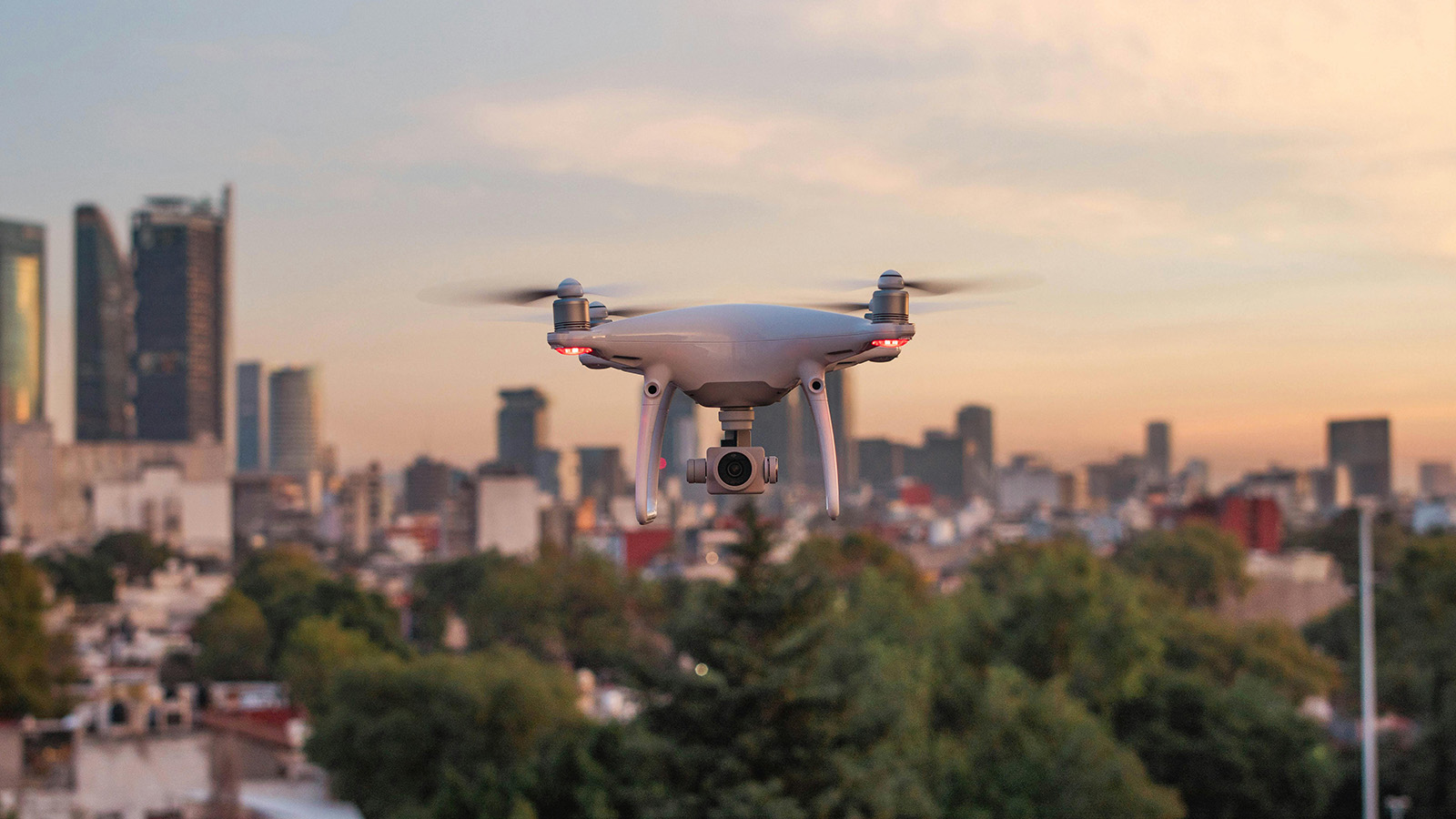
Compliance isn’t the exciting part of drone operations. Nobody buys a UAS platform because the audit trail looks great. But here’s the thing: compliance is the part that keeps your program flying. One lapsed Remote ID registration, one unauthorized airspace entry, one missing flight log during an FAA inquiry, and suddenly your entire operation is grounded while you sort it out.
The regulatory environment for commercial and public safety drone operations has gotten significantly more complex over the past few years. Remote ID is now actively enforced. LAANC is the standard pathway for controlled airspace access. The Part 108 BVLOS framework is expected to be finalized this year and will introduce an entirely new layer of requirements for organizations flying beyond visual line of sight. Your UAS software platform needs to handle all of this, not as a bolt-on feature but as a foundational layer that runs quietly in the background.
This article breaks down the compliance capabilities that should be table stakes for any serious C2 platform in 2026 and beyond. If your current software doesn’t cover these, you’re carrying risk you don’t need to carry.
Remote ID: The Digital License Plate
Remote ID has been mandatory since September 2023 for all registered drones, and the FAA is now actively enforcing it. Every drone weighing 250 grams or more must broadcast identification and location data during flight. The enforcement deadline has passed and the grace period is over. Civil fines can reach up to $27,500 per violation, and commercial pilots risk suspension or revocation of their Part 107 certificate.
There are three compliance paths. Standard Remote ID drones have broadcast capability built in at the factory. All new drones sold in the U.S. since late 2022 are required to include this. Retrofit broadcast modules can be attached to older aircraft to bring them into compliance. And FAA-Recognized Identification Areas (FRIAs) allow drones without Remote ID to operate within designated boundaries, though this isn’t practical for most commercial or public safety operations.
What your C2 platform should do: verify Remote ID compliance status for every aircraft in your fleet before it leaves the ground. The platform should flag any aircraft that isn’t broadcasting correctly, log Remote ID serial numbers against FAA registration records, and make it dead simple for an operations manager to see at a glance whether the entire fleet is compliant. If a broadcast module battery dies mid-mission or a firmware update breaks Remote ID functionality, the platform should catch it and alert the crew.
For organizations managing multiple aircraft, this is where a proper C2 platform separates itself from a basic ground control station. A GCS might let you fly one drone at a time. A C2 platform tracks compliance across a fleet.
LAANC Integration: Airspace Authorization Without the Paperwork
The Low Altitude Authorization and Notification Capability (LAANC) has transformed how drone operators access controlled airspace. Instead of submitting manual authorization requests through FAA DroneZone and waiting days or weeks for approval, LAANC provides near-real-time authorization through approved UAS Service Suppliers. It’s available at over 730 airports and air traffic facilities, covering roughly 81% of controlled airspace in the U.S.
For operations at or below the altitude ceiling shown on UAS Facility Maps, LAANC approval is typically instantaneous. Requests to fly above the pre-approved altitude require further coordination with an Air Traffic Manager and must be submitted at least 72 hours in advance.
Your platform should integrate LAANC authorization directly into the mission planning workflow. When an operator defines a flight area, the platform should automatically check whether the area falls within controlled airspace, display the applicable UAS Facility Map altitude ceiling, and prompt for LAANC authorization if needed. Ideally, the authorization request happens without leaving the platform. The pilot shouldn’t have to open a separate app, copy coordinates, and then switch back.
The platform should also store LAANC authorizations as part of the mission record. If an FAA inspector asks to see authorization for a specific flight six months from now, pulling that up should take seconds, not a scavenger hunt through email inboxes and third-party apps.
Operational Logging: The Audit Trail That Saves You
This is the compliance feature that nobody thinks about until they need it. And when you need it, you need it badly.
Every Part 107 operation should be logged. Flight time, date, location, pilot in command, aircraft registration, weather conditions, any incidents or anomalies. The FAA doesn’t currently mandate a specific log format, but having a thorough, timestamped, and tamper-evident record is what separates a defensible operation from one that looks sloppy under scrutiny.
Public safety agencies face additional documentation requirements depending on their state and jurisdiction. Many require detailed records for grant compliance, liability reporting, and post-incident review. Government COA holders typically have specific reporting obligations baked into their authorization. Our guide to evaluating UAS software for public safety covers the audit trail side of this in more depth.
Your C2 platform should generate this documentation automatically. Every flight should produce a log entry without the pilot having to fill out a paper form or manually enter data into a spreadsheet after landing. The log should capture telemetry data (altitude, speed, GPS position, battery levels), pilot credentials, airspace authorization references, and any safety events triggered during the flight. Bonus points if the platform timestamps everything in UTC and stores logs in a format that’s easy to export for audits or legal discovery.
The difference between a platform that handles logging well and one that doesn’t is the difference between a 30-second response to an FAA inquiry and a two-week scramble to reconstruct records from memory and scattered files.
Geofencing and Airspace Awareness
Geofencing is the software’s way of keeping pilots out of places they shouldn’t be. At a minimum, the platform should display restricted and prohibited airspace, temporary flight restrictions (TFRs), and airport proximity zones on the mission planning map. The better platforms do more than display this information. They actively prevent mission plans from being filed or executed in restricted airspace without proper authorization.
TFRs are particularly important because they change constantly. Presidential movements, wildfires, sporting events, and emergency operations all generate TFRs that may not have existed when the mission was planned the day before. The platform needs to pull current TFR data and check it against planned and active flights in near real time.
Some platforms also support custom geofences that an organization can define for its own operational boundaries. This is useful for public safety agencies that need to restrict drone operations to specific zones during an incident, or for enterprises that want to enforce no-fly buffers around sensitive infrastructure.
The key here is that geofencing should work as a guardrail, not just an informational overlay. Showing a red zone on a map is helpful. Preventing the drone from entering that zone without explicit authorization override is what actually prevents violations.
Night Operations Compliance
Since April 2021, Part 107 pilots can fly at night without a waiver, but specific requirements must be met. The remote pilot must have completed the updated recurrent training that covers night physiology and visual illusions (training completed before April 6, 2021 does not count). The drone must have anti-collision lighting visible from three statute miles.
Your platform should track pilot training status and flag any pilot who hasn’t completed the required night operations training before they’re assigned to a night mission. It should also prompt for confirmation that the aircraft is equipped with compliant anti-collision lighting. These are simple checks, but they’re the kind of thing that slips through the cracks on a busy team running multiple missions.
For teams operating regularly after dark, see our detailed guide on night drone operations for SAR, which covers equipment, planning, and crew safety beyond just the regulatory requirements.
BVLOS Readiness: Part 108 Is Almost Here
The FAA published its Notice of Proposed Rulemaking for Part 108 in August 2025, received over 3,000 public comments, and reopened the comment period in early 2026 to gather additional input on electronic conspicuity and right-of-way provisions. A final rule is expected in 2026 with implementation likely following six to twelve months after that.
Part 108 will fundamentally change how BVLOS operations are authorized. Instead of the current waiver-by-waiver approach under Part 107, Part 108 introduces a scalable framework with two tiers of operational authorization: permits for lower-risk operations and certificates for more complex ones. It shifts responsibility from individual pilots to organizations, introduces new personnel roles like Operations Supervisor and Flight Coordinator, and mandates detect-and-avoid technology, continuous position tracking, and integration with UAS Traffic Management (UTM) systems.
Even if your organization isn’t flying BVLOS today, your platform should be architected to support these requirements when they take effect. That means organizational-level user roles and permissions, automated compliance checking against operational area approvals, integration hooks for detect-and-avoid sensor data, and robust telemetry recording that meets the new record-keeping requirements.
Organizations currently operating under Part 107 BVLOS waivers should pay particular attention. The proposed rule would eliminate the ability to obtain new Part 107 BVLOS waivers, and the transition pathway for existing waiver holders is still being defined. The platform you’re using needs to be ready to adapt.
Pilot Certification and Currency Tracking
This one sounds basic, but it’s where a surprising number of programs have gaps. Every pilot flying under Part 107 must hold a current Remote Pilot Certificate and must complete recurrent training every 24 calendar months. For organizations with 5, 10, or 50 pilots on their roster, tracking who is current and who has lapsed is a real administrative challenge.
Your platform should maintain a pilot roster with certification dates, recurrent training completion dates, and any waivers or endorsements each pilot holds. It should alert operations managers when a pilot’s currency is approaching expiration. And it should prevent mission assignment to a pilot who isn’t current, period.
This matters especially during large-scale operations where multiple drone teams are being coordinated across a search area. When you’re pulling pilots from a roster at 2 AM for an emergency callout, you need to know instantly who is qualified to fly and who isn’t.
What to Look For When Evaluating Platforms
Compliance features tend to get buried in marketing materials behind flashier capabilities like live video streaming and 3D mapping. But when you’re evaluating UAS software for a public safety or enterprise operation, compliance should be near the top of your checklist.
Ask vendors these questions: Does the platform automatically verify Remote ID compliance before flight? Is LAANC authorization integrated into the mission planning workflow or does it require a separate tool? Does the platform generate flight logs automatically, and what data do those logs capture? How does the platform handle TFR updates and geofencing enforcement? Can the platform track pilot certification and training currency across a roster? Is the platform being updated to support Part 108 requirements when they take effect?
If the answer to any of these is “we’re working on it” or “you can do that manually,” that tells you where compliance sits in their product priorities.
Compliance Is Infrastructure, Not a Feature
The agencies and organizations running the most effective drone programs don’t think of compliance as a checklist they review once a quarter. They treat it as infrastructure. It’s built into the software, automated where possible, and visible to every level of the organization from the pilot on the ground to the program director reviewing quarterly reports.
The regulatory environment is only getting more complex. Remote ID enforcement is tightening. Part 108 will introduce substantial new requirements for any organization that wants to fly BVLOS. State and local regulations are adding their own layers on top of federal rules. The platform you choose today needs to handle all of this without making compliance a full-time job for someone on your team.
Compliance isn’t the reason anyone gets excited about drone technology. But it’s the reason your program gets to keep operating. Pick a platform that treats it that way.
We’re building TacLink C2 with compliance as infrastructure — Remote ID verification, LAANC integration, automatic flight logging, and a roadmap aligned with Part 108. If you need a platform built for the regulatory environment of 2026 and beyond, join the early access waitlist.
— Related
Keep reading

Written by
TacLink C2 Team
TacLink C2 Team builds a modern desktop ground control station for independent and commercial drone pilots. Writing here covers mission planning, multi-drone operations, airspace, and the software that keeps serious UAS programs running.