— Article
Drone SAR Program Setup: 7 Phases for New Teams
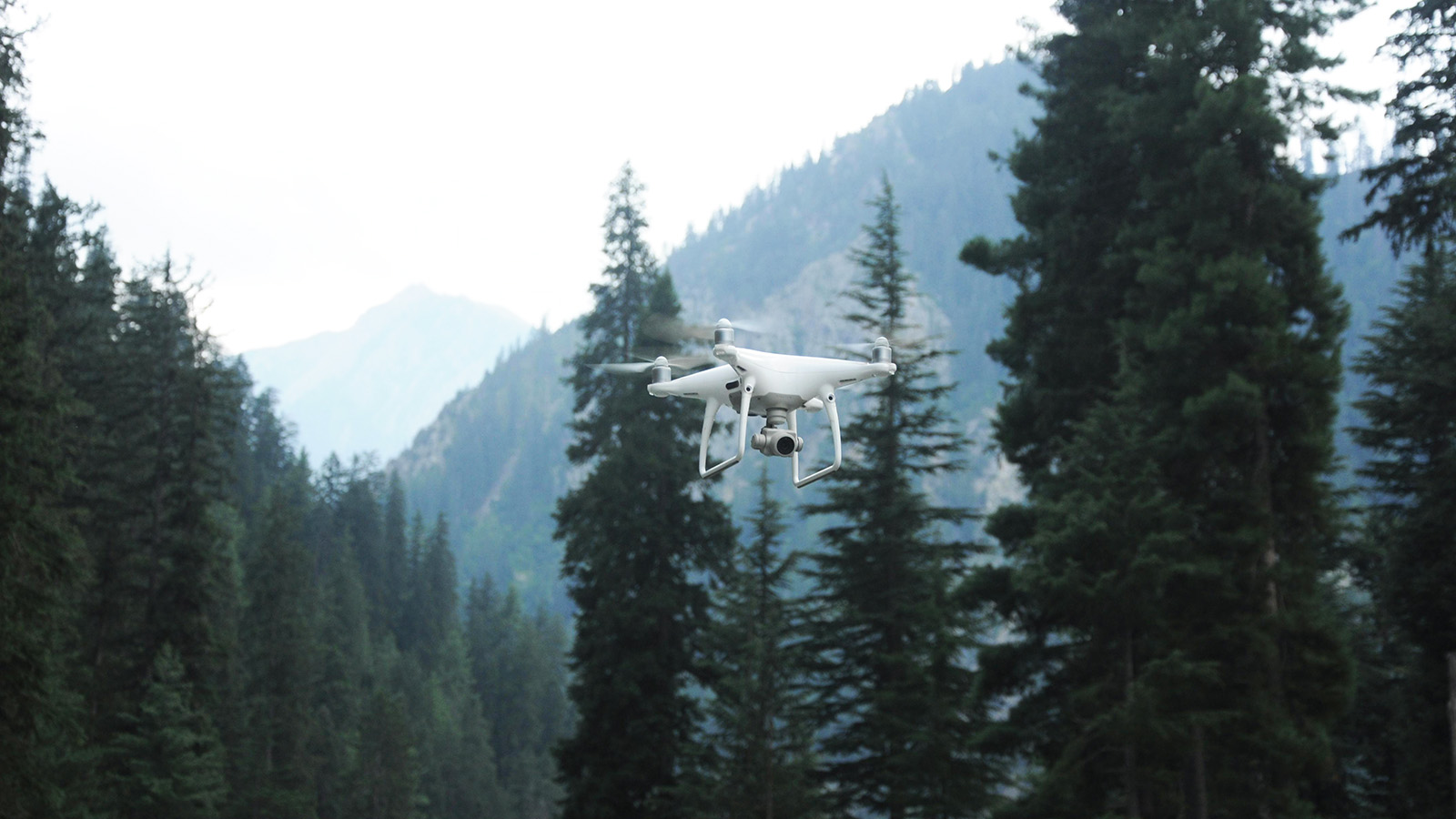
There’s a moment every SAR team goes through, usually around year two of drones being a thing in their unit, when somebody says out loud what everyone’s been thinking: the ad-hoc model isn’t working anymore. The guy who brings his own Mavic when he’s available, the member who happens to have a Part 107, the borrowed aircraft from the neighboring county. It was fine when drones were a novelty. It’s not fine now that they’re part of the search plan.
This guide is for the team that’s reached that moment and wants to do the next version right.
Building a formal drone SAR capability is not complicated, exactly. But it is a lot of small decisions that compound. Get the first few right and the program runs itself within eighteen months. Get them wrong and you’re re-doing your SOPs three years in, after an incident report you’d rather not file.
What follows is the roadmap, not in the order that feels natural, but in the order the work actually has to happen. If you want a shorter, higher-level version of the same path, our earlier drone SAR program overview is a good companion read.
First: two decisions that shape everything else
Before you spend a dollar on aircraft or a weekend writing a training syllabus, answer two questions. Honestly.
What capability are you actually building? There are two versions of a SAR drone program, and the difference matters more than people think. Version one is a support tool, drones as a force multiplier for ground teams, launched by trained members who also do other SAR work. Version two is a dedicated UAS team, a specialty unit alongside K9, technical rope, and swiftwater, with its own membership track, its own training cadence, and its own equipment budget. Most teams drift toward version two eventually. Knowing which you’re building on day one will save you a lot of retrofits.
What’s your legal authority to fly? This is the question that trips up nonprofit SAR teams the most, and it has real teeth. If you’re a government agency (county sheriff’s SAR unit, state-run SAR coordinator), you have the option of Public Aircraft Operations under Part 91, which means self-certification and broad flexibility. If you’re a volunteer 501(c)(3), and most wilderness SAR teams in the U.S. are, Public Aircraft Operations is not available to you directly. You’ll fly under Part 107 for your own training and operations, or under the COA of the agency that deploys you when you’re activated. Figure out which situation you’re actually in before you start writing policy, because the rest of the program depends on it.
With those two answered, the phased work starts.
Phase 1: Regulatory foundation
Your regulatory foundation is not “get everyone their Part 107.” That’s step one of maybe twelve.
Every pilot flying on your team will need a Part 107 Remote Pilot Certificate. That’s the floor, not the ceiling. The Part 107 test covers airspace, weather, and aircraft operations. It doesn’t cover a single thing you’ll actually do on a search. It is necessary, and it is nowhere near sufficient.
From there, your team needs to decide its authority structure. If you’re a government SAR unit, start the Public COA process in parallel with your pilots’ Part 107 prep. The COA application takes months and opens up privileges you’ll want (routine controlled-airspace operations, over-people exceptions during life-safety incidents, and a path toward night ops without per-flight waivers). The dual approach of pilots Part 107-certified plus organization operating under a COA is what most mature agencies run, and it’s what you should be building toward.
If you’re a nonprofit volunteer team, your path is different. You’ll operate under Part 107 day-to-day, and when you’re activated by a deploying agency (sheriff, state police, county EOC), your flight authority for that specific operation rides on that agency’s Public Aircraft Operations authority. Get this memorialized in your MOU with the deploying authority before your first activation, not after. The agency you work for should have already thought about this, but don’t assume. Ask.
Then there are the waivers you’ll need eventually: night operations, operations over people during life-safety events, and, looking six to twelve months out, BVLOS. The FAA’s Part 108 Notice of Proposed Rulemaking published in August 2025, with the final rule expected to land in spring 2026. Part 108 will transform BVLOS from an exception-based waiver process into a structured approval pathway, with Operations Supervisors and Flight Coordinators as newly-defined personnel roles. For SAR, this matters: the first FAA BVLOS waiver specifically for SAR operations was granted in 2021, and those capabilities are about to become something you can build into routine program design rather than apply for per mission. Read the rule when it drops. Don’t design your program around a regulatory world that’s about to change. Our Part 108 readiness breakdown tracks the details as they land.
A readiness note for SAR teams specifically. Under Part 108, the Operations Supervisor role carries organizational-level responsibility for safety and compliance, meaning your team’s drone lead is no longer just a senior pilot with extra paperwork. They’re an accountable officer under the regulation, with TSA Security Threat Assessment requirements attached to the position. The Flight Coordinator role, which handles tactical oversight of individual aircraft, is structured similarly. If your team doesn’t yet have named individuals who could step into those roles, with training records, qualifications, and institutional memory, start identifying them now. Programs that backfill these roles after the rule drops will lose six months of operational time.
One more piece: register every aircraft, keep your flight logs in a form you can hand to the FAA, and get comfortable with the idea that your program is a system that the FAA regulates, not a hobby with a certificate attached.
Phase 2: Mission-driven equipment selection
Most teams start by picking drones. Most teams regret it.
Start with missions. Write down the five or six scenarios your drone unit actually responds to. Lost hiker in wooded terrain. Missing child in the wildland-urban interface. Despondent adult walkaway. Drowning victim search along a riverbank. Technical rescue overwatch. Wide-area search in open country. Each of those missions implies a different payload, a different flight time, and a different risk profile. If you skip this step, you will buy a beautiful drone that can’t actually do the thing you needed it to do in August when a five-year-old goes missing from a campground.
A few principles worth internalizing:
- Thermal and optical is not an either/or. Every SAR program eventually runs both. Thermal is decisive at night and in cool conditions; it’s nearly useless during thermal crossover, the dawn and dusk windows when ground surface temperature and body temperature equalize, typically an hour or two after sunset and again just before sunrise, and in midday summer heat when the ground runs hotter than a living human. A dual-sensor payload or a two-aircraft team that runs both is where serious programs end up. Know the diurnal window for the region you work in, and train pilots to recognize when their thermal feed is lying to them.
- Fixed-wing has a place, but probably not yours yet. Fixed-wing SAR drones cover enormous ground with long endurance, which is fantastic for open country and wide-area searches. They’re also more complex to operate, harder to train on, and irrelevant in dense timber or urban terrain. Most new SAR programs should start multirotor and add fixed-wing when they have the flight hours to justify it. See our breakdown of fixed-wing, multirotor, and hybrid drone types before you commit a budget line.
- NDAA and Blue UAS compliance matters more every year. The DJI conversation is not going away. If you do any federal mutual aid, any critical-infrastructure work, or any state funding that carries procurement rules, buying only DJI is going to create a problem. It may not be a problem today. It will be one later.
- Year one, buy less than you think you need. The temptation to kit the team out on founding day is strong. Resist it. You will learn more about what your team actually needs from your first six months of real activations than you’ll learn from six months of research. Leave budget room.
One underrated piece of gear: a ground station, case, cables, and cold-weather battery warmers that work in the conditions you actually fly in. The drone is the cheap part of the kit. The infrastructure around it is where programs either succeed or quietly fail in the field.
Phase 3: The pilot pipeline
Pilots are the hardest part of the program. Not because pilots are hard to find, because building a pipeline is hard.
A functioning pipeline has four stages. Candidate (interested, no certification). Trainee (Part 107 earned, working toward mission-qualified). Qualified pilot (signed off to fly on live operations). Instructor (able to train and evaluate others). Every program eventually needs all four, and most new programs try to run with only stage two or three, which works until someone moves away or burns out.
For the SAR-specific skills layer on top of Part 107, you are largely on your own unless you buy into one of the national training programs. NASAR partnered with Unmanned Safety Institute (USI) starting in 2024 to produce SAR-specific UAS courses and certifications; DRONERESPONDERS, through its UNITE training program, offers public-safety-focused instruction that applies directly to SAR; and several state-level public safety UAS programs (New York’s DHSES being a notable example) run scenario-based SAR training courses. Use one of them. Building your own curriculum from scratch is possible but expensive in volunteer hours that should be going elsewhere.
At minimum, your qualified pilots need to be competent in:
- Standard SAR search patterns (expanding square, creeping line, parallel track, sector, contour), when to use which, and how to execute them under load
- Subject behavior basics, what a dementia walkaway moves like vs. a lost child vs. an intentional hider
- Comms discipline within an ICS structure (more on this below)
- Thermal imagery interpretation, including the false-positive traps
- Night operations fundamentals
- Emergency procedures, including loss-of-link behavior and forced landing
Subject behavior deserves particular attention because it’s where drone pilots bring a different lens than ground searchers. A dementia walkaway tends to travel in roughly straight lines until an obstacle redirects them, often downhill or toward familiar landmarks, which means drone grids oriented along drainage lines and established routes outperform pure area coverage for that profile. A lost child under about seven will frequently hide rather than respond to calling, changing both the sensor choice (thermal for someone motionless and concealed) and the pattern (slow, low-altitude contour work rather than fast wide-area sweeps). An injured hiker is stationary, which sounds easy until you realize stationary subjects run cooler because metabolic output drops, and they’re often under tree canopy precisely because they sought shelter. Each profile changes the mission. Pilots who fly the same pattern regardless of subject profile are missing people that teams with better-trained pilots would find.
Then there’s currency. Pilots who fly twice a year are dangerous in ways pilots who fly twice a month are not. Build a currency standard into your SOPs (minimum flight hours per quarter, minimum night flights per year, annual skills evaluation) and enforce it. A member who isn’t current doesn’t fly on live operations. That needs to be a norm, not an exception, and it needs to be a norm that applies to the team leader too.
One last thing on pilots: the retention problem. Volunteer SAR teams run on time and goodwill. Drone pilots specifically burn out when they’re called to every single activation regardless of mission fit, when their equipment is never the team’s equipment, and when they’re expected to train on their own dime. Budget for training stipends if you can. Rotate activation duty. Buy the equipment out of the team budget, not the pilot’s pocket. These sound like small things. They’re not.
Phase 4: ICS integration
This is the phase most programs do badly.
During an activation, a drone team does not operate on its own island. It operates inside the Incident Command System, under the Air Operations Branch, the same branch that covers manned aviation. This matters because the moment a helicopter, a fixed-wing observation aircraft, or a mutual-aid drone shows up on your incident, the coordination load goes up by an order of magnitude, and someone has to own that coordination.
The position that owns it is the Air Operations Branch Director (AOBD), who reports to the Operations Section Chief and supervises the Air Tactical Group Supervisor (ATGS), the person who physically coordinates tactical air traffic over the incident. When your drone is in the air and a state police helicopter enters the same airspace, the ATGS is the one separating you vertically and giving launch/hold calls. If your team hasn’t done this before, the first time is going to be stressful. Train for it before you need it. Our guide to managing multiple drone teams on SAR covers the multi-aircraft coordination side of the same problem.
The practical integration work looks like this:
- Know where your drone unit sits in the IAP. You’re an asset assigned by the AOBD, documented on the ICS 220 (Air Operations Summary). Your team leader should know what an ICS 220 looks like and how to read it.
- Establish comms early. Tactical freq for talking to the ATGS, command freq for reporting to the incident commander, team internal freq for your own crew. Three separate channels, minimum.
- Write your drone tasking procedure down. Who requests a drone flight? Who approves it? Who briefs the pilot? Who debriefs? If these aren’t written down, they don’t exist, and you’ll find out which on a bad call.
- Don’t self-task. The drone doesn’t fly just because the pilot thinks it should. The drone flies because the IC or operations section chief tasked it for a specific purpose, with a specific expected product. This is the single most important discipline for drone credibility within SAR. The teams that get called back are the ones who do what was asked, report what was found, and don’t freelance.
- Know the manned-aviation etiquette. If a helicopter shows up, your drone lands. Period. There is no argument. The ATGS will decide when you re-launch.
If your deploying agency’s IC is unfamiliar with UAS integration, that’s a training opportunity, not a confrontation. Offer to run a tabletop with them before fire season, avalanche season, or whatever your busy season is. Good SAR drone programs make ICs look competent on UAS issues. Bad ones make them look the opposite.
Phase 5: SOPs, training cadence, and after-action culture
Your SOPs are the document that proves you are, in fact, a program and not a hobby. They should cover, at minimum: qualifications and currency, equipment standards, deployment authority and tasking, flight operations, emergency procedures, data handling and retention, privacy policy, and post-mission reporting. You don’t have to write this from scratch. DRONERESPONDERS maintains a resource center with over 400 templates, including SOPs, COA guidance, waiver templates, and task books. Adopt, adapt, don’t reinvent. A structured pre-flight checklist and mission briefing template are good places to start.
Training cadence is where doctrine becomes reality. Monthly skills nights. Quarterly full-scenario exercises. Annual refresh on emergency procedures and regulatory updates. At least one joint exercise per year with the agencies that deploy you, because the first time your drone team operates alongside their dispatch should not be a real call.
One piece of SOP work that gets underinvested is data integrity. Your flight logs, video files, and mission records are not just training material, they’re the proof your team did what it said it did. Missing-person cases frequently become criminal cases, families sometimes file civil inquiries about adequacy of search, and agency partners periodically request your records for audit. Documentation that can’t be credibly challenged means: timestamps tied to GPS fixes, files stored in a system with access logs and no easy delete path, coverage polygons exported alongside the flight logs that produced them, and a written retention policy you can point to. Build this into the program from day one. Retrofitting it after a records request is how good teams end up looking bad on the stand.
And then there’s after-action culture. Every activation, every one, gets a debrief. What did we task? What did we find? What did we miss? What broke? What should we do differently next time? This is not bureaucracy. This is the mechanism by which your program learns faster than the members turn over. Teams that debrief consistently get measurably better year over year. Teams that don’t stay where they were in year one.
Phase 6: The software backbone
Once you’ve got aircraft, pilots, SOPs, and ICS integration, the thing that holds it all together is software. Specifically: the command-and-control platform your team runs missions on.
A lot of new programs try to stitch this together with manufacturer apps, a group chat, and a shared Google Drive. That works for about nine months. Then you get a real multi-team activation, three aircraft in the air, two agencies on scene, an incident commander who wants to see what you’re seeing, and the stitched-together approach falls apart precisely when it matters most.
What a serious SAR drone program needs from its software, at minimum:
- A shared map view that the incident commander, the pilots, and field teams can all see in real time
- Coverage tracking, so you know what ground has been searched, to what probability of detection, with what sensor
- Mission logging that generates the documentation your after-action reviews and agency reports depend on
- Support for multiple aircraft operating simultaneously without stepping on each other
- Airspace awareness (TFRs, ADS-B traffic, weather) rendered on the map where you’re already looking
- Offline or degraded-network capability, because cellular doesn’t reach where you do most SAR work
This is the piece of the program that most directly determines whether your team feels like a credible aviation unit or an ad-hoc group of pilots with drones. TaclinkC2 was built for exactly this use case: multi-drone missions, coordinated coverage grids, airspace and TFR overlays, and the kind of mission logging that survives a records request. Whether you use TaclinkC2 or something else, make sure whatever you run supports the scale of operation you intend to grow into, not the one you started at.
Phase 7: Mutual aid and long-term sustainment
The final piece, and the one most new programs think about last, is how you plug into the larger SAR ecosystem.
Join your state SAR council (NMSARC, PSARC, CSRB, there’s one in nearly every state). Build relationships with neighboring drone teams before you need them. Memorialize mutual aid agreements in writing so that when a multi-county search happens in February, nobody’s negotiating who’s covering whose insurance on the drive to the staging area. The SAR world is small; your reputation for competence or chaos travels faster than you think.
And then there’s sustainment. Year one is fun. Year three is where drone SAR programs die. The equipment ages, the founding pilots move on, the grant money runs out, and the team leader who championed the program gets promoted and doesn’t have time anymore. The programs that survive this built sustainability in from the start: a written leadership succession plan, a budget line that isn’t dependent on any single grant, an equipment refresh cycle that’s planned not reactive, and a training pipeline that produces new qualified pilots every year whether or not anyone’s leaving.
The teams that don’t plan for year three don’t usually make it to year four.
A note on the common failure modes
Every mature SAR drone program has a story about the thing they got wrong. A few patterns show up so often they’re worth flagging before you trip over them yourself.
The team that bought aircraft before writing SOPs. The team that qualified everyone on sunny-day flying and got caught the first time weather went sideways. The team that let currency lapse because “he’s been flying forever.” The team that freelanced during an activation and got benched by the IC. The team that kept all the mission data on one member’s laptop, which got replaced, which meant the evidence was gone. The team that never joined the state council because “we don’t need those guys,” until the day they did.
None of these are fatal individually. Collectively, they’re why the average drone SAR program looks the same in year five as it did in year one.
Building a drone SAR program is not a project with a finish line. It’s an operating capability you stand up, tend, improve, and defend. The teams that treat it that way end up with something genuinely useful: a specialty unit that saves lives, gets called back, and makes the people around them better at their jobs.
That’s the version worth building. Everything else is a hobby with paperwork.
— Related
Keep reading
Written by
TacLink C2 Team
TacLink C2 Team builds a modern desktop ground control station for independent and commercial drone pilots. Writing here covers mission planning, multi-drone operations, airspace, and the software that keeps serious UAS programs running.