— Article
What Is a UAS C2 Platform? A Plain-English Definition
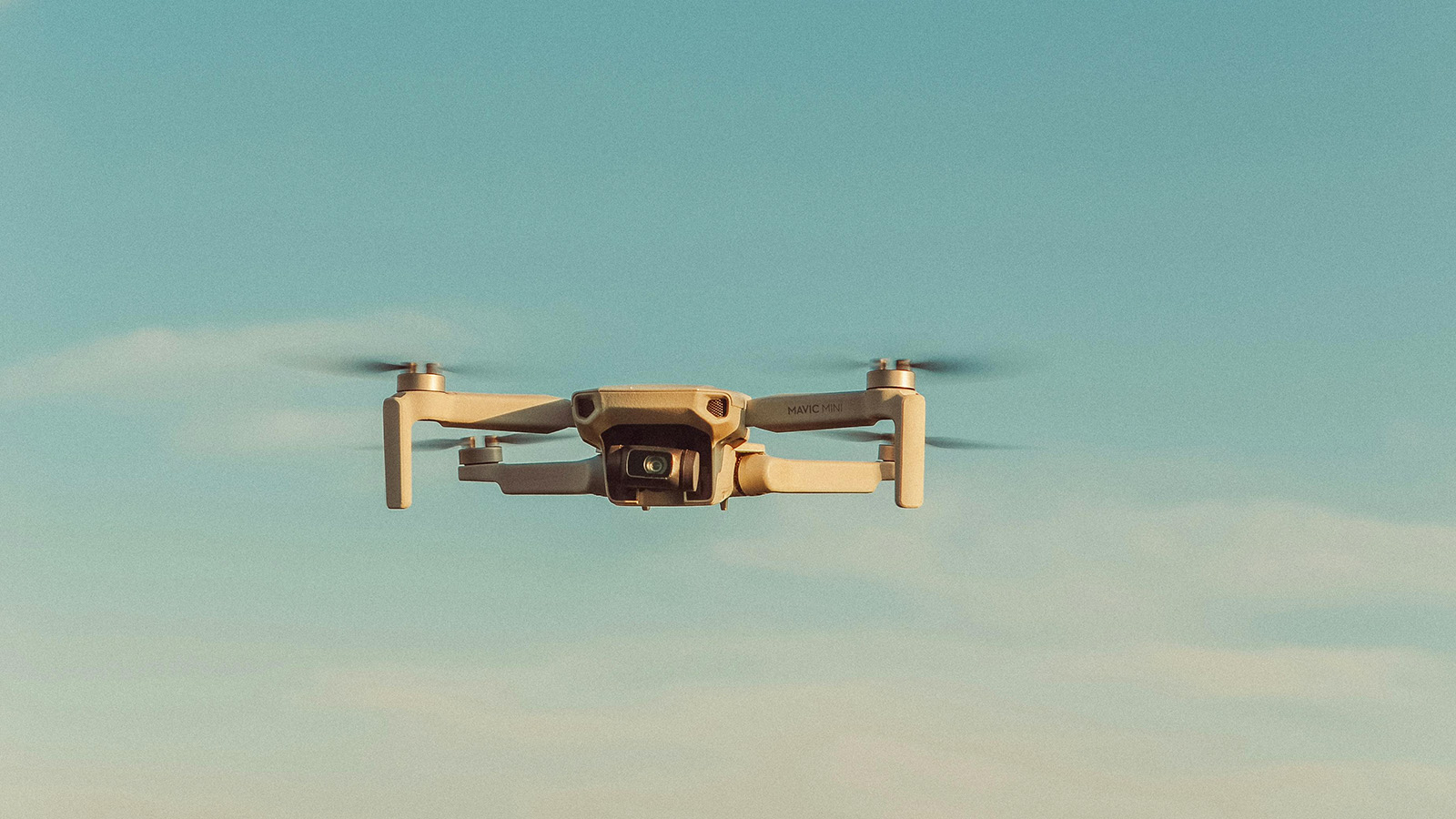
If you fly drones professionally or even if you’re just the “drone person” at your company, you’ve spent plenty of time staring at a Ground Control Station (GCS). Whether it’s the proprietary app that came with your aircraft, or open-source stalwarts like Mission Planner and QGroundControl, the routine is the same: Power up, connect, fly, land. It’s a reliable, one to one relationship that gets the job done.
But eventually, for almost every growing program, the workflow starts to crack.
Imagine you’re running two aircraft simultaneously on a high stakes search mission. You’re juggling two separate tablets, your field team is shouting coordinates over a radio that you have to manually peck into a touchscreen, and the Incident Commander back at the office is calling your cell phone every five minutes asking for a “status update.” By the time you pack up, your data is a jumbled mess of SD cards, screenshots, and fuzzy memories.
This is the exact gap a UAS Command and Control (C2) platform is designed to fill. Understanding the difference between a GCS and a C2 platform isn’t just an academic exercise in terminology — it’s the difference between flying a drone and managing an aviation operation.
What a Ground Control Station Actually Does
At its core, a ground control station is a digital cockpit. It is the direct interface between one pilot and one aircraft. Its job is to handle the tactical essentials:
- Telemetry: How high am I? How much battery is left? What’s my GPS lock quality?
- Command: Move the gimbal, fly to this waypoint, adjust altitude, or “Return to Home.”
- Payload: What is the camera seeing right now? Is the thermal sensor recording?
Most GCS applications are hardware centric. DJI Pilot 2 is built specifically for DJI hardware; Mission Planner is the brain for ArduPilot based systems; QGroundControl covers a broader range of MAVLink vehicles but still operates on the same fundamental premise. They are designed for what you might call the “One Pilot, One Drone” era — a model where a single operator manages a single vehicle for a single flight at a time.
That model made perfect sense when the industry was young. Five years ago, getting one drone in the air reliably was the whole challenge. The GCS solved that challenge well. But the drone industry has rapidly outgrown that single threaded paradigm, and the software hasn’t kept up.
It’s worth noting that this isn’t a knock on ground control stations. A GCS is an essential piece of any UAS operation, and it always will be. The pilot still needs stick inputs, telemetry readouts, and direct vehicle control. The issue isn’t that a GCS does its job poorly — it’s that its job description is too narrow for the way modern operations actually work.
Where the GCS Model Breaks Down
The limitations of a GCS become painfully obvious the moment you add a second drone or a third person to the mix. Here are three scenarios that every growing drone program hits eventually.
Scenario 1: The Multi-Aircraft Search
Consider a Search and Rescue (SAR) operation with three drones covering different grid sectors. Each pilot is locked into their own screen. They can see their own aircraft’s position, their own telemetry, and their own camera feed — but they have zero visibility into what the other two aircraft are doing.
This creates real problems. Pilots can’t see each other’s positions in real time, leading to “near miss” anxiety or, worse, actual airspace conflicts. If one pilot spots a person of interest, they have to relay that GPS coordinate verbally over a radio — reading out eight digits of latitude and longitude while trying to keep their aircraft stable. The search supervisor stands behind the three pilots, squinting at individual 7-inch screens, trying to mentally stitch together three separate pictures into one operational view.
Nobody in this scenario has a bad tool. They each have a perfectly functional GCS. The problem is that the operation requires a shared picture that three separate GCS instances can never provide.
Scenario 2: The Coverage Verification Problem
Take a commercial mapping job with a fleet of three drones. After the flight, you have three sets of flight logs, three sets of imagery, and three different flight paths. Did you actually achieve 100% coverage of the survey area? Did any two drones photograph the same strip while leaving a gap between them?
Answering that question means pulling data from three separate sources, loading it into a GIS tool, overlaying the flight paths, cross-referencing timestamps, and hoping you can reconstruct what happened in the air two hours ago. It’s a manual, hours-long data management exercise that should have been a single button press.
Scenario 3: The Stakeholder Visibility Gap
An agency director approves a drone deployment. An hour later, they want to know what’s happening. Their options: call the pilot (who is busy flying), drive to the field location (which may be remote), or wait until the mission is over and ask for a summary. At no point can they see the operation in progress without physically standing behind the pilot.
In public safety, this isn’t a convenience problem — it’s a command and control problem. The people who need operational awareness the most are often the people furthest from the screen.
In every one of these scenarios, the GCS isn’t “broken.” It’s doing exactly what it was built for — controlling a vehicle. The problem is that you need software that manages a mission, and those are fundamentally different jobs.
What Makes a C2 Platform Different?
A UAS C2 platform operates at the mission level, not the aircraft level. It treats the drone as a single asset within a larger ecosystem of sensors, people, and objectives. Instead of giving one pilot a view of one aircraft, it gives an entire team a unified view of the full operation.
Here is how a true C2 platform changes the game:
1. The Common Operating Picture (COP)
This is the foundation everything else is built on. In a C2 environment, every asset appears on the same map: your drones, your teammate’s drones, and the GPS locations of your ground teams — all simultaneously, all in real time.
If a “No Fly Zone” is updated by the commander, it pops up on everyone’s screen instantly. If a pilot marks a Point of Interest, the marker appears for every connected user with coordinates and a timestamp. Everyone, from the pilot in the field to the agency director in another city, sees the exact same operational reality.
This isn’t just a nicer map view. The common operating picture is the single most important element in any coordinated operation because it eliminates the information asymmetry that causes bad decisions. When the search team lead can see exactly which sectors have been covered and which haven’t, they stop asking for radio updates and start making faster, better-informed calls.
2. Fleet Level Health Monitoring
A GCS shows you the battery bar on one aircraft. A C2 platform aggregates health data across the entire fleet and tells you which aircraft needs attention right now. (For a deeper dive into exactly which data points matter and why, see our breakdown of real-time drone telemetry.)
Instead of a pilot checking their own battery voltage, the platform flags the aircraft with the lowest charge, the one with degraded GPS accuracy, or the one drifting off its assigned search pattern. Alerts are operational, not just mechanical. If Aircraft 2 drops below 30% battery while covering a critical sector, the platform doesn’t just warn that pilot — it surfaces the information to the team lead so they can decide whether to push the flight, swap the battery, or reassign another aircraft to pick up the coverage.
This is the difference between monitoring a battery and monitoring the viability of a mission. In operations with three, four, or five aircraft in the air simultaneously, no human can keep that picture in their head by watching individual telemetry screens. The platform has to do it for them.
3. Coordinated Mission Planning
With a GCS, you plan one flight at a time. If you’re running three drones, you plan three separate flights and hope they don’t overlap, leave gaps, or conflict in altitude. You might sketch out sectors on a paper map, or eyeball the coverage areas and trust your pilots to stay in their lanes.
A C2 platform replaces that guesswork with structured coordination. You plan one large operation, then assign sectors or tasks to individual aircraft within it. You can deconflict altitudes so two aircraft never occupy the same vertical space. You can define search patterns that guarantee coverage without redundancy. And you can push those assignments to pilots live, so they receive their tasking digitally instead of through a verbal briefing that they have to remember for the next 45 minutes.
This transforms the pilot’s role. In a GCS model, the pilot is the planner, the executor, and the record-keeper all at once. In a C2 model, the pilot executes a plan that was built at the operational level, and the platform handles the coordination overhead. It’s the same shift that happened in manned aviation decades ago — the difference between a bush pilot who does everything solo and a commercial crew that operates within a structured system.
4. Unified Communication and Data
A C2 platform kills the “radio relay game.” In a GCS workflow, if a pilot spots something important, they have to describe it over the radio, the listener has to write down the coordinates, and someone has to manually enter that information into a separate system. Every handoff is a chance for error, delay, or miscommunication.
In a C2 environment, that same pilot marks a POI on their screen, and it appears on the commander’s screen instantly — with GPS coordinates, a timestamp, the aircraft ID, and the altitude at which it was marked. No voice relay required. No transcription errors. No ambiguity about which “big oak tree” the pilot was referring to.
When the mission ends, the platform generates a unified operational record. You don’t get five separate flight logs from five separate GCS applications. You get one comprehensive report that shows every flight path, every event, every communication, and every piece of data generated during the entire operation — tied together by a single timeline. For agencies that need to produce after-action reports, legal documentation, or compliance records, this alone can save days of manual reconstruction.
The Mental Model Shift: Vehicle vs. Mission
The best way to distinguish the two is to look at the question the software is trying to answer:
- The GCS asks: “What is this aircraft doing right now?”
- The C2 Platform asks: “What is this mission achieving right now?”
One focuses on the state of the vehicle — airspeed, pitch, voltage, camera angle. The other focuses on the state of the objective — area cleared, targets identified, resources remaining, time elapsed. As operations scale, whether through BVLOS (Beyond Visual Line of Sight) flights, “Drone as First Responder” (DFR) programs, or large scale industrial inspections, the “mission state” is the only thing that actually matters to the decision makers.
This doesn’t mean the vehicle state becomes irrelevant. It means it gets absorbed into the larger picture. A C2 platform still tracks every aircraft’s battery and GPS quality — it just contextualizes that data within the mission. “Aircraft 2 is at 28% battery” is a vehicle state fact. “Sector 4 is about to lose coverage because Aircraft 2 needs to return” is a mission state fact. The second one is what the team lead needs to hear.
Why This Matters for 2026 and Beyond
The drone industry is at a tipping point. Several converging trends are making the GCS-only model untenable for any serious operation:
Multi-aircraft operations are becoming the norm. Agencies and commercial operators are deploying two, three, and four aircraft on single missions. BVLOS waivers are expanding, and the FAA has signaled increasing openness to multi-ship operations under structured safety cases. The days of “one drone, one mission” are ending.
DFR programs are scaling fast. Drone as First Responder programs are proliferating across the country, with agencies maintaining persistent overhead presence from fixed launch sites. These programs don’t fly single sorties — they maintain continuous coverage, which means managing aircraft rotations, battery swaps, and shift handoffs through software, not through memory.
Regulatory scrutiny is increasing. Federal guidance in 2025 pushed agencies toward NDAA-compliant, American-made drone systems. Compliance requirements around Remote ID, operational logging, and data sovereignty are tightening. Meeting these requirements across a fleet demands centralized management, not per-aircraft record-keeping.
Stakeholder expectations have changed. Whether it’s an incident commander, a project manager, or an agency director, the people funding and authorizing drone operations want visibility. They want to see what’s happening, not hear about it after the fact. A GCS can’t give them that. A C2 platform can.
If you are managing more than one aircraft, coordinating with ground teams, or need to report to stakeholders who aren’t standing in the field with you, a GCS is no longer sufficient. It’s like trying to run an airline using only the individual cockpit displays of your planes — without an Air Traffic Control system, dispatch, or a shared flight board.
What to Look For in a C2 System
If you’re evaluating platforms, be cautious of “GCS Plus” software — tools that are ground control stations with a few extra buttons bolted on. The label “C2” is increasingly used as a marketing term, so it’s worth asking pointed questions to separate the real platforms from the rebrands.
Simultaneous multi-aircraft control. Can it handle multiple live aircraft on one screen? Not sequentially — simultaneously, with independent telemetry, independent control inputs, and shared airspace awareness. If it can only connect to one aircraft at a time, it’s a GCS regardless of what the website says.
Hardware agnosticism. Does it work with DJI, Skydio, MAVLink-based drones, and potentially other protocols? If the platform only supports one manufacturer’s hardware, you’re buying a premium GCS tied to a single vendor’s ecosystem — not a C2 system. True command and control platforms abstract the aircraft layer so you can mix fleet types based on mission needs, not software compatibility.
Collaborative access. Can a remote user log in and see the live map, aircraft positions, and operational data without needing a controller in their hands? A C2 platform serves multiple roles — pilot, team lead, commander, stakeholder — not just the person holding the sticks. If the only way to see the operation is through the pilot’s screen, the platform isn’t solving the coordination problem.
Offline resilience. Does it work when the internet doesn’t? Public safety and field operations frequently happen in areas with degraded or zero connectivity. If the platform requires a cloud connection to plan a mission, display a map, or share the operational picture, it will fail in exactly the environments where you need it most.
Unified output. Does it produce a single, structured report at the end of the day — or a pile of individual flight logs that someone has to manually reconcile? The data that comes out of the platform should reflect the operation as a whole, not the sum of its individual flights.
The gap between a GCS and a C2 platform isn’t about the number of features on a comparison chart. It’s about the fundamental unit of work. If the software thinks the “unit” is a drone, it’s a GCS. If it thinks the “unit” is a mission, it’s a C2 platform. Everything else flows from that distinction.
We’re building TacLink C2 to be the mission-first brain for your fleet — a platform designed from the ground up around operations, not individual aircraft. If you’re ready to stop managing drones one at a time and start leading coordinated operations, join our waitlist for early access to the platform built for the next era of UAS.
— Related
Keep reading

Written by
TacLink C2 Team
TacLink C2 Team builds a modern desktop ground control station for independent and commercial drone pilots. Writing here covers mission planning, multi-drone operations, airspace, and the software that keeps serious UAS programs running.