— Article
Drone Operations in Adverse Weather: Wind, Rain, Cold
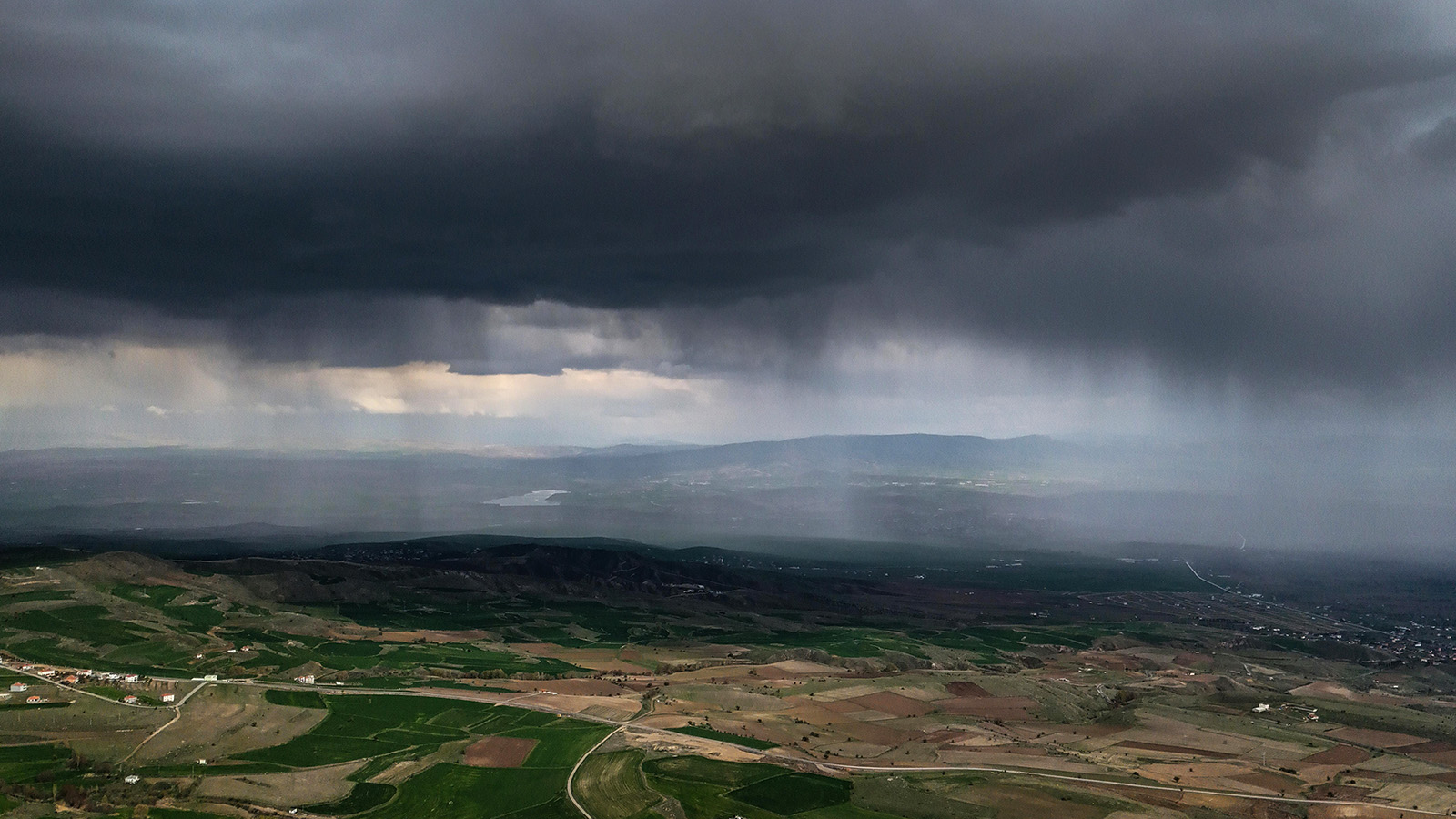
Public safety missions do not wait for perfect weather. A missing hiker does not choose to get lost on a calm, sunny afternoon. A structure fire does not pause because it is raining. A flood does not recede because the wind is blowing at 25 miles per hour. If your drone program only flies in ideal conditions, it is a fair-weather asset, and fair-weather assets do not justify their budget when leadership is asking what value the drone team brings to critical incidents.
That said, flying in adverse conditions is not the same as flying recklessly. The line between operational capability and unnecessary risk is drawn by understanding your equipment’s limits, respecting the physics that govern flight in hostile environments, and having the discipline to make a no-go call when conditions exceed what your aircraft and crew can handle safely. (The go/no-go discipline starts upstream. See our public safety drone pre-flight checklist for the full readiness sequence.)
This article covers the three most common environmental threats to field drone operations, namely wind, rain, and cold, and how experienced teams manage each one.
Wind
Wind is the most common adverse condition drone teams face, and the most likely to catch an operator off guard. Surface winds can be calm while winds at 200 feet are gusting well above your aircraft’s tolerance. Terrain features such as ridgelines, building edges, and canyon walls create turbulence and rotors that do not show up on a weather report. And wind does not just affect stability. It drains your battery, shortens your flight time, and reduces your effective range.
Every drone has a maximum wind speed resistance rating, usually published in meters per second in the spec sheet. Enterprise platforms commonly used in public safety, including aircraft in the Matrice, Skydio, or Autel EVO class, typically handle sustained winds of 10 to 15 meters per second (roughly 22 to 33 mph). Consumer-grade aircraft are usually rated lower, around 8 to 10 meters per second.
But the spec sheet number is a ceiling, not a target. A practical rule of thumb is to fly only when sustained winds are at or below two-thirds of your aircraft’s rated maximum wind resistance. If your drone is rated for 15 meters per second, plan for safe operations up to about 10 meters per second. That margin accounts for gusts, which are almost always higher than the sustained reading, and for the additional power draw that comes from fighting a headwind on the return leg.
In the field, carry a handheld anemometer and check wind speed at ground level before every flight. But understand that ground-level readings understate what the aircraft will encounter at altitude. As a general principle, wind speed increases with altitude due to reduced surface friction, a concept known as wind shear. What reads as 12 mph at the launch point may be 20 mph at 300 feet. If your mission requires altitude, factor that gradient into your go/no-go decision.
Terrain effects amplify the problem. Wind accelerates over ridgelines and around buildings, creating localized gusts significantly stronger than ambient conditions. Lee-side turbulence, which is the chaotic air behind an obstacle relative to the wind direction, can roll a small multirotor before the pilot has time to react. If you are operating near structures, cliffs, or tree lines, keep the aircraft upwind of the obstruction and avoid flying through the mechanical turbulence zone on the downwind side.
When you do fly in wind, a few operational adjustments help. Launch and land facing into the wind. Fly your outbound leg into the headwind first, so the return leg is wind-assisted. This prevents the situation where a pilot flies downwind for ten minutes and then cannot make it back against the headwind before the battery dies. Monitor battery consumption more aggressively than normal. A drone fighting a 20 mph headwind may draw 30 to 50 percent more power than in calm air, and your flight time will drop accordingly.
If the wind is marginal, consider flying lower. The boundary layer effect means wind speeds are generally reduced closer to the ground. For SAR grid searches or scene documentation where altitude is not critical, keeping the aircraft at 50 to 100 feet rather than 300 feet can make the difference between a stable, useful flight and a fight for control.
Know when to say no. If the aircraft is struggling to hold position, drifting laterally on approach, or the pilot is making constant corrections just to maintain heading, the conditions have exceeded what is safe. Land the aircraft and wait for conditions to improve. No piece of aerial footage is worth losing an aircraft over an active incident scene.
Rain
Rain is the second most common weather challenge, and the one where operator knowledge of their specific equipment matters most. The critical question is whether your aircraft has an Ingress Protection rating, and if so, what that rating actually means.
IP ratings use two digits. The first indicates protection against solid particles like dust. The second indicates protection against water. An IP55-rated drone, for example, is protected against dust ingress sufficient to interfere with operation and against low-pressure water jets from any direction. That means it can fly in moderate rain. It does not mean it is waterproof, and it does not mean it can operate in a downpour or land in standing water.
Many enterprise drones used in public safety carry IP45 or IP55 ratings. Some newer platforms are pushing IP67, which indicates protection against temporary submersion. But there is an important nuance most operators miss: the IP rating applies to the airframe, not necessarily to the entire system. Your controller, your tablet, your payload camera, and your battery contacts may have lower protection ratings than the aircraft body. A drone that can fly in rain is not useful if the controller shorts out in your hands.
If your aircraft does not have an IP rating, and most consumer and many prosumer drones do not, it should not fly in rain. Period. Water bridging across circuit board contacts causes short circuits. Moisture in motor bearings accelerates wear. Rainwater pulled into cooling vents by rotor wash can damage electronic speed controllers. Even a light drizzle can cause sensor errors in barometric altimeters and obstacle avoidance systems.
For teams with IP-rated aircraft, rain operations are manageable with discipline. Keep a few practices in mind. Do not fold or unfold the aircraft in the rain, because water can enter joints and seams that are sealed during flight but exposed during configuration changes. Ensure battery contacts and compartment seals are dry before inserting batteries. After a wet flight, dry the aircraft thoroughly before storage. If you flew in salt spray or near saltwater, rinse the aircraft with fresh water first. Salt corrosion will destroy motors and electronics faster than any amount of rain.
Rain also degrades sensor performance. Obstacle avoidance systems that use infrared or ultrasonic sensors can give false readings when rain is hitting the sensor face. Some operators disable obstacle avoidance during rain flights to prevent erratic automated behavior, but this means the pilot must maintain full manual awareness of the flight environment. Cameras can accumulate water droplets on the lens, reducing image quality. Thermal cameras are less affected by rain than optical cameras, which is one reason thermal payloads are often preferred for adverse-weather operations. (For a deeper look at how each sensor type performs in difficult conditions, see our drone payload types guide.)
Visibility is the final rain consideration. Part 107 requires a minimum visibility of three statute miles. Heavy rain reduces visibility rapidly. Even if your aircraft can handle the moisture, if you cannot maintain visual line of sight with the aircraft, the flight is not legal and not safe. Reduced visibility also affects the value of the intelligence you are collecting. If the camera cannot see through the rain, the mission may not be worth the risk to the aircraft.
Cold
Cold weather affects every component of a drone operation: the aircraft, the batteries, the pilot, and the payload. Managing cold requires preparation before you get to the field and discipline while you are there.
Battery performance is the most immediate cold-weather concern, and it is covered in depth in our companion article on drone battery management for extended field deployments. The short version: LiPo batteries lose capacity and voltage stability when cell temperatures drop below about 15°C (59°F). Below freezing, you can lose 20 to 50 percent of your rated flight time, and voltage sag under load becomes unpredictable. Preheat batteries to at least 20°C before flight, raise your landing voltage threshold from 3.3 to 3.5 volts per cell, and carry more batteries than you think you need.
Beyond batteries, cold affects the aircraft itself. Lubricants in motor bearings thicken at low temperatures, increasing friction and power draw during the first minutes of flight. Gimbal mechanisms can stiffen, resulting in jerky camera movement until the components warm up from operation. Plastic airframe components become more brittle in extreme cold, making the aircraft more vulnerable to damage from a hard landing or minor impact.
Propellers deserve specific attention in cold conditions. Ice can form on prop surfaces during flight in sub-freezing temperatures with high humidity or when flying through clouds or fog. Ice accumulation changes the aerodynamic profile of the blade, reduces thrust, and creates vibration. Most small UAS do not have de-icing capability. If you see ice forming on the props (visible as a rough white accumulation on the leading edges), land immediately. The condition will only get worse with continued flight.
Snow and ice on the ground create launch and recovery challenges. A drone sitting on snow can have moisture wick into motor housings, battery contacts, and USB ports. Use a landing pad, even a simple rubber mat, to keep the aircraft off wet surfaces. When landing on snow, moisture will contact the underside of the aircraft and the payload. Dry the aircraft immediately after recovery.
Cold affects the pilot as much as the equipment. Numb fingers lose dexterity on the sticks, and reaction times slow. Cognitive function degrades with prolonged cold exposure, which means decision-making, the most critical pilot skill, deteriorates exactly when conditions demand the most from it. Dress for the conditions, rotate pilots on long operations, and do not let anyone fly when they are shivering. A cold pilot makes bad decisions, and bad decisions in the air have consequences on the ground. (Many cold-weather missions also happen after dark. Our night drone operations guide for SAR covers the equipment and visibility considerations that compound with cold.)
Screen visibility can also suffer. Tablet and phone displays dim or slow their refresh rate in cold temperatures. Some LCD screens become sluggish below freezing, and touchscreens may become less responsive to gloved fingers. Consider using a controller with physical sticks rather than relying entirely on touchscreen inputs, and keep your display device insulated or in a controller hood to retain warmth.
The Go/No-Go Decision
Every flight in adverse conditions should begin with a deliberate go/no-go assessment. This is not a gut feeling. It is a structured evaluation of the mission requirement, the environmental conditions, the equipment capability, and the crew readiness.
Ask four questions. First, is this mission operationally necessary right now, or can it wait for better conditions? Not every request for aerial support requires immediate launch. Second, is the aircraft rated for these conditions? If you are flying an aircraft without an IP rating in rain, or a consumer drone in 25 mph winds, the answer is no regardless of how badly the IC wants video. Third, is the pilot proficient in these conditions? Adverse-weather flying requires more skill, not less. A pilot who has only flown in calm conditions should not be making their first wind flight during an active incident. Fourth, what is the consequence of losing the aircraft? If the drone goes down over an active scene, will it create a secondary hazard? Will the loss of the asset leave the operation without aerial capability for the remainder of the incident?
If any of those answers raise doubt, the correct decision is to wait, adjust, or stand down. The aircraft is a tool. Protecting the tool so it is available when conditions allow effective use is better than losing it in conditions where it could not deliver useful results anyway.
Adverse weather flying is a skill that develops with training and experience. Build it deliberately. Practice in moderate wind before you have to fly in strong wind during a real call. Test your rain procedures during a training exercise, not during a flood response. Understand your aircraft’s cold-weather behavior in January training flights so you are not learning it for the first time during a winter SAR.
The teams that fly effectively in bad weather are the teams that prepared for it before the weather turned bad.
— Related
Keep reading
Written by
TacLink C2 Team
TacLink C2 Team builds a modern desktop ground control station for independent and commercial drone pilots. Writing here covers mission planning, multi-drone operations, airspace, and the software that keeps serious UAS programs running.