— Article
Multi-Drone Operations: Why Fleet Coordination Breaks Down
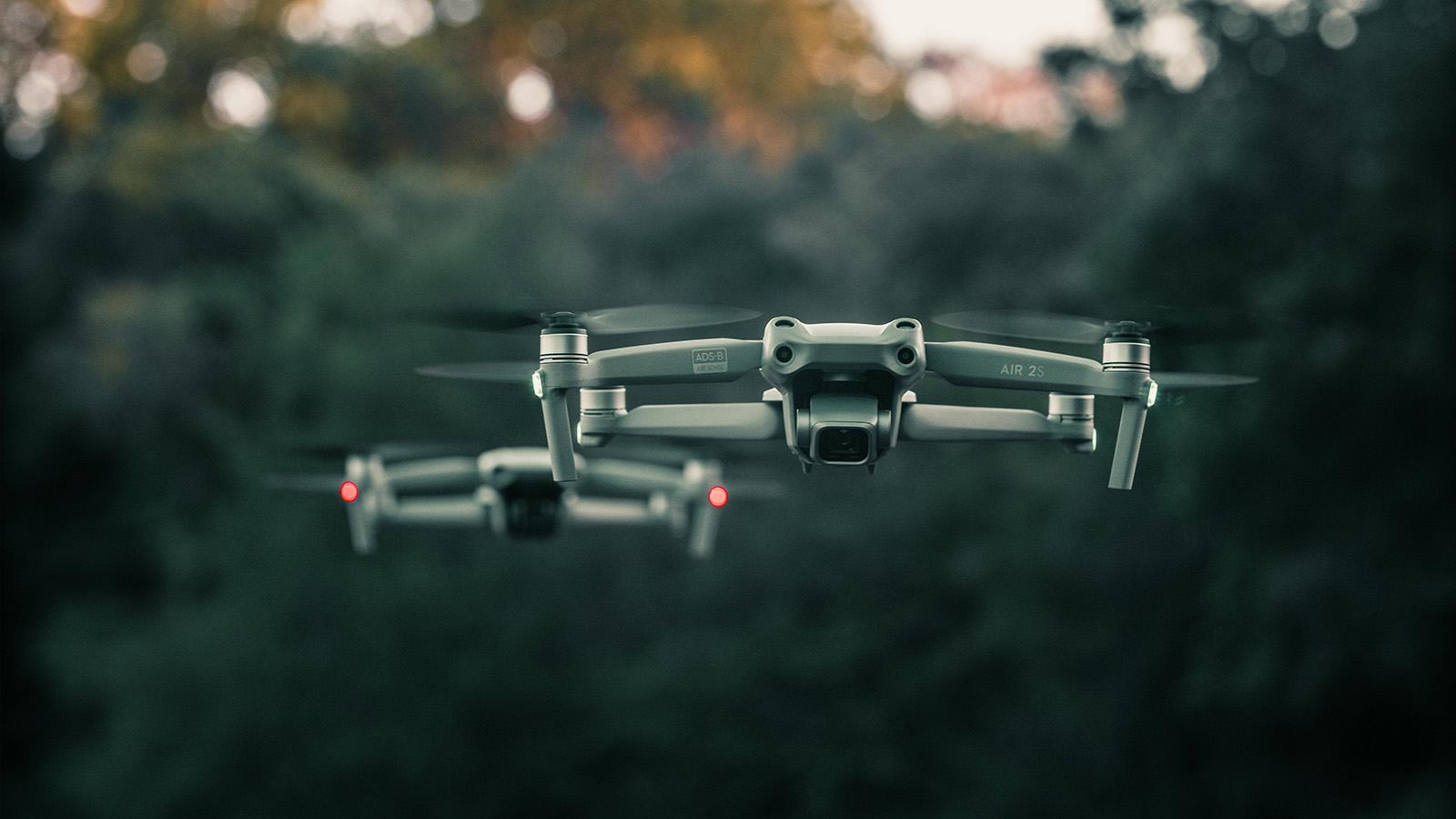
Flying a single drone on a search mission is manageable. Flying three simultaneously while coordinating ground teams, monitoring telemetry, and deconflicting shared airspace is an entirely different problem — and it’s the problem that defines modern public safety UAS operations.
As agencies expand from one or two aircraft to full multi-drone programs, the operational complexity doesn’t scale linearly. It compounds. Every additional aircraft adds new communication pathways, new failure modes, and new cognitive demands on the people running the mission. Without the right systems in place, the fleet that’s supposed to accelerate your operation becomes the thing that buries it in confusion.
This article breaks down the cognitive and technical challenges of multi-drone coordination, and explains why a dedicated UAS command and control (C2) platform — not just a collection of ground control stations — is the difference between a fleet that works together and a fleet that works against itself.
The Complexity Cliff: Why Three Aircraft Changes Everything
Most drone programs start small. A single pilot, a single aircraft, a single mission at a time. At that scale, a standard ground control station handles the job. The pilot monitors one telemetry feed, one video stream, one battery clock. Situational awareness is straightforward because there’s only one situation to be aware of.
Add a second aircraft and the workload roughly doubles — but it’s still manageable with good communication between two pilots. The challenge is containable.
The third aircraft is where things break. Research into cognitive workload in multi-UAS operations consistently shows that operator performance begins to degrade as the number of simultaneously managed vehicles increases, particularly when contingencies arise. It’s not the routine flying that overwhelms people. It’s the exceptions — a low-battery alert on Aircraft 2 while Aircraft 3 reports a GPS anomaly and the incident commander is requesting a video feed from Aircraft 1’s sector. The cognitive demands of triaging across multiple aircraft in real time push operators past the threshold where critical details start falling through the cracks.
This is the complexity cliff, and every multi-drone operation hits it. The question is whether your systems are designed to catch you.
The Five Coordination Challenges That Break Multi-Drone Operations
1. Airspace Deconfliction
When multiple aircraft share the same operational area, keeping them separated is the most immediate safety concern. In a single-aircraft operation, the pilot owns the sky. In a multi-drone operation, every aircraft’s flight path must account for every other aircraft’s flight path — plus any manned aviation operating in the vicinity.
Without a shared spatial picture, pilots rely on radio calls and mental models to avoid conflicts. That works on a calm training day. It fails on a chaotic incident scene where airspace coordination already involves manned helicopters, temporary flight restrictions (TFRs), and NOTAM management. A C2 platform that displays all aircraft positions on a single map — with altitude separation and proximity alerts — turns deconfliction from a cognitive burden into a visual one.
2. Task Assignment and Handoff
In a SAR operation, the search area is typically divided into sectors. Each drone is assigned a sector and a search pattern. As batteries deplete, aircraft return to base, get swapped, and relaunched — often into a different sector than they just left.
Without a system tracking which sectors have been covered, which are in progress, and which are queued, task assignment becomes a whiteboard exercise managed by someone with a radio. Sectors get re-searched while others go untouched. Multi-drone fleet management software should track sector assignments as live state — showing what’s been covered, what’s active, and what’s next — so that task handoff between aircraft rotations is seamless.
3. Communication Discipline and Technical Overhead
Every additional aircraft adds communication pathways. With five pilots plus a ground team plus an incident commander, you have a communication network that can easily devolve into crosstalk and missed calls.
Beyond verbal communication, there is the technical challenge of GCS telemetry latency. When multiple streams are hitting a single network, lag can hide critical status changes. Furthermore, managing MAVLink ID conflicts (where multiple drones accidentally broadcast on the same System ID) can ground an operation before it starts. A C2 platform that pushes real-time telemetry and status updates to a shared display reduces the radio burden significantly. Pilots don’t need to verbally report their battery level if the operations manager can see it on a dashboard.
4. Centralized Situational Awareness
The single most important capability in any multi-drone operation is the common operating picture — a single display that shows every aircraft’s position, status, and assignment overlaid on the operational area. This is fundamentally different from a ground control station, which is designed to show one pilot one aircraft.
In public safety operations, this role falls to the Air Operations Branch Director (AOBD) or the UAS Unit Leader within the Incident Command System (ICS). Their job isn’t to fly aircraft; their job is to allocate resources and report status to the incident commander. They need a tool built for coordination, not for individual piloting.
5. Data Aggregation and Replay
When a multi-drone operation ends, the data it generated — flight logs, video footage, telemetry recordings — needs to be consolidated. If each aircraft is running its own independent GCS, data aggregation is a manual post-processing task that can take days. A fleet-level C2 platform that ingests telemetry and footage from all aircraft into a single timeline makes post-mission reporting possible within minutes of landing.
What Multi-Drone Fleet Management Software Actually Needs to Do
Not every platform that claims fleet management capability actually delivers it. If you’re evaluating options, our guide to evaluating UAS software for public safety covers the full criteria — but here’s what matters specifically for fleet coordination:
Fleet-wide common operating picture: All aircraft positions and statuses displayed on a single georeferenced map with sub-second latency.
Sector and task management: The ability to define search sectors and track coverage progress as a live operational state.
Telemetry aggregation: Battery levels, link quality, and GPS accuracy for every aircraft, displayed simultaneously with configurable alerts. (For a deep dive into which telemetry data points matter most, see our breakdown of real-time drone telemetry.)
Role-based views: A pilot needs detail; an operations manager needs the big picture; an incident commander needs a summary.
CAD and dispatch integration: In public safety, the drone operation must be able to exchange data with existing CAD and dispatch systems.
Offline capability: The platform must function fully in an offline or edge-deployed configuration for areas with degraded connectivity.
Scaling Beyond the Pilot: The Operations Manager Role
One of the least discussed but most important shifts in multi-drone operations is the emergence of a dedicated operations manager role — someone who isn’t flying an aircraft but is instead managing the fleet.
In a single-aircraft operation, the pilot is the operation. In a multi-team operation, the pilot becomes a specialist executing one piece of a larger plan. Someone else needs to hold the big picture: tracking coverage, managing battery rotations, and coordinating with ground teams. This role doesn’t exist in most GCS workflows because a GCS is designed for a pilot, not a coordinator.
The Real Cost of Poor Fleet Coordination
Bad coordination in a multi-drone operation doesn’t always look dramatic. It looks like two aircraft unknowingly searching the same sector while an adjacent sector goes uncovered. It looks like a battery swap taking twelve minutes instead of four.
None of those are catastrophic on their own, but together, they degrade the operation’s effectiveness by 30% to 50%. In a time-critical SAR mission, that degradation is measured in whether someone is found in time. The investment in proper multi-drone fleet management software is about converting multiple independent flights into a single coordinated operation.
We’re building TacLink C2 to solve fleet coordination from the ground up — shared situational awareness, sector-level task management, and fleet-wide telemetry in a single interface. If you’re scaling past one aircraft and need software that keeps pace, join the early access waitlist.
— Related
Keep reading
Written by
TacLink C2 Team
TacLink C2 Team builds a modern desktop ground control station for independent and commercial drone pilots. Writing here covers mission planning, multi-drone operations, airspace, and the software that keeps serious UAS programs running.