— Article
Common Operating Picture for Drones: Plain-English Guide
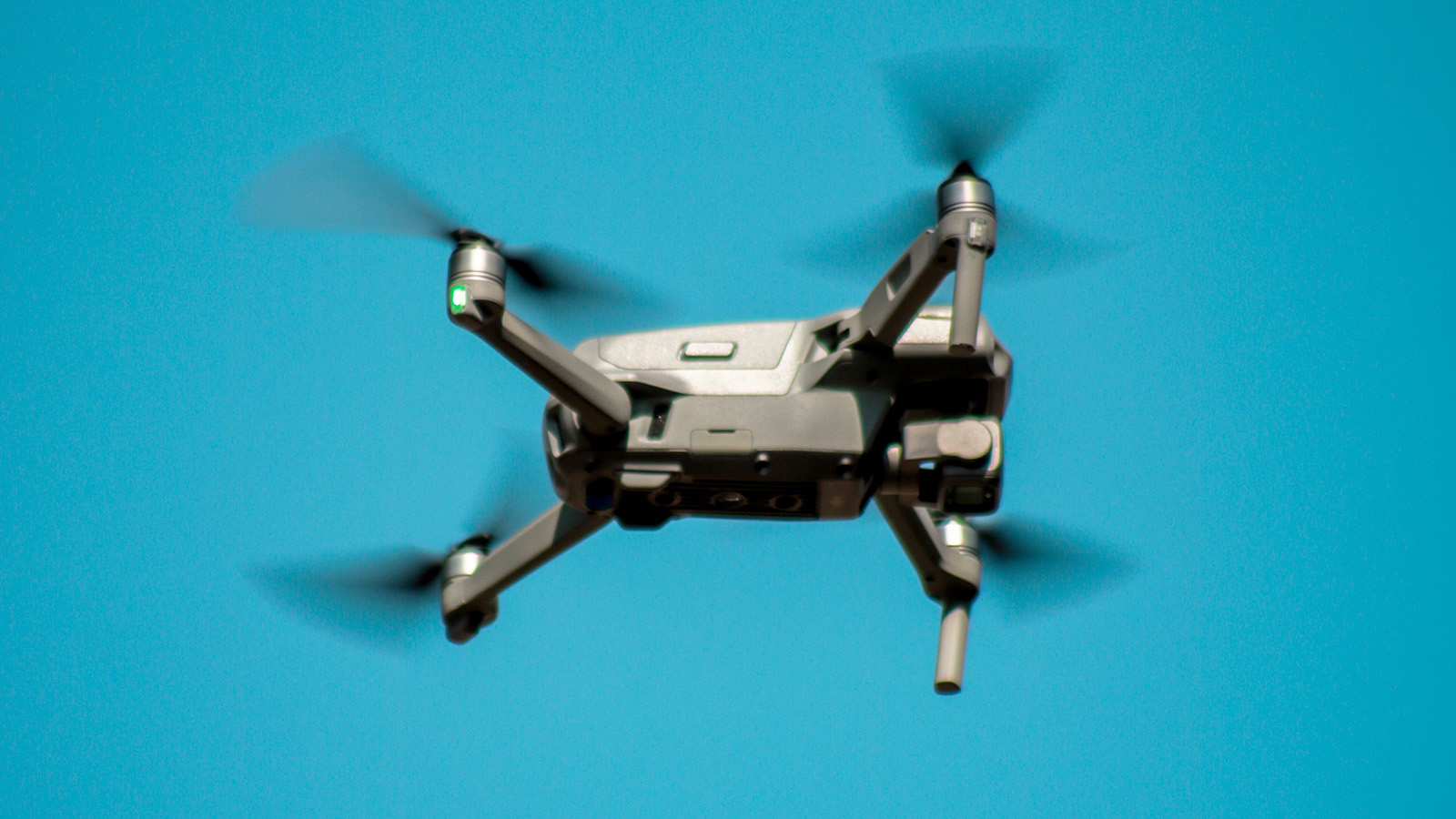
If you’ve ever watched a war room scene in a movie (the big glowing map, the icons sliding around, someone calling out a target), you already have a rough mental picture of what we’re about to talk about. The real version isn’t science fiction anymore. It’s running right now over Ukraine, over wildfire operations in places like California, and increasingly anywhere a large drone fleet needs to coordinate in real time, including the airspace where Amazon and Walmart want to fly delivery drones.
The piece of software that makes all of it work has a deeply unglamorous name: the Common Operating Picture, or COP. This guide explains what it actually is, why it suddenly matters so much, how it works under the hood, and where the technology is going. No jargon for jargon’s sake, just the stuff worth knowing.
The short version: one screen instead of five
A Common Operating Picture is a single, shared, live map that pulls in every relevant feed (drone video, GPS positions, radar tracks, radio signals, weather, no-fly zones) and stacks them on top of each other so everyone looking at it sees the exact same reality at the exact same moment.
That’s it. That’s the whole idea. The hard part is the word “everyone.”
Here’s the problem it solves. Picture an emergency manager during a wildfire, or a military commander, or a fleet operator running fifty inspection drones. Until recently, that person was effectively trying to watch five televisions tuned to five different channels at once. One screen showed raw radar. Another had a live drone camera. A third tracked where the ground crews were. A fourth showed the weather. A fifth listed which parts of the sky were off-limits. Your brain has to do the merging, in real time, while people are waiting on your decision.
A COP throws those five televisions out and replaces them with one window. The radar, the weather, the crew locations, and the drone feed all get layered onto a single interactive map, so instead of doing mental gymnastics you just look out the window and see what’s happening. That shift, from juggling screens to reading one, is the entire value proposition, and it turns out to be worth a staggering amount of money and, in some cases, lives.
Why this became urgent, fast
Drones got cheap, capable, and absolutely everywhere, and the systems built to manage the sky did not keep up. Traditional air traffic control was designed for a few thousand airliners flying high, fast, and predictably, all in constant radio contact. It was never built to track tens of thousands of small, slow, low-flying machines that can launch from a backyard and don’t talk to anyone, and many conventional air-surveillance radars were never optimized to reliably pick out small, slow drones against ground clutter. Meanwhile the command software that militaries and public safety agencies relied on was largely a collection of closed, proprietary tools, each a sealed silo feeding its own little screen.
For years that was merely inconvenient. Then small commercial drones started showing up in conflict zones, at airports, and over crowds, and “inconvenient” turned into “dangerous.” You can’t de-conflict airspace you can’t see, and you can’t defend against a drone swarm by squinting at six separate monitors. The Common Operating Picture went from a nice-to-have to something closer to basic infrastructure: the connective tissue that lets all those disconnected sensors finally talk.
How a COP actually works
Strip away the marketing and a modern COP is really four jobs stacked on top of each other.
1. It swallows data from everything
The bottom layer is ingestion: pulling in feeds from wildly different sources and dumping them into one pool. That means electro-optical (normal) and thermal (heat-seeing) video streamed off the drones, usually over low-latency protocols built for shaky connections. Ukraine’s Delta handles this through a dedicated video module called Vezha, which aggregates live feeds from hundreds of drones at once and lets operators drop markers straight onto the shared map, reportedly helping classify more than 4,000 points of interest a day. It’s a useful reminder that a real COP isn’t one monolithic app; it’s a stack of specialized modules wired together. Ingestion also means telemetry: the drone’s precise GPS position, altitude, and orientation. The good systems also grab the coordinates of what the camera is pointed at, not just where the drone is hovering, which sounds like a small distinction until you’re trying to call in the exact spot of a stranded hiker or a target.
On top of the drone data, a serious COP ingests outside sensors too: radio-frequency detectors that sniff out drones by their control signals, the transponder data that crewed aircraft broadcast, and ground-based radar. The more independent ways you can “see” an object, the more confident you can be that it’s real.
None of that fusion happens, though, without a less glamorous ingredient: common data standards. A radar, a drone, and a soldier’s tablet all describe the world differently, and most of a COP’s quiet work is translating those incompatible feeds into one shared language. Formats like Cursor on Target (CoT), the messaging standard that underpins ATAK, along with Remote ID broadcast formats and various NATO and aviation data protocols are what let equipment from different vendors show up as clean, comparable icons on the same map. Interoperability is the boring foundation the whole “single pane of glass” sits on.
2. AI sorts the firehose
Raw data alone doesn’t help anyone. Pour every feed onto one map with no filtering and you’ve just recreated the five-televisions problem in a single window: a chaotic mess that hides the one thing you needed to notice.
So modern platforms lean on machine learning to do the sorting. Computer-vision models scan the live video and flag specific objects (a vehicle, a person, a heat signature) and drop a clean pin on the map instead of making a human stare at footage. Just as important, the AI does correlation: if a radio sensor, a radar, and a camera all detect what’s probably the same drone, the software estimates that they’re seeing one object, fuses them into a single track (usually with a confidence score attached) and shows one icon instead of three confusing ones. That’s the difference between clarity and noise.
3. It shows you decisions, not data
The visible layer, the map itself, is where all this pays off. A good interface lets an operator zoom from a city-wide strategic view down to a single drone’s camera feed in one click, with the terrain, weather, friendly positions, and restricted zones layered underneath. The goal isn’t to display more. It’s to display the right things clearly enough that a tired human under pressure can act on them. This is precisely what good situational awareness software is built to do.
4. It lets you act, not just watch
This is the part that’s changed most recently. Older systems were read-only: you watched, then picked up a radio to do something about it. Newer COPs are two-way. From the same map, a commander can re-task a drone, redirect a whole swarm, or, in defense settings, cue a countermeasure against an incoming threat. The picture becomes a control panel.
Where Common Operating Pictures are actually being used
The architecture shifts a lot depending on who’s using it and how badly things can go wrong.
The battlefield: Ukraine’s Delta
One of the most battle-tested COP platforms in use today is Ukraine’s Delta system, and its story says a lot about where this technology came from. It didn’t start in a defense contractor’s lab. It grew out of a volunteer reconnaissance group, Aerorozvidka, whose coders began stitching together a web-based map from commercial drones and field reports in the years after 2014. The Ministry of Defence eventually took it over and turned it into a national platform.
What makes Delta notable isn’t just that it works: it’s how far it’s been formally validated. In July 2024, it became the first Ukrainian military system to pass a NATO-standard cybersecurity audit, a roughly six-week review against more than 160 security requirements. Then on August 6, 2025, Ukraine’s defense minister signed a decree making Delta the single source of operational data exchange across all levels of the country’s defense forces, from a commander’s laptop down to a soldier’s phone. By October 2025, Delta served as the primary command platform during NATO’s multinational REPMUS exercise in Portugal.
The headline number Ukraine’s Ministry of Defence has put on it: Delta-assisted operations have supposedly contributed to more than $15 billion worth of Russian equipment damaged or destroyed, a figure that comes from Ukrainian officials and isn’t independently audited. Those same officials routinely credit the system with helping identify on the order of 2,000 enemy targets a day. They’ve also described an AI module nicknamed Avengers that scans live drone video and flags Russian equipment, compressing what used to be slow manual analysis into something close to real time.
The deeper lesson defense planners took from Delta is uncomfortable for traditional procurement: a cloud-based, software-first system built by volunteers and updated constantly outpaced the slow, hardware-heavy way militaries normally buy technology.
The defense-tech version: Anduril’s Lattice
On the commercial side of defense, the company most associated with this idea is Anduril and its Lattice platform, founded by Palmer Luckey. Lattice is designed to fuse data from large numbers of sensors, drones, and other systems into one AI-driven picture and, crucially, to keep working in what the military calls DDIL conditions: denied, degraded, intermittent, and latent. In other words, when the network is jammed, weak, or dropping in and out, which is exactly when you need it most.
It’s also a good example of how “dual-use” this technology has become. In October 2025, Anduril and Korean Air announced a partnership to point Lattice at wildfires, using distributed sensors across air, land, and space to spot a fire the moment it starts and then autonomously task drones to assess it. Luckey’s framing was blunt: the way we currently fight wildfires is, in his words, “horribly antiquated.” The same software architecture that tracks hostile drones can just as easily coordinate a firefighting fleet.
Public safety: closing the 911 gap
For police, fire, and emergency management, the COP does something very specific: it shrinks the agonizing window between a 911 call and a responder physically arriving. “Drone as First Responder” programs launch a drone the instant a call comes in, and a COP feeds incident commanders live overhead thermal and optical views before anyone’s boots hit the ground.
The hard part is getting that video out of a chaotic disaster zone reliably. Cell networks get overwhelmed exactly when everyone needs them. So public-safety setups often bond multiple connections together (cellular, Wi-Fi, satellite) to keep a stable, encrypted stream flowing into dispatch. And many public-safety and defense deployments rely on a tool called ATAK (the Android Team Awareness Kit), which lets field officers see live drone positions and shared map markers right on a phone clipped to their chest, no special command vehicle required.
Commercial airspace: making room for delivery drones
Then there’s the civilian side, where the COP is less about threats and more about not crashing into each other. This is the world of UTM, Unmanned Aircraft System Traffic Management, and it’s governed by frameworks the FAA and NASA have been building for years. The FAA’s UTM Pilot Program demonstrated the foundational plumbing back in 2019, and the FAA’s Remote ID rule (finalized in 2021, built on the industry standard known as ASTM F3411) now requires most drones operating in the National Airspace System to broadcast identifying and location information, a digital “license plate” for the sky, with a handful of exceptions for things like designated identification areas and certain government flights.
Notably, the UTM model the FAA chose isn’t one giant government database. It’s federated: multiple private companies each run their own service, and they share constraints and flight intentions through standardized connections. So if a medical-delivery drone is mid-flight and a MedEvac helicopter suddenly needs that airspace, the reservation can ripple out across every provider’s system and clear a path automatically. We’ll come back to whether federation is actually the right call, because it’s genuinely contested.
Enterprise: one fleet, many sites
Finally, the least dramatic but fastest-growing use: companies running drones at scale for inspections (solar farms, pipelines, mines, agriculture). Here a COP is basically a mission-control dashboard. A single manager can sit in one office and oversee automated drones launching from remote charging docks around the world, watching the feeds and tweaking routes from a keyboard. It’s the most boring application and quite possibly the one that’ll touch the most businesses.
What the numbers say (and how much to trust them)
Two honest caveats before any figures, because this is an area where confident-sounding statistics get passed around uncritically.
First, market-size projections vary wildly depending on which research firm you ask. For the global UTM market in 2025, published estimates range from a couple hundred million dollars to nearly two billion, depending entirely on how each firm draws the boundaries of “the market.” Ten-year forecasts are even more scattered: projections for the mid-2030s run anywhere from around $2 billion to roughly $13 billion, with growth rates that several analysts put in the high-teens to low-twenties percent annually. Put simply: the exact dollar figure you see quoted is mostly a function of marketing, but the directional trend is undeniable. This is a fast-growing category that serious money is flowing into, and you should treat any single precise number with a raised eyebrow.
Second, the most reliable data on COPs in real high-intensity use comes from Ukraine, and those figures (the $15 billion, the targets-per-day) come from the Ukrainian government, which has every reason to present them favorably. They’re plausible and consistent across reporting, but they’re not independently audited. Worth knowing as you read them.
There’s also a thread of academic work poking at whether the federated UTM model is actually safe at scale. Simulation studies have found that sharing flight plans across competing providers genuinely cuts conflicts when traffic gets heavy, but that the small delay needed to keep everyone’s systems in sync can, under the wrong conditions, backfire and increase them. The takeaway is sobering: coordination isn’t free, and a poorly synchronized federated system can introduce new conflict risks of its own. That’s a live research question, not settled fact.
The honest challenges nobody should gloss over
This technology is genuinely impressive. It’s also not magic, and the failure modes matter.
Physics doesn’t care about your software. A COP is only as real-time as your connection. In a jammed warzone, a flooded cell network at a stadium, or a remote disaster area, bandwidth collapses exactly when you need it. Video degrades, latency spikes, and the map drifts out of sync with reality, which means a commander could be making a life-or-death call based on an icon that’s already wrong. The leading fix is edge computing: move the AI processing closer to the sensor (often onto the drone itself, sometimes onto a nearby vehicle or field node), then transmit just a tiny text packet (“vehicle, here”) instead of a fat 4K video stream. That saves bandwidth, but the bigger payoff is twofold. It cuts latency, because there’s no round trip to a faraway server before the drone reacts. And it buys autonomy: if the connection drops entirely, a drone running its own onboard processing can keep tracking a target, assessing a fire, or navigating safely instead of going blind the moment the link dies. Edge computing isn’t just a bandwidth trick; it’s what keeps the picture alive when everything else fails.
More data can mean less clarity. The dream of a “single pane of glass” can curdle into an unreadable mosaic if you cram every available feed onto one map with no filtering. Human-factors researchers have warned for years that you can overload an operator into paralysis. The counter-argument is that this is an AI problem, not a fundamental one: better filtering hides the noise and surfaces only what matters. Which one wins depends entirely on the quality of the software.
Then there’s the autonomy question, which is the big one. As COPs shift from watching to acting, they increasingly come with autonomous teeth: the ability to detect a threat and recommend, or even initiate, a response. Defense strategists argue this is simply unavoidable math: no human can react fast enough to counter a saturated drone swarm by hand. Ethicists, civil-rights groups, and plenty of engineers counter that handing lethal targeting decisions to a model optimizing pins on a map invites misidentification, bias, and a genuine moral hazard. There’s a cybersecurity dimension too. Frameworks like the NIST AI Risk Management guidance flag attack surfaces that don’t exist in older systems: an adversary poisoning the training data, or spoofing the inputs outright by feeding false GPS or fake visual signals to trick the AI into chasing ghosts or, far worse, tagging a friendly unit as a target. In an electronic-warfare environment where the enemy is actively trying to deceive your sensors, an AI that trusts its feeds a little too much becomes a liability. This isn’t a debate with a tidy resolution, and you should be suspicious of anyone who claims it is.
Where this is all heading
A few trends are worth watching over the next handful of years.
True swarms. Today, “flying multiple drones” mostly means running several pre-planned flight paths at once. The next step is genuine swarming, where drones talk to each other over mesh networks and reorganize on the fly, while the human just sets a broad goal (“search this grid,” “hold this perimeter”) and the COP handles the messy details.
The merger of traffic management and counter-drone. Right now, civilian UTM (keeping drones from colliding) and security-focused counter-drone systems (stopping hostile ones) live in separate worlds. Pressure on airports, stadiums, and critical infrastructure is pushing them together. Future COPs will likely cross-check every drone against the Remote ID registry in real time and automatically flag anything that enters restricted airspace without a valid digital “handshake.”
Prediction over reaction. The current generation reacts to what’s happening. The next aims to anticipate it: re-routing a medical delivery around weather before a dispatcher notices, or modeling how a wildfire will spread, using historical data and live feeds.
Persistent coverage. Battery life is the unglamorous ceiling on all of this. Expect COPs to manage the logistics themselves: when one drone runs low, the system quietly cycles it back to a charging dock and launches a fresh one into the same spot, so the “eye in the sky” never blinks.
The bottom line
For most of its history, the Common Operating Picture was a quiet piece of plumbing, the kind of thing only a systems integrator could love. That era is over. The cheap-drone explosion broke the old ways of managing airspace, and the COP turned out to be the thing that could put the pieces back together: one shared map, fed by everything, readable by anyone who needs it.
Whether it’s coordinating drones over a battlefield, getting a thermal camera over a house fire before the first truck arrives, or de-conflicting delivery drones over a suburb, the underlying job is the same: turn a chaotic, fragmented flood of information into a single clear picture a human can act on. Do that well and you’ve built one of the most consequential pieces of software of the decade. Do it badly and you’ve just built a very expensive, very confusing wall of screens, and the companies and agencies that understand the difference are the ones worth watching.
Sources
- Unmanned Aircraft System (UAS) Traffic Management (UTM) Concept of Operations v2 (Federal Aviation Administration, primary)
- Remote ID Final Rule, 14 CFR Parts 1, 11, 47, 48, 89, 91 (Federal Aviation Administration, primary)
- UAS Traffic Management Pilot Program Technical Report v2.0 (Federal Aviation Administration, primary)
- Autonomous Aerial Drones Connecting Public Safety: Opportunities and Challenges (National Institute of Standards and Technology)
- The Drone Battlefield (Army University Press)
- Command & Control / Lattice (Anduril, primary)
- Korean Air and Anduril Explore Solutions to Global Wildfire Response (Anduril, primary)
- Empirical Evaluation of Federated Unmanned Traffic Management (Preprints.org, peer-reviewed)
- Ukraine’s DELTA System Shows How Drones, Data, and Leadership Shape Modern Security (Homeland Security Today)
- Ukraine’s Intermediate-Range Strike Campaign and New Mechanized Attacks Herald the Start of a New Phase of the War (Institute for the Study of War)
— Related
Keep reading

Written by
TacLink C2 Team
TacLink C2 Team builds a modern desktop ground control station for independent and commercial drone pilots. Writing here covers mission planning, multi-drone operations, airspace, and the software that keeps serious UAS programs running.