— Article
How a C2 Platform Coordinates a Multi-Drone Fleet
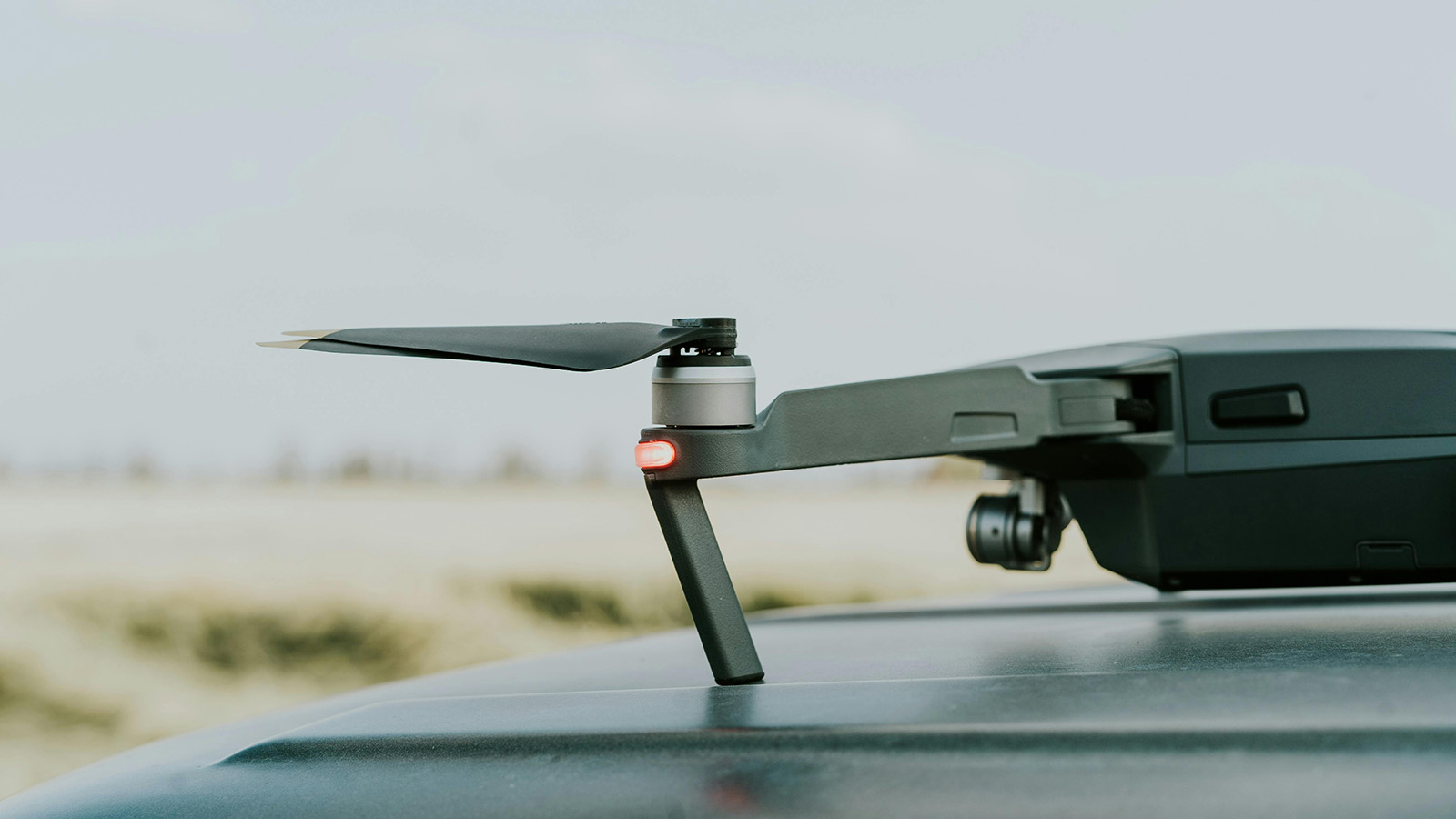
There is a moment that experienced multi-aircraft operators tend to describe in similar terms. You are running three aircraft across a search area. Everything is going fine. And then two things happen at once: pilot two calls out a possible point of interest on the radio while pilot one’s battery alert fires on your screen. You look at the battery alert. When you look back up, the radio exchange with pilot two has moved on without you, and you are not sure whether they got a direction or whether they are still circling.
That moment, playing out over and over during a long operation, is what cognitive overload in multi-aircraft operations actually feels like. It is not catastrophic. It is a slow accumulation of small coordination gaps that degrade the quality of the operation in ways that are hard to attribute to any single failure.
This is the problem that multi-drone fleet management software is built to solve. Not through automation that removes pilots from the loop, but through coordination infrastructure that reduces the communication overhead between pilots, commanders, and field teams to a manageable level.
Why Multi-Aircraft Coordination Is Hard
The difficulty of coordinating multiple aircraft simultaneously is not a training problem. It is a cognitive architecture problem. The human attention system is not designed for simultaneous monitoring of multiple independent systems, each generating its own stream of status information, alerts, and decisions.
Research into multi-UAS operator workload consistently shows that cognitive load scales faster than linearly with aircraft count. Going from one aircraft to two does not simply double the monitoring burden. It introduces the additional task of tracking the relationship between aircraft, managing airspace deconfliction mentally, and routing information between pilots who may not be able to communicate with each other directly.
Cognitive Load Research
Pilot Cognitive Load vs. Aircraft Count (Without C2 Support)
Cognitive load estimates based on NASA-TLX research into multi-UAS operator workload. C2 platform tooling can reduce effective load by 40 to 60 percent at three or more aircraft.
The practical consequence is that without coordination tooling, experienced pilots running three or more aircraft simultaneously are working at cognitive load levels where error rates increase meaningfully. Not because they are bad operators, but because the task has exceeded the design capacity of unaided human attention.
The answer is not to hire more pilots. It is to build coordination infrastructure that externalizes the tracking and routing work that currently lives inside operators’ heads.
The Three Core Coordination Problems
Multi-aircraft operations present three coordination challenges that stack on each other and become increasingly difficult to manage without purpose-built tooling.
The Tasking Problem
In a single-aircraft operation, the pilot is also the mission planner. They know where they are going, why, and what they are looking for. In a multi-aircraft operation, someone other than the pilots — usually a mission coordinator or incident commander — needs to direct multiple pilots toward different objectives simultaneously, adjust those objectives as the situation evolves, and maintain awareness of what each aircraft has and has not covered.
Without a C2 platform, this coordination happens through radio and verbal communication. The coordinator issues directions verbally, pilots acknowledge, and the coordinator tries to maintain a mental model of who is doing what across the operation. This works up to a point. That point is roughly two aircraft, two pilots, and a reasonably static operational picture.
Add a third aircraft, a dynamic situation that requires mid-mission retasking, or pilots who are out of direct radio range of the coordinator, and the verbal model starts breaking down. Tasks get acknowledged but not executed. Coverage gaps appear because no one has a shared record of what has been assigned and completed. Retasking one pilot creates a cascade of adjustments that the coordinator cannot keep up with while also monitoring aircraft statuses.
Mission Flow
How Tasking Flows in a C2-Managed Multi-Aircraft Operation
A C2 platform solves the tasking problem by creating a shared digital record of what has been assigned to whom, what has been completed, and what the current operational picture looks like. The coordinator issues tasks through the platform rather than by radio, pilots receive and acknowledge tasks in the same interface, and the system maintains the state record that the coordinator was previously trying to hold in their head.
The Handoff Problem
Multi-aircraft operations require aircraft to rotate in and out of the operational area throughout a mission. Battery swaps, payload changes, pilot rotations, and dynamic priority shifts all require aircraft to leave their current task and transition to a new one. Each of those transitions is a coordination event with real potential for things to fall through the gaps.
The most common failure mode is coverage gaps created by handoffs. Aircraft A is covering a grid sector. Its battery approaches the warning threshold and it returns to base. During the time between A landing and the replacement aircraft reaching the sector, that area has no coverage. If the coordinator does not actively track and direct the gap closure, it persists without anyone noticing.
Coordination Scenarios
Handoff and Tasking Scenarios: Manual vs. C2-Managed
Pilot verbally announces RTH on radio, commander manually tracks coverage gap, next pilot self-coordinates
Platform alerts commander of RTH initiation, auto-flags coverage gap on map, queues next tasking for returning aircraft
Commander radios pilot, pilot acknowledges verbally, abandons current task without logging completion status
Commander issues retask in platform, pilot receives visual notification, task status updates automatically, log records change
Briefing by radio or in person, pilot studies paper map, no live operational picture until airborne
Pilot accesses live common operating picture before launch, sees all active aircraft and current tasking state
External pilot operates independently, no shared picture, deconfliction is entirely verbal
External pilot invited to shared operational view, aircraft appears on common picture, tasks assignable through same interface
A C2 platform with fleet telemetry integration catches this automatically. When an aircraft initiates return-to-home, the platform can flag the coverage gap on the mission map, alert the coordinator, and surface the next available aircraft for tasking to close the gap. The handoff becomes a managed process rather than an improvised one.
The Communications Problem
In a well-run multi-aircraft operation, information flows in multiple directions simultaneously. Pilots are reporting observations upward to the coordinator. The coordinator is issuing guidance downward to pilots. The incident commander is receiving operational updates from the coordinator. Field teams are receiving actionable information from drone observations. And all of this is happening at the same time.
Radio-based coordination handles one information flow at a time. When multiple flows need to happen simultaneously, they queue up and some of them get delayed, truncated, or dropped. The pilot who observes something significant and tries to report it while the coordinator is tasking another aircraft either waits and risks the observation going stale, or interrupts and risks the tasking exchange being incomplete.
A C2 platform with communications integration creates separate channels for different information flows that can operate simultaneously without competing for the same radio channel. Tasking flows through the platform interface. Telemetry flows directly to the coordinator’s dashboard. Observations can be flagged and logged digitally for commander review without requiring a voice radio exchange.
Airspace Deconfliction at Scale
Beyond coordination, multi-aircraft operations require active management of airspace to prevent conflict between aircraft operating in proximity. When each pilot is operating their own GCS in isolation, airspace deconfliction is handled by pilots maintaining awareness of each other’s position through radio calls and their own situational awareness. This is workable in low-density operations with clear horizontal separation between aircraft.
It becomes insufficient when aircraft are operating in the same general area at different altitudes, when visibility is limited, or when dynamic retasking moves aircraft into proximity without adequate coordination time. A C2 platform that maintains live position data for all aircraft and can surface proximity alerts gives pilots and coordinators the early warning they need to deconflict before separation becomes a safety issue.
The common operating picture is the key tool here. When every pilot and the coordinator can see every aircraft’s position on a shared map in real time, spatial awareness of the overall operational picture is maintained at the system level rather than depending on each individual pilot to construct and maintain their own mental model.
Scaling Up: Mutual Aid and Multi-Agency Operations
The coordination challenges of multi-aircraft operations multiply significantly when they cross organizational boundaries. A large-scale SAR deployment or disaster response may involve aircraft from multiple agencies operating under a unified incident command structure. Each agency brings its own aircraft, its own pilots, and potentially its own operational software.
Without a shared C2 platform, mutual aid aircraft essentially operate as independent units that must deconflict through voice radio and coordinate through the incident command structure rather than through direct information sharing. The lag between a mutual aid pilot observing something and that information reaching the unified command can be measured in minutes rather than seconds.
A C2 platform that supports multi-agency access lets mutual aid units participate in the shared operational picture without requiring them to abandon their own software. They can see the common map, receive tasking from the unified command, and contribute their aircraft’s telemetry and observations to the shared information environment. The coordination overhead of multi-agency operations drops significantly because the information infrastructure is shared rather than parallel.
Putting the Pieces Together
The cumulative effect of solving the tasking, handoff, and communications problems through a C2 platform is that multi-aircraft operations become genuinely scalable. Not infinitely scalable, but scalable to the point where a well-equipped coordinator can manage five or more aircraft with a cognitive load comparable to what a well-equipped pilot can manage with two aircraft today.
That shift in operational capacity is meaningful. It means that agencies with limited personnel can get more operational coverage from their aircraft. It means that large incidents can be covered by coordinated fleets rather than loosely coordinated individual aircraft. And it means that the quality of information flowing to commanders improves because the coordination infrastructure maintains a coherent operational picture rather than leaving coordinators to assemble it from radio reports.
For the broader context of how fleet coordination fits into a complete C2 platform, the complete guide to UAS C2 platforms covers the full capability landscape. For the public safety evaluation angle, our buyer’s guide covers how to assess multi-aircraft support. And for the situational awareness layer that makes fleet coordination possible, the real-time SA guide covers the common operating picture in depth.
We’re building TacLink C2 with fleet coordination as a core capability — shared tasking, real-time handoff management, and a common operating picture that scales from two aircraft to ten. If you’re running multi-drone operations, join the early access waitlist.
— Related
Keep reading
Written by
TacLink C2 Team
TacLink C2 Team builds a modern desktop ground control station for independent and commercial drone pilots. Writing here covers mission planning, multi-drone operations, airspace, and the software that keeps serious UAS programs running.