— Article
Drone-in-a-Box: How Autonomous Perimeter Security Works
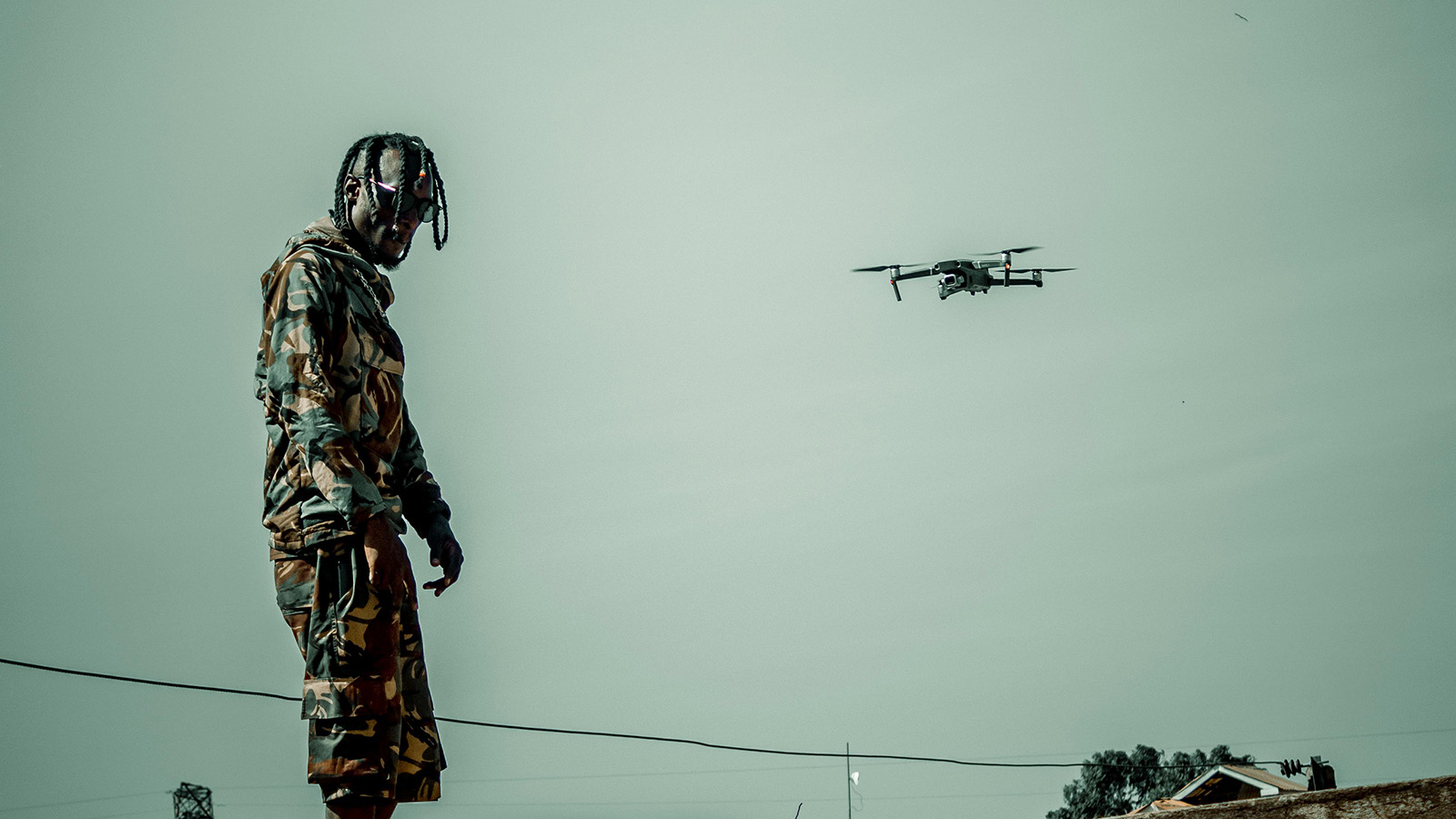
For most of modern history, securing a perimeter meant the same three things: guns, gates, and guards. A fence to slow intruders down, a camera to watch a fixed slice of ground, and a human being to walk the line and respond when something went wrong. That model has held for decades, but it is now buckling under its own limitations. Fences don’t move. Cameras have blind spots. And guards get tired, quit, or simply can’t run across 500 acres of industrial property fast enough to matter.
Into that gap has flown a new category of physical security: the autonomous “Drone-in-a-Box” (DiaB) system. These are self-contained robotic stations that house a drone, charge it, shelter it from the weather, and launch it automatically the moment an alarm trips: no pilot, no patrol car, no waiting. The drone flies straight to the trouble, streams live high-definition and thermal video back to a control room, and returns to its box to recharge for the next mission. It is, in effect, an automated first responder that can be airborne in seconds.
This is not a futuristic concept anymore. It is being deployed at power utilities, ports, oil fields, military bases, prisons, and stadiums right now, and a long-awaited shift in U.S. aviation regulation is about to pour fuel on the fire. Here is how the technology works, where it came from, what the data says, and why the same drones that defend a perimeter have also become one of its greatest threats.
From explosive balloons to robotic sentries
The idea of sending an unmanned aircraft to do a job too dangerous or tedious for a person is older than powered flight itself: from explosive-laden Austrian balloons launched over Venice in 1849, to the radio-controlled “Aerial Target” and “Kettering Bug” of the First World War, to the 1930s British target aircraft, the DH.82B Queen Bee, that gave us the word drone. By the Vietnam War, unmanned aircraft were flying reconnaissance at scale. But for more than a century, the throughline was the same: use the air to reach what people on the ground cannot.
The specific concept behind the modern Drone-in-a-Box, an aircraft that deploys from and returns to a self-contained, automated shelter, has roots in late-1960s military signals-intelligence programs designed to be packed up, shipped, and redeployed cheaply. But the technology stayed locked inside defense establishments for decades. What finally democratized it was the smartphone revolution: by the early 2010s, miniaturized sensors, high-density lithium-polymer batteries, and cheap GPS chips made small drones a consumer product. Hobbyist quadcopters came first; the realization that the same hardware could perform automated industrial inspection and security followed close behind.
A handful of startups saw it early. Percepto was founded in Tel Aviv in 2014 to push drones away from manual piloting and toward fully autonomous industrial monitoring. Easy Aerial emerged around 2015 with a focus on rugged, military-grade perimeter systems. Within a few years, the abstract promise of autonomous aerial security would be tested in the real world, sometimes spectacularly.
The moments that changed everything
A few milestones turned drone-based security from a pitch deck into an operational reality.
The year 2018 delivered a brutal lesson in why this matters. Over several days in December, repeated unauthorized drone sightings forced London’s Gatwick Airport to shut down, stranding well over a hundred thousand passengers and exposing how helpless conventional security, fences, guards, fixed cameras, is against a threat that simply flies over the top of it. The Gatwick incident became a global wake-up call, accelerating investment in both drone-based defenses and the counter-drone systems built to stop them.
In December 2020, the U.S. Air Force validated the technology at the highest level. The 60th Air Mobility Wing and 60th Security Forces Squadron at Travis Air Force Base, working with Easy Aerial over a roughly two-year development program, deployed what was billed as the first automated drone-based monitoring and perimeter security system on a U.S. Air Force installation. The Smart Air Force Monitoring System (SAFMS) could launch automatically when a fence or fire alarm tripped, fly to the trigger location, stream HD and thermal video, then return to its base station to recharge, proving that off-the-shelf DiaB systems were ready for serious security work.
Then came scale. In April 2022, Percepto and Florida Power & Light announced what both companies called the largest commercial autonomous drone project in the world: an initial deployment of 13 Drone-in-a-Box systems around West Palm Beach, with plans to grow to hundreds of units monitoring substations and distribution grids across the state. It was the first time autonomous drones were used at this scale within an urban setting for infrastructure inspection, and it demonstrated that a single command center could oversee a fleet spread across a vast geography.
Regulators moved next. In September 2023, the FAA granted Airobotics, a subsidiary of Ondas Holdings, an Airworthiness Type Certification for its Optimus-1EX system. This is worth stating precisely, because it is often overstated: the Optimus-1EX was the first drone-in-a-box system to earn the FAA’s highest tier of airworthiness certification, and the second uncrewed aircraft of any kind to do so. (It was not, as is sometimes claimed, the first uncrewed aircraft in the world to be type-certified.) Even with that caveat, it was a landmark: the kind of design approval traditionally reserved for crewed aircraft, clearing a major hurdle for routine flights over populated areas.
The biggest shift of all is still unfolding, and it is regulatory. We’ll come back to it.
What’s actually inside the box
A modern Drone-in-a-Box system is not just a camera with propellers. It’s a tightly integrated package of robotics, edge computing, wireless networking, and machine learning, and it breaks down into four parts.
The docking station is the self-sufficient hub, sometimes called a “hive” or “nest.” Built to survive years outdoors, high-end stations carry ingress-protection ratings (commonly around IP54 to IP55) that resist dust and water, and many include climate control to keep the drone’s batteries within a safe temperature band across extreme heat and cold. Landing a drone back into a box, though, is harder than it sounds: standard GPS is accurate only to a few meters, which is useless when the charging contacts need to align within centimeters. Stations solve this with Real-Time Kinematic (RTK) positioning or vision-based guidance for centimeter-level precision on the final descent, often backed up by mechanical arms that physically nudge the landing gear into place. Recharging happens through contact pads or wireless induction; the highest-throughput systems skip charging entirely and use a robotic arm to swap a depleted battery for a fresh one in minutes, enabling near-continuous flight.
The aircraft and its sensors are where the security value lives. Tactical monitoring drones are usually multirotor or hybrid vertical-takeoff designs built for reliability in wind and weather. The payload is what matters: high-resolution zoom cameras that can read a license plate from a distance without tipping off an intruder, and radiometric thermal sensors that see heat signatures through darkness, smoke, and light foliage. Some industrial platforms add specialized payloads, optical gas-imaging cameras that spot invisible leaks, for example, letting a single flight handle both security and inspection.
The artificial intelligence is what removes the human pilot from the loop. Fleet-management software lets operators draw geofenced boundaries and no-fly zones, schedule routine patrols, and route the drone automatically to an alarm. Onboard, the drone uses obstacle-avoidance sensors to navigate around cranes, structures, and other hazards. The most consequential leap is in computer vision: the AI analyzes the live feed in real time and learns to tell the difference between a deer wandering near a fence and a person climbing it, flagging genuine threats while ignoring the wind-blown debris that triggers false alarms on traditional systems.
System integration ties it all together. Drones rarely work alone; they’re the rapid-response arm of a larger “blended” security stack. Ground-based perimeter radar or fence sensors detect an intrusion and feed precise coordinates to the docking station, which launches the drone automatically, often within seconds. Throughout the flight, video and telemetry stream back to a central operations center over 4G/5G cellular, typically protected with strong encryption to keep hostile actors from intercepting it. The result is eyes on a target far faster than any guard could drive there.
The less visible, but arguably more consequential, shift is happening at the ground control station (GCS), the software brain that orchestrates all of this. As fleets grow from a single box at one substation toward the statewide, hundreds-of-units deployments that Part 108 is meant to enable, the GCS is migrating away from a desktop application a technician runs on-site and toward tiered, cloud-hosted platforms that supervise many docks at once from a central operations center. That backend has to do hard things in real time: ingest concurrent telemetry from dozens of aircraft, relay low-latency video back to remote operators, and crunch each flight’s payload data fast enough to be actionable. Increasingly, the hardware underneath is interchangeable while this software layer is not: vendors like FlytBase pitch a deliberately hardware-agnostic operating system that can manage docks from different manufacturers, even as the high-end physical platforms (Percepto, Airobotics, DJI’s Dock line) trend toward proprietary, tightly integrated, and in some cases type-certified designs. In other words, the durable competitive moat in this market is shifting from the airframe to the orchestration software.
The numbers behind the boom
The money flowing into this space tells the story of an industry crossing from experimental to essential. It’s worth treating the figures below as what they are, projections from named market-research firms, each with its own methodology, but the direction they all point is unmistakable.
According to Mordor Intelligence, the tactical UAV market is forecast to grow from roughly $7 billion in 2026 to around $12.7 billion by 2031. Fortune Business Insights projects the broader UAV market climbing from about $41 billion in 2025 to more than $160 billion by 2034. North America currently leads the field, driven heavily by U.S. defense spending and a cluster of aerospace contractors, while the Asia-Pacific region is the fastest-growing, fueled by border-security demand.
The most striking number, though, is the one that captures the paradox at the heart of this technology. The counter-drone market, the systems built to detect and stop rogue UAVs, is projected by Market.us to explode at roughly a 28% compound annual growth rate, reaching tens of billions of dollars within the decade. In other words, the same trend making drones the ultimate security tool is simultaneously making them the fastest-growing threat to critical infrastructure.
On the return-on-investment side, vendors and security firms report compelling operational gains. Industry figures cited by drone-security providers point to security operating-cost reductions of up to 50% when robotics augment or replace human patrols, increases in raw patrol volume on the order of 100% to 400%, and meaningful drops in security incidents, in the range of 30% to 40%, when facilities adopt a blended human-plus-drone model. These come from interested parties rather than independent auditors, so they’re best read as directional rather than gospel, but they explain the underlying business logic: when a security chief can show lower staffing costs and far more coverage and fewer incidents, the capital outlay for a drone network amortizes quickly.
The players shaping the field
The ecosystem splits roughly into hardware makers, software platforms, service providers, and regulators.
On the hardware side, Percepto remains the most prominent pioneer in autonomous industrial DiaB, known for durability testing that includes withstanding hurricane-force winds and for pushing the regulatory envelope on automated beyond-line-of-sight operations. Asylon Robotics stands out for combining aerial drones with ground-based robotic “dogs” into a unified, around-the-clock robotic security operations center, serving high-profile clients including U.S. Air Force logistics sites. Sunflower Labs targets commercial and high-value residential properties with a fast-deploying “Bee” drone and “Hive” base station. Easy Aerial is deeply embedded in government, military, and public-safety work, including the landmark Travis AFB system. And European maker Acecore Technologies builds heavy-lift, weather-hardened airframes for demanding endurance missions.
On the software side, FlytBase provides a hardware-agnostic fleet operating system that connects different drones and docks to a central command center, handling alarm integration, geofencing, and mission scheduling. Among service providers, firms like Titan Protection illustrate the “blended security” model, pairing autonomous drones with human officers and remote guarding rather than treating the two as competitors.
And then there’s the regulator that effectively sets the industry’s speed limit: the Federal Aviation Administration.
The regulatory hinge: FAA Part 108
For years, the single biggest obstacle to scaling drone security wasn’t technology; it was law. To fly a drone Beyond Visual Line of Sight (BVLOS), which is fundamentally what remote, autonomous DiaB operation requires, an operator had to secure a customized waiver from the FAA under Part 107. Each waiver was painstaking and individual, which made deploying hundreds of drones across a state nearly impossible.
That bottleneck is now being addressed. On August 7, 2025, the FAA published its Notice of Proposed Rulemaking for Part 108, a sprawling, 700-plus-page framework intended to normalize routine BVLOS operations by certifying the operating organization and its systems rather than issuing one-off pilot waivers, while folding flights into a managed traffic system. A 60-day public comment period closed in October 2025, drawing more than 3,000 responses, and a final rule has been widely anticipated for sometime in 2026.
The reaction has been a mix of celebration and sharp criticism. Supporters argue Part 108 is exactly the clear, performance-based standard the industry needs to scale. Critics, including major drone-industry associations, have raised two recurring objections. First, the proposal initially offered no clean “grandfathering” path for operators already flying safely under Part 107 waivers, potentially forcing them to re-certify under a new and possibly costlier regime. Second, the framework’s heavy emphasis on highly automated operation with simplified interfaces was read by some as effectively sidelining traditional hands-on “pilot-in-the-loop” control, raising the barrier to entry and, critics worry, removing a human safety net during an in-flight emergency. How the FAA resolves these tensions in the final rule will shape the industry for the next decade.
The hard problems nobody has solved
For all its momentum, autonomous drone security carries genuine controversies that the marketing rarely dwells on.
The counter-drone paradox is the sharpest. As drones become the best way to secure a perimeter, they also become the most asymmetric way to attack one: a single rogue UAV can shut down an airport (as Gatwick proved), drop contraband into a prison yard, or carry a payload over any fence ever built. Facilities can spend heavily on counter-drone systems to detect an incoming threat. But here’s the trap: in the U.S., while federal defense and security agencies have legal authority to mitigate rogue drones, jamming, capturing, or destroying them, private commercial entities generally do not. Jamming radio frequencies or interfering with aircraft in navigable airspace is broadly prohibited. So a data center or power plant can detect a hostile drone breaching its perimeter with perfect clarity and, legally, do almost nothing but call law enforcement, who frequently lack the tools or the response time to neutralize the threat in time.
Privacy and trespass law create a second minefield. The FAA controls navigable airspace, but states regulate low-altitude privacy, and the rules are a patchwork. Nevada’s drone statute, for example, can make it a civil trespass to fly over someone’s property below 250 feet without consent under certain conditions, with the possibility of enhanced damages. A security drone that automatically launches to investigate a breach and briefly clips the airspace over an adjacent home, flying low to keep a thermal lock on a target, can expose its operator to real liability. Operators say these inconsistent state rules cripple dynamic response; privacy advocates counter that they’re essential guardrails against pervasive corporate surveillance.
Cybersecurity rounds out the list, and it splits into two distinct layers: the communication link and the AI itself. Start with the link. Many drones, particularly those built on open autopilot stacks like PX4 and ArduPilot, communicate with their ground station using MAVLink, a lightweight protocol that by default sends its messages unencrypted. MAVLink 2.0 added optional packet signing for authentication, but still no native encryption, which leaves the channel exposed to eavesdropping, GPS spoofing, replay attacks, and command injection unless the operator wraps it in secure tunneling, a VPN, or TLS over the cellular link. High-end industrial systems often run proprietary or hardened links rather than raw MAVLink, but across the broader fleet the principle holds: a security drone whose telemetry and command channel aren’t properly secured is a drone an adversary may be able to watch, hijack, or feed false data, no clever AI trick required.
The second layer is the AI itself, and this is where the most novel risk lives. Because autonomous drones lean on computer vision and neural networks to track and navigate, they’re vulnerable to attacks that target the model’s perception rather than its plumbing. In February 2026, researchers at the University of California, Irvine unveiled a technique they call FlyTrap: a specially crafted visual pattern, printed, in their demo, on an ordinary umbrella, that fools a drone’s tracking algorithm into miscalculating distance and steadily closing in until it can be netted or crashed. The team demonstrated it against consumer tracking features on drones like the DJI Mini 4 Pro, not against hardened industrial units, but they were explicit that the same weakness exists wherever camera-based autonomous tracking is deployed, including security and border-patrol roles. The lesson is uncomfortable: removing the human pilot eliminates human error, but it replaces that error with algorithmic blind spots a clever adversary can exploit without firing a shot.
Where this is headed
Over the next one to five years, the trajectory is fairly clear. If Part 108 is finalized and implemented, the scaling barrier largely evaporates, and utilities and energy companies will graduate from running single drones at single sites to managing hundreds of interconnected systems from one control room: true statewide autonomous monitoring.
Expect the siloed aerial drone to give way to multi-domain robotic teams, where a ground radar detects an anomaly, an aerial drone confirms it from above, and a ground robot approaches to investigate or deter, keeping human guards out of dangerous encounters entirely. The same playbook is crossing into public safety through Drone as First Responder programs, where docking stations stationed across a city give police real-time situational awareness and faster response to emergencies. And a quieter frontier is opening indoors: drones that patrol warehouses and data centers without GPS, navigating by onboard sensors while doubling as inventory-tracking and loss-prevention tools, free from the airspace rules that govern outdoor flight.
The fence, the camera, and the guard aren’t disappearing. But for the first time, they’re being joined by something that can see in three dimensions, think about what it’s seeing, and get to the trouble before a human ever could. The perimeter, in other words, finally has eyes that can move.
Sources
- Normalizing Unmanned Aircraft Systems Beyond Visual Line of Sight Operations (Part 108 NPRM) (FAA / Federal Register)
- FAA’s proposed Part 108 BVLOS Rule: Industry response and key concerns (DLA Piper)
- UC Irvine researchers expose critical security vulnerability in autonomous drones (FlyTrap) (UC Irvine News)
- Airobotics’ Optimus drone receives FAA Airworthiness Type Certification (The Robot Report)
- A Brief History of Drones (Imperial War Museums)
- Unmanned Aerial Systems: A Historical Perspective (Army University Press)
- Travis AFB and Easy Aerial partner for autonomous drone-based security operations (Military Aerospace & Electronics)
- Percepto unveils world’s largest autonomous commercial drone deployment at leading US electric utility (Percepto via PR Newswire)
- A Novel Cipher for Enhancing MAVLink Security (arXiv, peer-reviewed analysis confirming MAVLink transmits unencrypted by default)
- Tactical UAV Market Size, Share & Report Analysis (Mordor Intelligence)
- Unmanned Aerial Vehicle (UAV) Market Size, Share, Report (Fortune Business Insights)
— Related
Keep reading

Written by
TacLink C2 Team
TacLink C2 Team builds a modern desktop ground control station for independent and commercial drone pilots. Writing here covers mission planning, multi-drone operations, airspace, and the software that keeps serious UAS programs running.