— Article
Edge AI Drones: Why Onboard Beats Cloud Inference
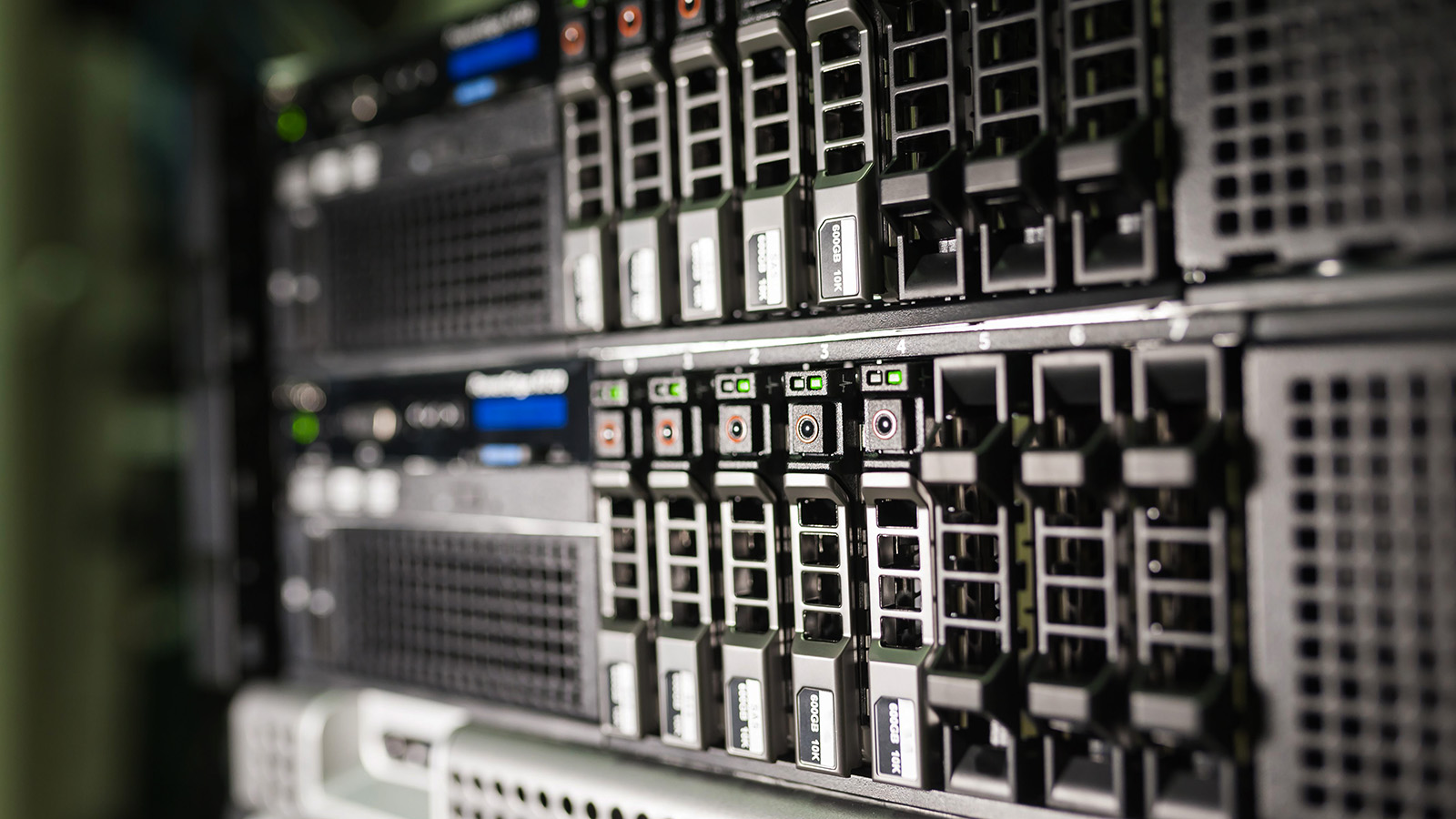
For most of the last decade, drones were basically flying cameras with a really long extension cord. They captured video, beamed it back over a radio link, and let a server somewhere else do the actual thinking. That arrangement worked fine when the link was strong and nobody was trying to jam it. It falls apart the moment either of those things stops being true.
That’s the short version of why the entire industry is rethinking where a drone’s intelligence should live. The decision sounds technical, edge inference versus cloud inference, but it shapes everything downstream: how fast a drone reacts, how far it can fly, what it costs to run a fleet, and whether it keeps working when the network goes dark. If you’re evaluating drone platforms for inspections, public safety, agriculture, or defense, this is the architecture question that quietly determines whether the thing actually does what you need it to.
Let’s break down what’s happening, why it matters, and where each approach earns its keep.
What “edge” and “cloud” actually mean for a drone
Strip away the jargon and there are really only two questions: where does the AI model run, and what gets sent over the air?
In a cloud AI setup, the drone is a collector. It films the scene, compresses that footage with a standard video codec like H.264 or H.265, and streams it over a radio or cellular link to a data center. Banks of GPUs decode the video, run the detection models, and send the answer, “vehicle at these coordinates,” “crack on the third pylon,” “anomaly detected,” back to the operator. The drone itself doesn’t understand anything it’s looking at. It just relays pixels.
In an edge AI setup, the model runs on the drone. Onboard chips, usually a system-on-chip with a dedicated neural processing unit or a small embedded GPU, analyze the camera feed in real time, right where it’s captured. Instead of streaming heavy video, the drone transmits a lightweight result: a bounding box, a coordinate, a short alert clip. The heavy lifting happens at the source.
A useful way to picture the difference is your own nervous system. When you touch a hot stove, your hand pulls back before your brain even registers pain: that’s a spinal reflex, handled locally because waiting for the brain would mean a burn. Edge AI is that reflex arc. Cloud AI is the cerebral cortex: slower, but where deep memory lives and long-term patterns get worked out. A well-designed drone needs both, which is a point we’ll come back to.
The case for moving the brain onboard
Three pressures have pushed edge computing from a nice-to-have into a requirement: latency, bandwidth, and power. They reinforce each other, and the cloud struggles with all three at once.
Latency: the difference between dodging and crashing
Round-trip cloud inference, the time for video to travel up, get processed, and for an instruction to come back, often lands in the hundreds of milliseconds once you account for transmission, queuing, and network variability, though it swings widely with network architecture: a well-tuned private network can be much faster, a congested public pipeline can blow past a full second. Either way, that’s fine for reviewing footage after a flight. It’s a disaster for a drone moving at 35 miles per hour that needs to dodge a power line right now.
Edge inference collapses that delay dramatically, often to 20 to 100 milliseconds, because the data never leaves the aircraft. For anything reflexive, obstacle avoidance, subject tracking, threat response, that gap is the whole ballgame. You can’t outsource a reflex to a server three states away and hope the network cooperates.
It’s worth heading off a fair objection here: carriers pitch 5G Multi-Access Edge Computing (MEC) as the fix, moving the “cloud” down to the cell tower so the round trip shrinks. It genuinely helps, and for some workloads it’s a real middle ground. But it still can’t beat compute that physically lives on the drone: there’s always a radio hop and a network in the path, and that network can still be congested, jammed, or simply absent over a remote pipeline. MEC narrows the gap; onboard processing removes it.
Bandwidth: the math that breaks at scale
A single compressed 1080p video stream eats roughly 2 to 12 Mbps of continuous bandwidth, depending on how aggressively it’s compressed. One drone, no problem. Now picture a swarm. Fifty drones each streaming HD can saturate a typical cellular cell entirely, leaving no room for anyone else and no headroom for the system to grow.
Edge AI sidesteps most of this. A metadata-driven deployment that ships only bounding boxes, coordinates, and the occasional alert frame can drop well under 1 Mbps per camera, often a reduction of more than 90% compared with continuous video streaming. Your mileage varies with what you send; add live thumbnails or frequent video clips and the number climbs. But the direction is dramatic, and it means a low-bandwidth, long-range radio link is often enough to run command, control, and reporting, without paying for a fat data pipe or cloud egress fees that climb with every camera.
Power: every watt is borrowed from flight time
A drone can’t plug into the wall, so power budgets are unforgiving. Continuous high-power radio transmission is one of the hungrier things a UAV does, so cutting it down, analyzing onboard and sending lightweight results instead of full video, removes one real draw on the system. It’s worth being precise about the mechanism, though: flight time is dominated by propulsion, and transmission isn’t always the biggest consumer onboard. The honest claim is that reducing continuous video transmission improves overall system efficiency and, in some deployments, contributes to longer endurance and range, not that it single-handedly extends flight time. Less radio chatter helps; it isn’t magic.
Here’s the disparity at a glance:
| Metric | Cloud AI | Edge AI |
|---|---|---|
| Round-trip inference latency | ~300 to 800 ms | ~20 to 100 ms |
| Bandwidth per camera | ~2 to 12 Mbps (full video) | Often well under 1 Mbps (metadata) |
| What gets transmitted | Compressed H.264/H.265 video | Bounding boxes, coordinates, alert clips |
| Behavior when the link drops | Blind, analysis stops | Keeps flying and reacting |
| Power profile | High (constant RF transmission) | Lower RF load, higher onboard compute draw |
| Best at | Fleet analytics, retraining, archive search | Real-time reflexes, autonomy, contested airspace |
Where the cloud still earns its place
It would be easy to read all that and conclude the cloud is dead weight. It isn’t. Pure edge has real limits, and pretending otherwise leads to bad system design.
Edge hardware lives under a constant constraint engineers shorthand as SWaP-C: Size, Weight, Power, and Cost. The most accurate deep learning models are also the most demanding, and a drone simply can’t carry the silicon, or the cooling, to run them at full tilt indefinitely. Push an embedded GPU hard enough and it hits its thermal limit, at which point it throttles: the chip deliberately slows itself down to avoid frying. In a data center you’d solve that with liquid cooling and effectively unlimited airflow. On a drone, both options are off the table: every gram of heat sink is a gram stolen from payload or flight time, and you’re relying on ambient air that might be 100°F on an asphalt rooftop in July. And here’s the part that doesn’t go away: silicon keeps getting more efficient every generation, but the physics of shedding heat from a small, weight-limited, sun-baked airframe is the ceiling everything else runs into. An unexpected drop in processing speed mid-flight isn’t just a performance hiccup, at 35 miles per hour it’s a safety problem.
The cloud has none of those limits. It’s where you do the things edge can’t:
- Fleet-wide analytics. Spotting that an electrical grid is slowly degrading, or catching an anomaly that only shows up across months of aggregated footage from hundreds of drones, requires pooling data centrally. No single drone can see that pattern.
- Training and retraining. Edge models are frozen in place once deployed. To make them smarter, you feed new data into centralized infrastructure, retrain, and push updated weights back to the fleet.
- Heavy generative and search workloads. Querying years of archived video, running large multimodal models, that’s cloud territory, and it’s not close.
So the honest framing isn’t “edge beats cloud.” It’s that they’re good at different jobs.
The architecture everyone’s actually converging on
Because neither extreme is complete, many enterprise, defense, and industrial deployments are converging on a hybrid architecture, and the most interesting version of it is split inference, sometimes called collaborative intelligence.
Here’s the clever bit. Instead of choosing between running the whole model on the drone or shipping raw video to the cloud, you cut the neural network in half. The drone runs the front-end layers locally, then compresses and transmits the intermediate features, the abstract mathematical representations those early layers produce, rather than the original pixels. The cloud picks up where the drone left off, running the final, heavy layers to finish the job.
This solves a few problems at once. Those feature tensors are far smaller than human-viewable video, so bandwidth stays low. And because raw imagery is never transmitted, split inference can substantially improve privacy and operational security: there’s no clean picture of the scene for a third party to intercept. It’s not a magic privacy shield, though: researchers have shown that intermediate neural features can sometimes be partially reverse-engineered back into recognizable images, so in sensitive applications the feature stream still needs protecting like any other data. One academic implementation at Carleton University split a fault-classification model between a drone and a ground station and added “trigger logic” so the drone only sent data when certain conditions were met, cutting total transmission by nearly half while still hitting 93.67% classification accuracy.
This approach is getting formal backing too. MPEG, the same standards body behind the video codecs in your phone, is developing a family of machine-oriented standards under the MPEG-AI umbrella (ISO/IEC 23888). Two efforts matter here: Video Coding for Machines, which optimizes an actual video stream for machine analysis rather than human eyes, and Feature Coding for Machines (FCM), which compresses neural features directly. Early FCM test models have shown bitrate reductions on the order of 85% compared to pixel-based baselines while preserving task accuracy. In plain terms: the industry is building a standard way to transmit “what the machine needs to know” instead of “what a human would want to watch,” and that quietly makes a lot of cloud-versus-edge tradeoffs disappear.
If you want the whole thing in one sentence, a common industry framing nails it: edge for the alert, cloud for the insight, and a thin pipe in between.
The platforms and chips driving this
A handful of companies are setting the pace, and it’s worth knowing who does what.
On the silicon side, NVIDIA is the gravitational center. Its Jetson line lets teams train models on big data-center GPUs and port them to edge hardware with minimal rework, which is a huge practical advantage. The flagship Jetson AGX Orin delivers up to 275 TOPS (trillion operations per second) with power configurable between roughly 15 and 60 watts, genuinely serious compute for something that fits in your hand. Lighter modules like the Orin Nano Super bring the same software stack down to a much smaller power envelope for aircraft that can’t spare the watts.
Qualcomm leans on its mobile heritage to chase the low-power, well-connected end of the market, pairing onboard AI with built-in 5G. A wave of specialist chipmakers, Hailo, Axelera, Ambarella, and others, compete hard on performance-per-watt, squeezing real deep-learning throughput into single-digit-watt budgets so SWaP-constrained drones don’t need heavy heat sinks. There’s also novel work in compute-in-memory architectures, which calculate directly inside the memory array to sidestep the energy cost of shuttling data back and forth, aimed squarely at running big models offline without draining the battery.
On the platform side, Skydio has done as much as anyone to prove out true onboard autonomy. Its enterprise flagship, the Skydio X10, runs a dual-processor setup pairing an NVIDIA Jetson Orin with a Qualcomm QRB5165 (a robotics chip derived from the Snapdragon 865). The company cites up to 85 trillion operations per second of local compute in an airframe under 4.7 pounds, with IP55 weather resistance, FLIR Boson+ thermal imaging, and a “NightSense” mode for navigating in zero light. The point of all that onboard horsepower is independence: the drone can keep flying, avoiding obstacles, and tracking subjects even with no connection to anything.
Auterion takes a different angle: it’s the operating system, not the airframe. Founded by Lorenz Meier, the engineer behind the widely used PX4/Pixhawk open-source flight stack, Auterion supplies the software and edge hardware that turn ordinary drones into coordinated, autonomous fleets. The approach got a very public stress test in 2025, when the company landed a $50 million Pentagon contract to deliver 33,000 AI-driven “strike kits” to Ukraine, by unit count one of the largest Western drone deals on record. Meier’s framing of the moment captured the industry mood: previously they’d shipped thousands of these systems, and now they were shipping tens of thousands, an unprecedented scale-up driven by the reality that jam-resistant, onboard autonomy is exactly what survives in a contested environment.
Then there’s DJI, still the global volume leader in commercial and consumer drones, with genuinely strong transmission technology. But data-privacy concerns and tightening federal rules have increasingly limited DJI’s access to U.S. government and public-sector procurement, and in December 2025 the company was added to the FCC’s Covered List, which blocks new models from gaining the FCC authorization needed for U.S. sale. DJI still has a wide footprint in commercial and many public-safety settings, but the regulatory squeeze on the federal side has become a major tailwind for U.S. and allied edge-AI hardware.
The friction nobody should gloss over
This shift isn’t frictionless, and a clear-eyed look at the tensions makes for better buying decisions.
The physics never fully cooperates. That accuracy-versus-power tradeoff is permanent. Engineers lean on tricks like quantization (running models at lower numerical precision) and knowledge distillation to cut power draw, but those savings can nibble at detection accuracy. There’s no free lunch, just a dial between mission reliability and flight time that someone has to set.
The regulation is a double-edged sword. In the U.S., procurement restrictions, Section 848 of the FY2020 NDAA, which originally barred the Department of Defense from buying drones with critical components from covered foreign countries, plus the American Security Drone Act in the FY2024 NDAA, which expanded the prohibition government-wide, are pushing public agencies and critical-infrastructure operators toward domestic, edge-native platforms. The logic is data sovereignty: sensitive visual and telemetry data shouldn’t traverse foreign-controlled servers. (Worth noting: NDAA compliance is a supply-chain procurement standard, not a full cybersecurity certification on its own; programs like Blue UAS layer the security testing on top.) Plenty of people argue that’s exactly right for a power utility or a federal site. But commercial operators counter that compliant drones often cost more and sometimes trail competitors on raw camera hardware, and that a real-estate photographer or a crop-mapping outfit doesn’t need military-grade isolation. Both sides have a point, and where you land depends entirely on what you’re protecting.
Pure edge has a strategic ceiling. Edge keeps a drone alive and reactive in the moment, but it can’t see the forest. Long-term, macro-scale pattern detection and continuous model improvement genuinely require centralized infrastructure. Anyone selling “edge-only” as a complete solution is selling you half a system.
The contested-airspace wrinkle
There’s one factor that increasingly overrides everything above in defense and critical-infrastructure work: what happens when someone is actively trying to break your link. The edge-versus-cloud debate stops being a tidy cost-and-latency tradeoff the moment electronic warfare enters the picture. A drone that depends on continuous connectivity for perception or navigation is only as reliable as its radio link, and in a contested RF environment that link can be jammed, spoofed, or denied outright. Ukraine has been the brutal proving ground: GPS-reliant, cloud-tethered drones get neutralized, while platforms that carry their intelligence onboard keep working. That’s the real reason onboard autonomy has become a priority for military and public-safety operators. In the environments they care about most, it’s the difference between a drone that finishes the mission and one that drops out the instant the spectrum gets ugly.
Where this is all heading
A few trends are worth watching over the next couple of years.
Transmitting human-viewable video purely for a machine to analyze is starting to look wasteful, and MPEG-FCM-style feature transmission is positioned to replace it across enterprise and defense use. Compute-in-memory chips should make it increasingly practical to run large models offline at very low wattage. Federated learning, where drones learn locally and share only model updates, never raw footage, lines up neatly with tightening privacy rules. And small vision-language models are starting to land on edge hardware, which points toward a near future where you simply tell a drone what to look for in plain language and it figures out the rest onboard, no cloud API in the loop.
The throughline is consistent: intelligence keeps migrating closer to the sensor.
So what should you actually do with this?
If you’re choosing a drone platform, skip the spec-sheet TOPS race and start with the operating reality. Will you fly where networks are weak, congested, or actively hostile? Edge autonomy stops being a luxury. Do you need millisecond reactions for safety or tracking? That has to live onboard. Are you running a fleet and trying to learn something across all of it over time? You’ll want a cloud tier doing the heavy analytical lifting.
For nearly everyone, the right answer isn’t one or the other: it’s a hybrid that puts the reflexes on the drone and the deep thinking in the cloud, with as thin a connection between them as you can manage. Match the architecture to the mission, and the technology stops being an abstract debate and starts being a competitive advantage.
Sources
- Edge AI vs. Cloud AI (IBM Think)
- Emerging Standards for Machine-to-Machine Video Coding (arXiv)
- Bandwidth-efficient Live Video Analytics for Drones via Edge Computing (Carnegie Mellon University, peer-reviewed)
- Split-Inference Project (Carleton University Honors Project Repository) (Carleton University, primary)
- Inception Spotlight: New Skydio 2 Drone Powered by NVIDIA Jetson (NVIDIA Developer Blog, primary)
- Skydio X10 Technical Specs (Skydio, primary)
- The history of Pixhawk (Auterion, primary)
- The future of defense is software-defined autonomy: our investment in Auterion (Bessemer Venture Partners)
- Ukraine to receive 33,000 AI strike kits for combat drones, FT (Ukrainska Pravda citing Financial Times)
- Edge AI Market Size & Share, Industry Analysis Report 2034 (Global Market Insights)
Working out which drone architecture fits your operation? Get in touch and we’ll help you map the right edge-cloud balance to your actual use case.
— Related
Keep reading
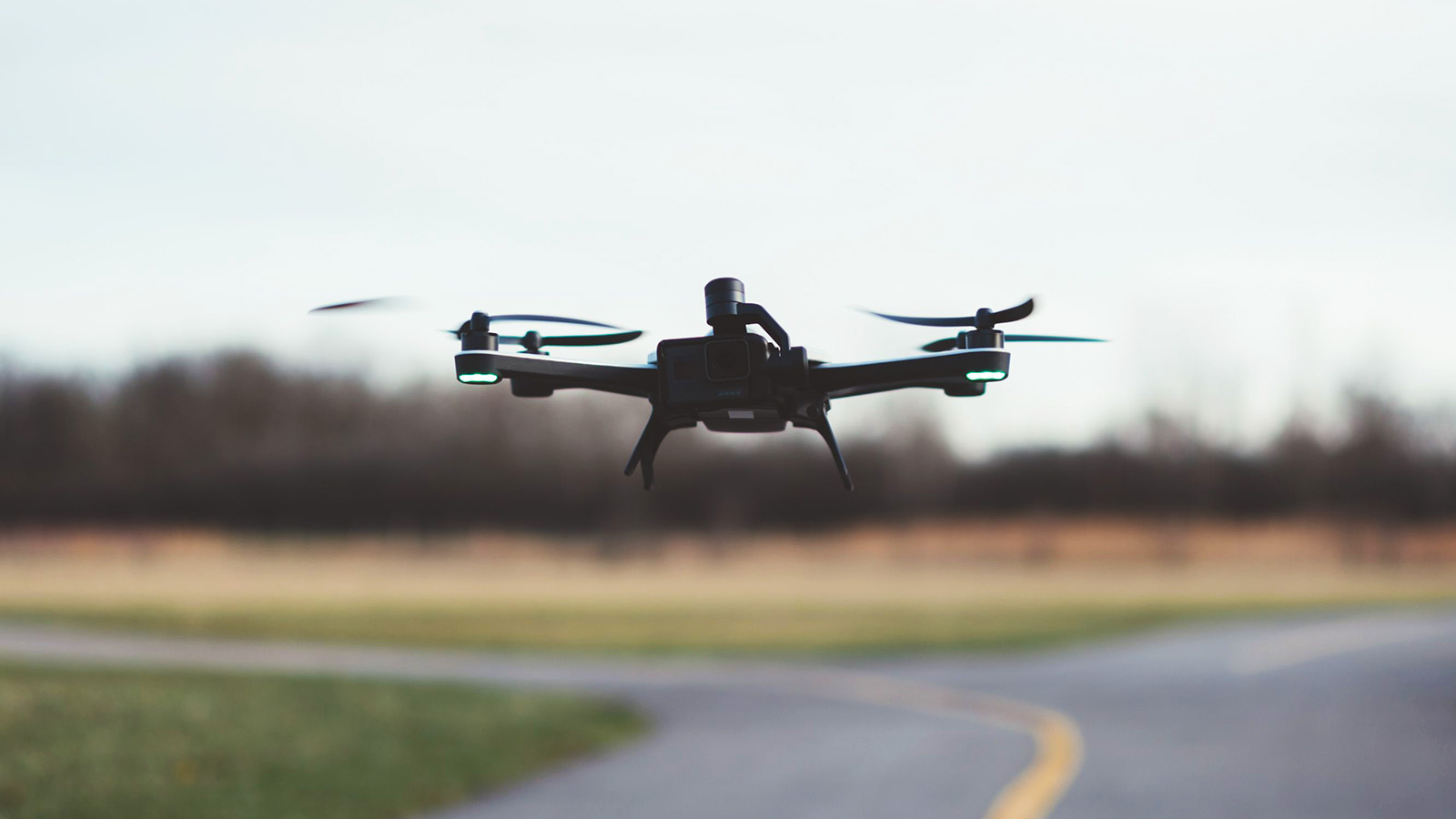


Written by
TacLink C2 Team
TacLink C2 Team builds a modern desktop ground control station for independent and commercial drone pilots. Writing here covers mission planning, multi-drone operations, airspace, and the software that keeps serious UAS programs running.