— Article
Drone Sensor Fusion: GPS-Denied Navigation Explained
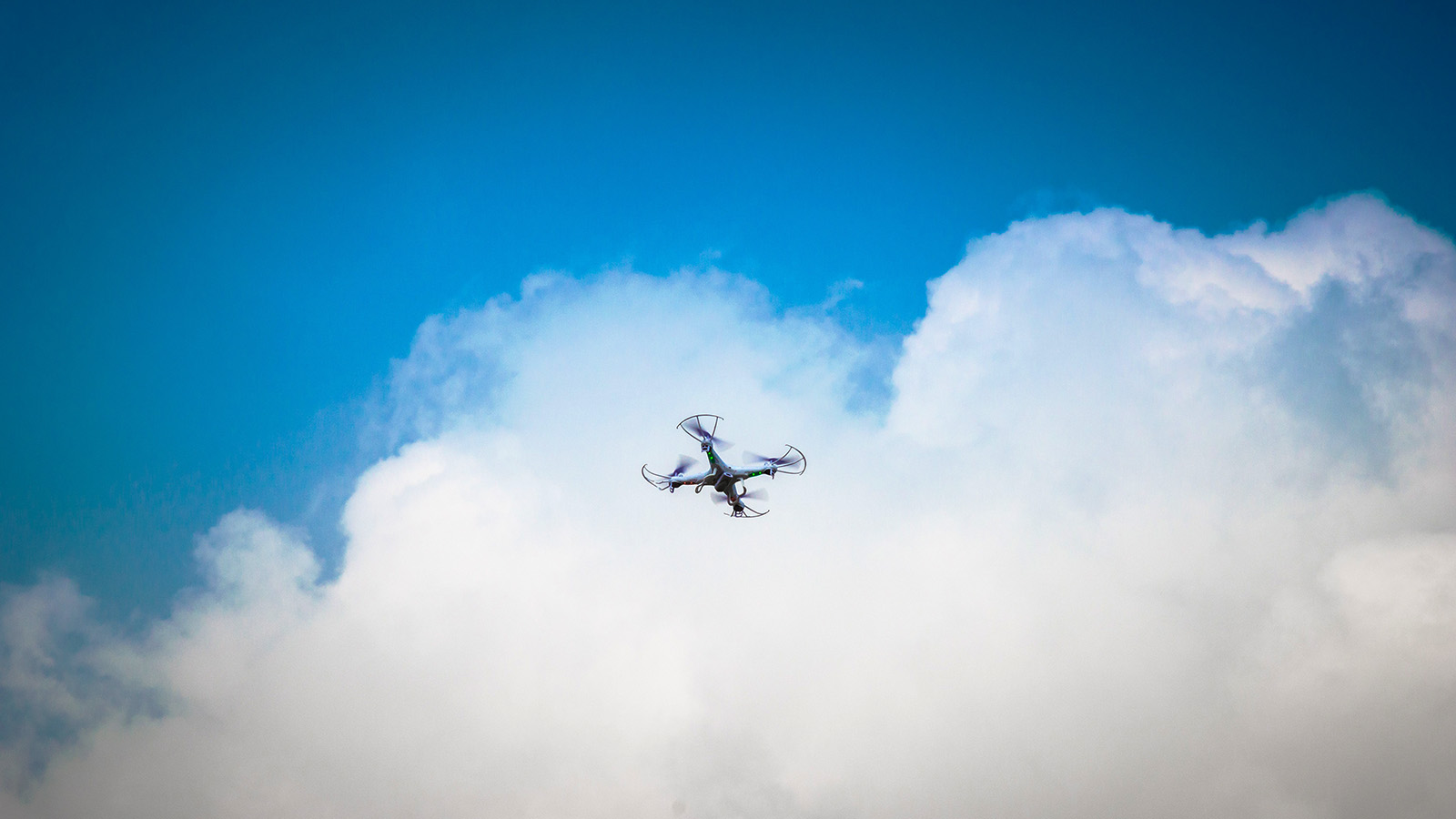
Ask any drone engineer what keeps them up at night and you’ll rarely hear “battery life” first. More often it’s a quieter problem: the moment a drone stops trusting its own position. GPS jamming and spoofing have moved from niche military capabilities into commercially accessible threats. Simple jammers are cheap and widely available online, while spoofing tools, though harder to source, are increasingly within reach of sophisticated actors. And the headlines now stretch well past the front lines: disrupted shipping in the Black Sea, ghost signals around major airports, delivery drones that suddenly think they’re a kilometer from where they actually are.
The technology that stops a drone from getting lost in those moments doesn’t have a flashy name. It’s called sensor fusion, and it’s arguably the most important software running on any modern aircraft that flies itself. If you build, buy, regulate, or simply rely on drones, it’s worth understanding what it does, because it’s the difference between an aircraft that keeps operating safely through interference and one that loses its navigation picture at the worst possible moment.
What sensor fusion actually is
Strip away the jargon and sensor fusion is a referee. A drone carries a handful of sensors that each have an opinion about where it is, how fast it’s moving, and which way it’s pointing. None of them is fully trustworthy. Sensor fusion is the math that listens to all of them at once, weighs each opinion by how reliable it is at that exact moment, and produces a single best guess that’s better than anything a lone sensor could manage.
The classic way to picture it is walking through thick fog. You’ve got two ways to stay on course. One is your inner ear, which feels every quick turn and stumble but slowly loses track of which way is “straight” the longer you walk. The other is a faint bell ringing from your destination, slow to react and easy to lose in the wind, but it never moves and never lies about where home is. Lean entirely on your inner ear and you’ll drift into a lazy curve without noticing. Lean entirely on the bell and you’ll trip over the rock right in front of you. Your brain blends the two: fast reflexes from the inner ear, long-term truth from the bell. That blending is sensor fusion, and on a drone the “inner ear” is the inertial sensors while the “bell” is GPS.
Why no single sensor can be trusted
Here’s the core problem fusion exists to solve. Every sensor is excellent at one thing and quietly terrible at another.
A gyroscope measures how fast the drone is rotating. Integrate that over time and you get orientation, but tiny, unavoidable measurement errors pile up the longer you keep adding them, so the estimate slowly drifts away from reality. Leave a gyroscope alone for a minute and it’ll happily tell you the horizon is somewhere it isn’t.
An accelerometer has the opposite personality. It can feel the pull of gravity, which gives it an absolute, drift-free sense of “down.” But it also feels every motor vibration, every gust, every aggressive bank turn, so its raw signal is far too jittery to fly on by itself.
GPS, when it’s working, gives you something neither inertial sensor can: an absolute fix on where you are on the planet. The catch is right there in “when it’s working.” Satellites can be blocked by buildings and terrain, drowned out by jammers, or more insidiously, faked by a spoofer feeding the drone counterfeit signals that walk it somewhere it never meant to go.
Fusion takes the gyroscope’s quick reflexes, the accelerometer’s rock-steady sense of gravity, and GPS’s absolute positioning, and stitches them into one estimate where each sensor covers for the others’ weaknesses. The whole really is more reliable than the sum of its parts. And as we covered in how drone GCS displays present situational awareness, the quality of that fused estimate is exactly what the operator sees on screen, so it carries through to every downstream decision.
The brains behind the blend: from simple filters to the Kalman family
The algorithm doing the stitching matters enormously, and there’s a clear ladder of sophistication.
At the bottom sits the complementary filter, cheap, simple, and good enough to keep a basic quadcopter hovering level. It just trusts the gyroscope for fast movements and the accelerometer for the long-term sense of down, with a bit of filtering to keep them in their lanes. It works, but it’s blind to how uncertain each sensor is at any given moment, which makes it a poor fit for anything more demanding than holding steady.
The serious work is done by the Kalman filter and its descendants. The Kalman filter, published by Rudolf Kálmán in 1960, was one of those rare ideas that arrived exactly when it was needed. Within a few years, engineers at MIT’s Instrumentation Laboratory had it running on the Apollo guidance computer, fusing radar, inertial platforms, and sextant star sightings to steer spacecraft toward the Moon on a computer with a tiny fraction of the power in a modern key fob. That lineage isn’t trivia. Modern drone navigation filters descend from the same estimation principles pioneered in Apollo-era guidance.
A Kalman filter runs a relentless two-step loop. First it predicts where the drone should be, based on a model of how it moves. Then, when a fresh measurement arrives, it corrects that prediction, deciding how much to trust the new data versus its own forecast based on how noisy each one is. Predict, correct, predict, correct, hundreds of times a second.
The plain Kalman filter assumes the world behaves in straight lines, and drones absolutely do not. So in practice almost everything flying today uses the Extended Kalman Filter (EKF), which handles the curves and rotations of real flight, and does so well even in fairly aggressive maneuvers. In the most strongly non-linear flight regimes, some developers reach for the Unscented Kalman Filter (UKF), which models non-linear motion more faithfully, though it carries a heavier processing load that not every small flight controller can spare. That trade-off (accuracy versus the compute budget on a tiny airframe) is a debate that genuinely divides the field.
The GPS-denied problem, and how engineers fight it
This is where sensor fusion stops being an interesting engineering topic and becomes a strategic one.
When GPS is denied, a drone falls back on its other senses. That usually starts with its inertial navigation system (INS), the gyroscopes and accelerometers, supplemented by other non-satellite techniques: dead reckoning from inertial data, vision-based navigation, terrain matching, and lidar-based localization. Engineers group all of this under the banner of resilient PNT (positioning, navigation, and timing). How well a drone holds up depends heavily on a design choice most people never see: how tightly the GPS receiver and the inertial system are wired together.
In a loosely coupled setup (the common, modular approach) the GPS receiver works out a full position on its own and hands that finished answer to the inertial filter. Simple and robust, but it has a hard floor: a GPS receiver needs at least four satellites to compute a position. Drop below four, in an urban canyon or under a forest canopy, and it produces nothing at all. The inertial system is left to drift unaided.
A tightly coupled system is cleverer. Instead of waiting for a finished position, it feeds the raw satellite measurements straight into one central filter. That means it can squeeze useful information out of just one, two, or three visible satellites, not enough for a fix on their own, but plenty to slow the drift. In contested or cluttered airspace, that’s a serious resilience advantage, which is why tactical and high-end commercial systems lean toward it despite the heavier processing demand.
How good has dead reckoning actually gotten? The numbers from recent flight trials are genuinely striking. In demonstrations by Advanced Navigation, aircraft flew with GPS fully denied and still tracked their position with remarkable precision:
- 8.8 meters of error over 5 kilometers, about 0.17% of the distance traveled, using a compact MEMS inertial system fused with an air-data unit reading the aircraft’s own pitot tube.
- Roughly 0.045% error over 545 kilometers on a longer flight that paired a tactical-grade inertial system with a laser velocity sensor.
To put that in perspective, a drone could fly the length of a small country with its satellite navigation switched off and still know where it is to within a few hundred meters. Not good enough to thread a needle, but more than good enough to get home.
How cameras became navigation sensors
Inertial systems are excellent at sensing motion, but on their own they always drift eventually. To bound that drift without GPS, modern drones increasingly lean on their cameras, and this is one of the biggest shifts in GNSS-denied navigation over the last decade.
The technique is called visual-inertial odometry (VIO). A camera tracks distinctive visual features in the scene (the corner of a building, the texture of a field) and watches how they move frame to frame. Fuse that with the IMU’s motion data and the drone can estimate how far and which way it has traveled, no satellites required. Push the idea further and you get SLAM (simultaneous localization and mapping), where the drone builds a map of an unfamiliar space while simultaneously working out its own position within it.
This isn’t lab-only technology. The obstacle avoidance and stable indoor hovering you see on consumer drones from DJI and others lean heavily on visual-inertial techniques, and the same approach underpins serious GPS-denied autonomy in warehouses, tunnels, and contested airspace. Vision has its own failure modes (it struggles over featureless terrain like open water or fresh snow, and running it well demands real onboard compute) which is exactly why it’s fused with inertial data rather than trusted alone. The two cover each other’s blind spots, the same principle that runs through everything here. The onboard-compute angle is its own can of worms, covered in why edge inference beats cloud inference for drones.
The market is voting with its wallet
If you want a read on where the industry thinks this is heading, follow the money.
The broad commercial drone market is projected to grow from around $30 billion in 2024 to roughly $55 billion by 2030, according to Grand View Research, a climb driven by the slow-but-steady arrival of routine Beyond Visual Line of Sight (BVLOS) operations, the regulatory holy grail where drones fly real missions without a human keeping eyes on them. That entire category depends on fusion being trustworthy enough to satisfy aviation regulators, which is why the FAA stood up dedicated UAS test sites back in 2012 to gather exactly that kind of evidence.
The sharpest growth, though, is in the counter-drone world. The market for systems that detect and stop hostile drones (Counter-Unmanned Aircraft Systems, or C-UAS) is forecast to climb from roughly $6.6 billion in 2025 to more than $20 billion by 2030, a compound growth rate north of 25%, according to MarketsandMarkets. That surge is a direct echo of what’s playing out in Ukraine, the Red Sea, and around critical infrastructure worldwide, where cheap, expendable drones have forced defenders to rethink airspace from scratch. And the technology winning that race is, once again, sensor fusion, just pointed the other way, combining radar, radio-frequency scanners, and AI cameras to pick a real threat out of a sky full of birds and noise. (For the operational side of how teams actually rehearse these scenarios, see our counter-drone tabletop exercises guide.)
Who’s actually building this
The landscape is a mix of established aerospace primes, open-source communities, specialist hardware shops, and a new wave of AI-first entrants.
It’s worth saying up front that much of the inertial-navigation backbone in aviation and defense comes from long-standing players: Honeywell Aerospace, Northrop Grumman, Collins Aerospace, and Safran all build high-grade inertial and integrated navigation systems, while a company like u-blox supplies GNSS receiver technology across countless commercial platforms. The newer names below operate alongside, not instead of, that established base.
On the software side, ArduPilot and PX4 are the open-source backbones of an enormous share of the world’s drones, from hobby builds to commercial fleets. Both build their navigation around EKF-based estimation, both let developers test fusion behavior in simulation before risking real hardware, and PX4 in particular can run several filter instances in parallel and quietly fail over to the healthiest one if a sensor starts misbehaving mid-flight, a kind of built-in paranoia that’s exactly what you want at altitude.
On the dedicated-hardware side, companies like Inertial Labs and Advanced Navigation build the inertial systems that make GPS-denied flight survivable. Advanced Navigation is notable for blending traditional Kalman filtering with machine learning that adapts to a specific aircraft’s vibration signature and conditions, rather than relying on hand-tuned settings. The trial numbers above came from their kit.
Then there’s the neuromorphic frontier. Prophesee, a French deep-tech firm, builds “event-based” vision sensors modeled on the human retina. Instead of capturing full frames dozens of times a second like an ordinary camera, each pixel fires only when it detects a change in brightness, which means microsecond reaction times, almost no motion blur, and a fraction of the data to crunch. In June 2026 the company launched Mantara, a drone-detection system built natively around the technology. CEO Jean Ferré framed the appeal neatly: in counter-drone work, he argues, the best camera isn’t the one that sees everything, but the one that delivers exactly what you need to read a scene in real time, make the right call, and stay ahead of a threat that never stops evolving.
The fusion-of-fusions trend shows up clearly at VisionWave Holdings, which in April 2026 acquired the xClibre AI video platform specifically to bolt a visual layer onto its radio-frequency detection systems. CEO Douglas Davis put the logic in one line: RF sensing tells you something is there. Video intelligence tells you what it is and what it’s doing. Pairing the two cuts down the false alarms that plague single-sensor counter-drone setups (the operational equivalent of getting a second opinion before you act, and a sibling problem to reducing false positives in drone YOLO detection).
There’s also a quieter, important argument brewing about how much AI belongs in safety-critical systems. Firms like PiLogic, which builds “explainable” AI for aerospace and defense, make the case that mission-critical work can’t tolerate the unpredictability of generative models. The outputs have to be deterministic and auditable, because in this domain a confident guess that turns out wrong isn’t a quirk, it’s a crash. The argument is gaining traction: in June 2026 the company signed a Cooperative Research and Development Agreement with the U.S. Air Force Research Laboratory to apply its approach to diagnosing and predicting electrical failures on spacecraft. It’s a useful counterweight to the assumption that more machine learning is always better.
What’s coming next
A few developments are worth watching over the next couple of years.
Event-based vision goes mainstream. Those retina-inspired sensors are moving from labs into fast tactical and racing drones, where their near-instant response makes genuinely high-speed obstacle avoidance possible, and light enough on data that even minimal onboard hardware can keep up.
Hybrid AI filters. Rather than replacing the trusted Kalman filter, researchers are bolting neural networks onto the front of it. The network learns the messy, real-world noise patterns that rigid math models miss (say, the specific vibration of a damaged propeller) and cleans the data before the deterministic filter does the final, explainable estimation. You get the adaptability of machine learning without giving up the auditability that aviation certification demands.
Drones that rewrite their own physics. A more futuristic thread uses data-driven techniques to let a damaged drone re-learn how it flies in real time. Lose a rotor or tear a wing and the aircraft’s internal model no longer matches reality, normally a recipe for loss of control. Emerging “digital twin” approaches aim to spot the mismatch, recalculate the flight dynamics on the fly, and keep the aircraft stable through damage that would otherwise be fatal.
Deeper multi-sensor counter-drone grids. Expect tighter, faster fusion of radar, RF, and AI cameras at the edge, making the detect-identify-respond loop quick enough to handle saturated airspace without overwhelming the people supervising it.
Frequently asked questions
What is drone sensor fusion in simple terms? It’s the software that combines readings from a drone’s different sensors (inertial units, GPS, cameras, barometers) into one reliable estimate of position and orientation, weighing each sensor by how trustworthy it is at that moment so no single failure throws the aircraft off.
How do drones navigate without GPS? Through dead reckoning: fusing inertial sensors, cameras, and other inputs to track movement from a known starting point. Modern systems can hold accuracy to a fraction of a percent of distance traveled, letting an aircraft fly long stretches with satellite navigation fully jammed and still find its way home.
How does sensor fusion help prevent drone spoofing? Spoofing works by feeding a drone counterfeit GPS signals to quietly push it off course. Sensor fusion is a natural defense because it cross-checks GPS against the drone’s own inertial sensors. If a spoofer claims the aircraft has jumped to a new position, but the accelerometers and gyroscopes felt no movement that would explain it, the mismatch gives the deception away, and a well-tuned filter can reject the fake data and keep flying on its inertial estimate.
What is visual-inertial odometry (VIO)? VIO is a GPS-free navigation method that fuses a camera with the drone’s inertial sensors. The camera tracks visual features in the scene while the IMU measures motion, and together they estimate how far and which way the drone has moved. It’s a core technique behind obstacle avoidance, stable indoor flight, and GNSS-denied autonomy, and it’s closely related to SLAM, where a drone maps an unknown space and locates itself within it at the same time.
What’s a Kalman filter and why does it matter? It’s the core fusion algorithm, a predict-then-correct loop, first published in 1960 and famously used on the Apollo program, that blends noisy measurements into a best estimate. Its modern descendant, the Extended Kalman Filter, runs on most drones flying today.
Why is sensor fusion central to counter-drone defense? Because no single sensor is enough. Radar and RF can tell you a drone is present; AI cameras can tell you what it is and what it’s doing. Fusing them together slashes false alarms and gives operators the confidence to act on real threats fast.
— Related
Keep reading

Written by
TacLink C2 Team
TacLink C2 Team builds a modern desktop ground control station for independent and commercial drone pilots. Writing here covers mission planning, multi-drone operations, airspace, and the software that keeps serious UAS programs running.