— Article
UAS ROI in Emergency Response: The Cost Numbers That Matter
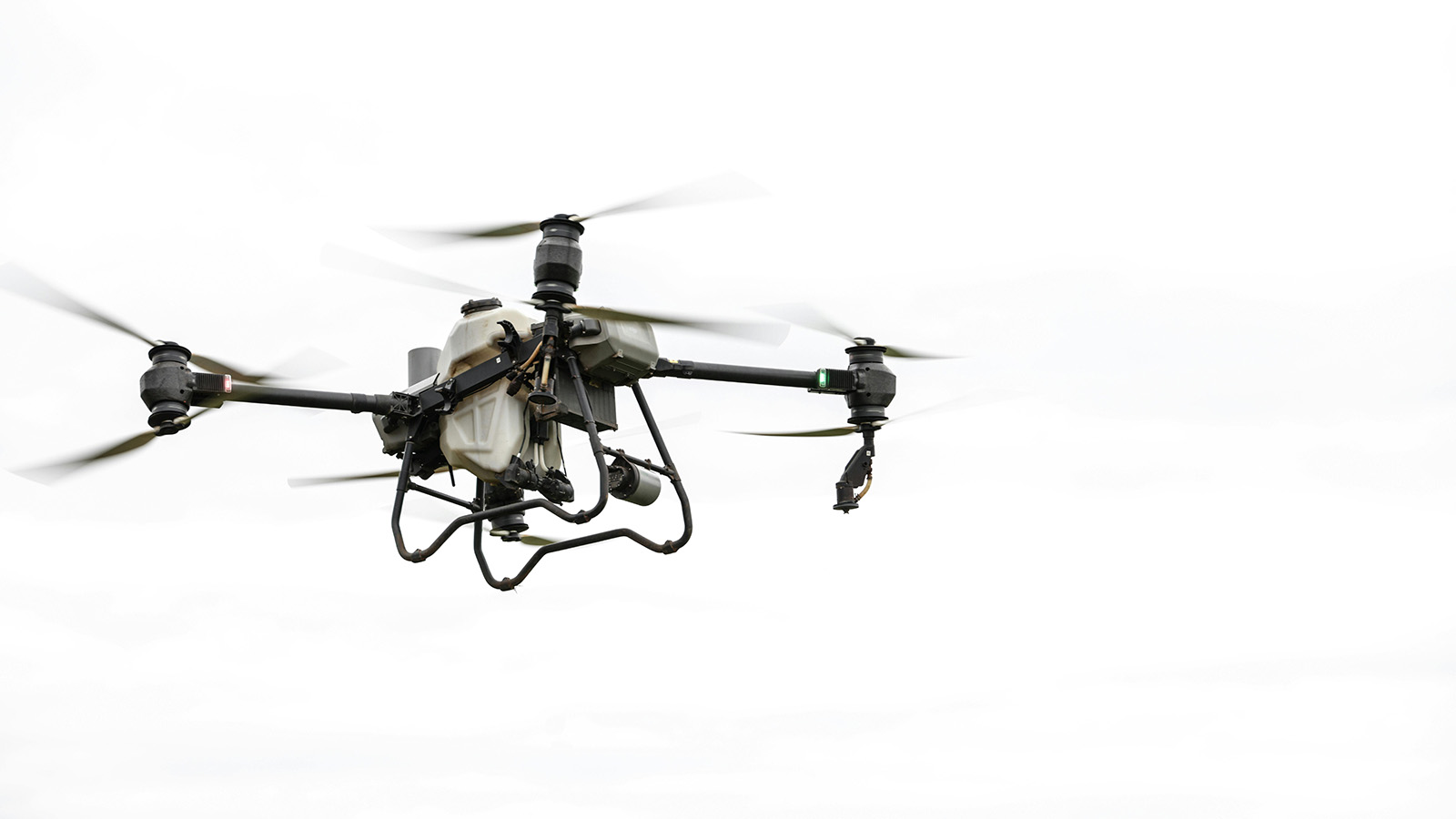
When a fire chief or sheriff’s captain asks about drone ROI, they’re rarely asking for a philosophy lecture on the future of public safety. They want to know one thing: does this justify the budget?
That’s a fair question, and it deserves a direct answer. The problem is that most UAS ROI conversations go wrong in one of two directions — either they lead with technology enthusiasm that doesn’t map to fiscal reality, or they cherry-pick a single dramatic rescue story and present it as a representative cost-benefit analysis. Neither approach survives a budget committee.
This article takes a different approach: a structured breakdown of the actual cost and value drivers in public safety drone programs, with realistic figures that agencies can model against their own operational data. The goal isn’t to oversell. It’s to give decision-makers the framework to build an honest, defensible ROI case — one that holds up under scrutiny.
How to Think About UAS ROI
Before getting into numbers, it helps to understand the two separate buckets that UAS ROI lives in. Conflating them is the most common analytical mistake.
Bucket 1: Cost displacement. These are direct, measurable savings — dollars that would otherwise leave the budget. Reduced helicopter flight hours. Fewer personnel required for hazardous area sweeps. Lower overtime costs from shorter incident timelines. These are the easiest to quantify and the most persuasive to finance departments.
Bucket 2: Outcome value. These are harder to express as a line item, but often represent the larger share of actual value. Faster subject location in time-sensitive medical emergencies. Reduced personnel exposure in environments with genuine injury risk. Better documentation that protects the agency in post-incident reviews or litigation. These don’t show up as a direct budget offset — but ignoring them undervalues the capability significantly.
A complete ROI analysis addresses both. An analysis that only covers Bucket 1 will usually show a modest return and invite skepticism about whether the program is worth sustaining. One that only covers Bucket 2 will look like advocacy, not analysis.
Cost Driver 1: Helicopter Offset
This is where the numbers get compelling quickly, and where most agencies find their clearest ROI case.
Law enforcement and fire/rescue helicopters are extraordinarily expensive to operate. Direct operating costs — fuel, maintenance, crew — typically run between $400 and $800 per flight hour for agency-operated rotary wing assets. When you factor in fully-loaded costs including depreciation, hangar, insurance, and administrative overhead, that figure commonly reaches $1,200 to $2,000 per hour or more. Contract helicopter rates for agencies that don’t own their aircraft range considerably, but rarely fall below $600–$900 per flight hour.
A UAS capable of handling the same initial reconnaissance, aerial observation, or area search typically costs $25 to $75 per flight hour in direct operating costs — covering battery wear, maintenance reserves, and incidental consumables. Even at the high end of that range, the cost ratio is roughly 10:1 in favor of drones for the missions where they’re operationally equivalent.
The more relevant comparison isn’t per-hour cost — it’s per-incident cost. Most helicopter deployments involve a minimum commitment: call-up time, flight to scene, operational time on task, return flight, and post-flight admin. For many agencies, deploying a helicopter means a floor of 2–3 hours of costs even for a relatively contained incident. A drone team can be airborne and on task in 10–20 minutes and stood down without a multi-hour minimum commitment.
| Agency helicopter | Contract helicopter | UAS | |
|---|---|---|---|
| Direct operating cost / hour | $400–$800 | $600–$900 | $25–$75 |
| Fully-loaded cost / hour | $1,200–$2,000 | As contracted | $50–$120 |
| Minimum practical deployment cost | $2,400–$6,000 | $1,800–$4,500 | $75–$300 |
| Call-up to on-scene | 30–60+ min | Variable | 10–20 min |
| Night / low visibility capability | Requires FLIR-equipped | Varies | Standard with thermal |
The displacement opportunity isn’t that drones replace helicopters. They don’t — there are incident types where rotary wing capability is genuinely irreplaceable, and this shouldn’t be obscured in an ROI analysis. The opportunity is that a meaningful percentage of helicopter deployments are for missions — initial reconnaissance, area search, scene surveillance, perimeter establishment — that a UAS can handle at a fraction of the cost and with faster response.
Even conservative estimates suggest that agencies with active drone programs displace 15–30% of their helicopter deployments with UAS, depending on mission profile and program maturity. For an agency spending $200,000 annually on helicopter support, that range implies $30,000–$60,000 in direct cost savings — before accounting for any other ROI factors.
Cost Driver 2: Search Time and Personnel Efficiency
Time-to-locate is the operational metric that matters most in search and rescue, and it has a direct cost relationship that’s often underappreciated.
Ground search teams are resource-intensive. A typical organized wilderness search may deploy 20–60 personnel for a search area that a single drone with thermal imaging can cover in a fraction of the time. The cost differential isn’t just hourly wages — it’s the downstream effects: overtime, logistics, mutual aid resource requests, and the accumulated probability of personnel incidents that increase with team size and extended operations.
The efficiency advantage of aerial thermal search over ground-based visual search is substantial in appropriate conditions. A drone with a quality thermal sensor can cover several hundred acres per flight in systematic search patterns, maintaining a consistent scan speed and altitude that ground teams physically cannot match. In wilderness and rural SAR, drone-assisted search has documented time-to-locate reductions of 40–70% in cases where thermal conditions are favorable and the subject is in an open or semi-open environment.
The per-incident labor cost of an organized SAR operation varies enormously, but even modest assumptions support a strong efficiency case. An 8-hour organized ground search involving 30 volunteers or paid staff — factoring in coordination, logistics, and resource costs — commonly represents $15,000–$40,000 in operational expenditure. If drone deployment routinely compresses the active search phase by 2–4 hours, the cost savings per incident are material.
For agencies tracking incidents over multiple years, the cumulative data tells a clearer story than any single incident. If your agency runs 40 SAR incidents per year and drone-assisted search reduces average search duration by 3 hours per incident, you’re looking at 120 personnel-hours saved per incident on average, multiplied across your team size and labor cost.
Cost Driver 3: Personnel Safety and Liability Reduction
This is the ROI category that’s hardest to put a dollar figure on — and the one that may ultimately matter most.
Public safety personnel are injured and killed in the course of operations. SAR, structural fire approach, hazmat reconnaissance, and tactical law enforcement all involve environments where personnel face genuine physical risk. Every deployment of human beings into those environments carries an injury probability that translates directly into workers’ compensation costs, medical expenses, disability claims, and — in the worst cases — survivor benefits and litigation.
Drone deployment as a first-look tool before committing personnel to hazardous environments is not a new idea, but its systematic application as a risk reduction strategy is underutilized. The logic is straightforward: if a drone can confirm whether a structure is occupied before a fire company makes entry, or whether a subject is in a specific ravine before a rescue team rappels in, the cost of that information is trivially small compared to the cost of a preventable personnel injury.
Workers’ compensation claims for public safety personnel are expensive. A single serious injury can generate $100,000–$500,000 in direct costs, with long-tail expenses in some cases that significantly exceed that range. A drone program that prevents two personnel injuries over its operational life has paid for itself many times over — but those costs never appear in the drone budget, which makes them systematically underweighted in ROI analyses.
The liability dimension extends to post-incident review as well. Drone-generated video documentation of incident conditions — the state of a structure before entry, the configuration of a scene before personnel arrived — has genuine legal value in defending agency decisions. The cost of that documentation is essentially zero once the program exists. The value, in a contested case, can be substantial.
Cost Driver 4: Deployment Availability and Response Time
Helicopter assets are not always available. Maintenance windows, crew duty limits, weather, and competing mission demands mean that aerial capability is often unavailable precisely when it’s needed. A drone program provides a baseline aerial capability that is deployable on short notice, independently of whether other aerial assets are available.
The availability differential matters because many incident types have a steep time-value curve — the value of aerial reconnaissance is highest in the first 30 minutes and declines as the situation stabilizes or resolves. Helicopter response that arrives 45 minutes into an incident has fundamentally different value than drone response that arrives 12 minutes in.
For agencies with existing air support contracts, the ROI calculation should include the value of having any aerial capability at the moment of need — versus waiting for contracted assets that may have a 30–60 minute response time. For agencies without dedicated air support, a drone program may represent the only practical path to aerial capability, which reframes the ROI question entirely: the alternative isn’t a cheaper helicopter, it’s no aerial coverage at all.
Cost Driver 5: Post-Incident Documentation and Reporting
This is a smaller line item than the others but worth capturing in a complete analysis.
Drone-generated aerial photography and video of incident scenes has applications well beyond active operations: damage documentation for insurance and FEMA reimbursement processes, scene documentation for after-action review, and evidentiary support for investigations. Historically, this documentation required either expensive helicopter flights or was simply not captured. With an active drone program, it becomes a standard part of incident response at minimal marginal cost.
For agencies dealing with infrastructure damage (flooding, wildfire, storm damage), the value of systematic aerial documentation for disaster reimbursement processes can be significant. FEMA public assistance programs and similar mechanisms require documentation of damage extent and location — documentation that drone programs can provide at scale and speed that ground-based teams cannot match.
The Total Cost of a UAS Program
A credible ROI analysis has to account honestly for what a program actually costs — not just the hardware.
The table below reflects a realistic cost model for a mid-sized agency starting a UAS program with two aircraft, targeting operational readiness within 12 months.
| Cost category | Year 1 | Annual ongoing |
|---|---|---|
| Aircraft (2x, primary + backup) | $15,000–$40,000 | — |
| Sensor payloads (thermal + optical) | $8,000–$20,000 | — |
| Support gear (batteries, cases, chargers) | $4,000–$8,000 | $1,500–$3,000 |
| C2 / UAS software platform | $3,000–$8,000 | $2,500–$6,000 |
| Part 107 training and testing | $1,500–$3,000 | $500–$1,500 |
| Program-specific SAR training | $2,000–$5,000 | $1,000–$2,500 |
| Waivers and regulatory filings | $500–$1,500 | $200–$500 |
| Maintenance and parts reserve | $2,000–$4,000 | $2,000–$4,000 |
| Total | $36,000–$89,500 | $7,700–$17,500 |
For most agencies, the program pays for itself within 12–24 months when helicopter displacement alone is factored in. That timeline compresses when personnel safety and documentation value are included in the model.
A few notes on this model:
Hardware costs are front-loaded, then low. Year 1 is the expensive year. Once the program is established, ongoing costs are substantially lower and reasonably predictable.
Software costs are underestimated in most agency plans. The tendency is to focus on hardware during procurement and treat software as an afterthought. A purpose-built C2 platform isn’t optional for programs operating multiple aircraft or integrating into ICS structures — it’s infrastructure. When evaluating platforms, our UAS software evaluation guide for public safety covers the criteria that actually matter.
Staff time is a real cost that doesn’t appear in most agency budgets. Program oversight, training coordination, equipment maintenance, and currency management require hours that come from somewhere. For volunteer organizations this may be absorbed differently, but for paid staff it represents a genuine operational cost that should be acknowledged in the model even if it’s not separately funded.
Building the ROI Case for Your Agency
The numbers above are ranges. What converts them into a persuasive internal case is substituting your agency’s actual data.
Before you present to a budget committee or senior leadership, gather the following from your incident records:
Helicopter utilization data. How many incidents per year involved aerial assets? What was the average cost per deployment? Which of those incidents — in retrospect — could a drone have handled the initial reconnaissance or search phase?
SAR incident volume and duration. How many organized searches did your agency run or participate in last year? What was the average personnel commitment? What percentage of those searches involved subjects who were eventually located in accessible areas (where drone search is most effective)?
Personnel incident data. How many personnel injuries occurred in your agency last year in operational contexts? What was the aggregate workers’ compensation and medical cost? What percentage involved personnel entering hazardous environments that drone reconnaissance could have assessed first?
These three data sets alone are usually sufficient to build a defensible Bucket 1 ROI case. Bucket 2 value — outcome improvements, liability protection, documentation — can be addressed qualitatively in the same presentation, supported by incident examples where the capability would have made a measurable difference.
Common Mistakes in UAS ROI Analysis
Modeling against helicopter replacement rather than displacement. The ROI case for drones isn’t that they eliminate helicopter costs — it’s that they reduce helicopter utilization for appropriate mission types. Overstating the displacement percentage undermines credibility.
Leaving out the full cost of ownership. Hardware-only cost models don’t survive scrutiny. When leadership approves a program based on hardware costs and then sees software, training, and support costs in year two, it damages confidence in program management. Build the complete model from the start.
Relying on anecdote rather than incident data. A compelling rescue story is useful context, but it’s not an ROI analysis. Decision-makers who’ve seen advocacy before recognize the pattern and discount it. Leading with your own agency’s incident data — even if it’s incomplete — is more persuasive than anyone else’s case study.
Ignoring the cost of not having the capability. The implicit comparison in most ROI analyses is against the current state. But the current state has costs that aren’t labeled as such — the helicopter deployment that cost $4,000 for a mission a drone could have handled, the 6-hour search that went 4 hours longer than it needed to. Making those costs visible is part of building a complete case.
Underweighting program sustainability costs. A program that launches and then goes dormant because nobody maintained pilot currency or equipment doesn’t deliver ROI — it delivers a sunk cost. The business case should include what it takes to sustain the capability, not just stand it up.
What the Numbers Actually Say
Across the value drivers covered here — helicopter cost displacement, search efficiency, personnel safety, availability, and documentation — a well-run public safety drone program typically generates 3:1 to 8:1 return on annual program costs when modeled conservatively against an agency’s actual incident data.
The range is wide because the value varies significantly with agency type and use case. An agency that runs 60 SAR incidents per year in wilderness terrain will see different numbers than one that runs 15 incidents per year in an urban environment. A program that systematically integrates drone deployment into its operational protocols will outperform one where drones are only deployed on major incidents.
The underlying point is that the ROI is there and it’s substantial — but realizing it requires treating the program as operational infrastructure rather than a technology experiment. That means investing in the right software to support systematic deployment, building and maintaining a qualified pilot pipeline, and integrating drone assets into ICS structures so they’re actually used when they’re most valuable. Our guide to building a drone SAR program from the ground up covers that full operational infrastructure in detail.
For agencies already running a program and looking to quantify its value retrospectively — or for new programs making the case to leadership before the first aircraft is purchased — the framework above gives you the categories. The numbers inside those categories are yours to fill in.
We’re building TacLink C2 to be the software infrastructure that makes these ROI numbers real — automated logging for compliance documentation, fleet-wide telemetry for operational efficiency, and a shared operating picture that makes every deployment count. If you’re building the case for a drone program, join the early access waitlist.
— Related
Keep reading
Written by
TacLink C2 Team
TacLink C2 Team builds a modern desktop ground control station for independent and commercial drone pilots. Writing here covers mission planning, multi-drone operations, airspace, and the software that keeps serious UAS programs running.