— Article
AI Detection on Live Drone Feeds: How Edge Vision Works
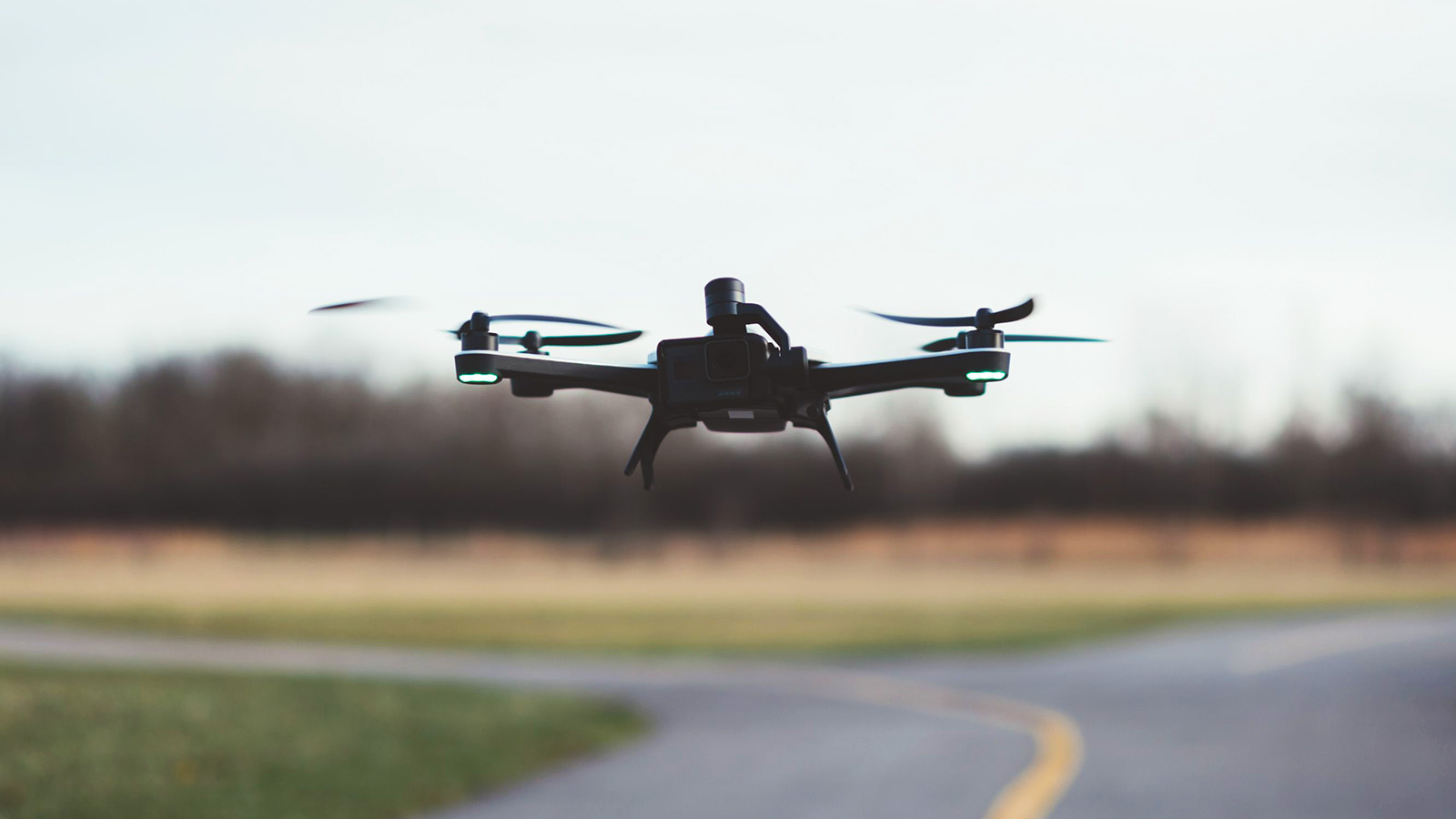
For most of the last decade, a drone was basically a flying camera with a long extension cord back to a human. It captured video, beamed it down to a ground station, and somewhere a person (or a server farm) made sense of what was on screen. That arrangement worked fine until the moment latency started to matter, and now it matters a lot.
The shift happening right now is simple to state and hard to pull off: the analysis is moving onto the aircraft itself. Instead of streaming raw footage somewhere else to be processed, modern drones run the object detection model on board, in real time, frame by frame. The drone sees a vehicle, classifies it, draws a box around it, and tags its coordinates before the next frame even arrives, no round trip to the cloud required.
This is what people mean by “AI detection on live drone feeds,” and it’s quietly reshaping everything from infrastructure inspection to search and rescue to the modern battlefield. Here’s how it actually works, the hardware that makes it possible, and where the technology is going over the next few years.
What “detection on the edge” actually means
When detection runs in the cloud, every frame has to make a trip: up to a server, through a model, and back down with the results. Even on a fast connection that round trip costs you tens to hundreds of milliseconds, an eternity when a drone is moving at 50 mph or trying to dodge a power line.
Edge detection collapses that loop. The neural network lives on a small computer bolted to the drone, so the “glass-to-glass” delay (lens to decision) drops into the single-digit millisecond range. That’s the difference between a drone that reacts and one that waits. It also means the system keeps working when there’s no connection at all, in a tunnel, deep in a canyon, or in a contested environment where the signal is being actively jammed.
The catch is that you can’t bolt a data-center GPU onto a one-kilogram quadcopter. Everything about airborne computing is governed by a brutal constraint the industry abbreviates as SWaP: Size, Weight, and Power. The whole engineering story of edge drone AI is about squeezing serious computer vision into a package that’s small enough to fly, light enough not to kill your flight time, and frugal enough not to drain the battery in minutes.
A quick history: how we got here
Computer vision didn’t appear overnight. The foundational ideas trace back to neurophysiology research in the 1950s and ’60s, which found that biological vision starts by detecting simple things (edges, lines, basic shapes) and builds up from there. Translating that insight into machines took decades.
Early object detectors were accurate but painfully slow. Region-based approaches like R-CNN essentially scanned an image in pieces, proposing hundreds of candidate regions and then classifying each one. Great for a research paper; useless for a drone that needs answers 30 times a second.
A few turning points changed the trajectory:
- 2015, YOLO arrives. Joseph Redmon introduced “You Only Look Once,” which reframed detection as a single math problem solved in one pass over the image. Instead of scanning regions one by one, the network looked at the whole frame at once and predicted boxes and classes simultaneously. The speed jump was enormous, and it made real-time aerial detection plausible for the first time.
- 2018, autonomy goes consumer. Skydio shipped the R1, a drone that could fly itself, dodge obstacles, and track a subject using onboard cameras and deep learning, no skilled pilot required. It proved you could do real spatial reasoning on a moving aircraft with off-the-shelf-ish hardware.
- 2020, institutional adoption. Anduril’s autonomous sentry towers, running its Lattice software, became part of a U.S. Customs and Border Protection program. Worth being precise here: these towers are stationary ground masts, not aircraft, but that’s exactly why the milestone matters. It proved the Lattice software mesh could run computer vision autonomously in remote, unstructured conditions, and stationary edge AI walking is what let airborne edge AI (like the Ghost-X further down) eventually run.
- 2024, the edge platform boom. NVIDIA’s Jetson Orin modules paired with lightweight models like YOLOv8-Nano made high-frame-rate inference achievable on sub-kilogram drones, pushing the tech into agriculture, industrial inspection, and tactical use all at once.
- 2025 to 2026, attention and brain-inspired chips. YOLOv12 brought attention mechanisms into the YOLO family (more on that below), while neuromorphic chips and event-based cameras started showing up in real obstacle-avoidance research, hinting at the next architectural leap.
Under the hood: how the detection actually happens
The YOLO approach, in plain terms
The dominant family of models on drones today are single-stage detectors, mostly descendants of YOLO. The reason is straightforward: they’re built for speed.
Here’s the mental model. YOLO divides each incoming frame into a grid. If the center of an object falls inside a particular grid cell, that cell becomes responsible for detecting it. Each cell predicts a handful of candidate boxes, a confidence score for each, and a guess at what class of object it’s looking at. All of that comes out of a single forward pass through the network, which is why it’s fast enough for live video.
The best analogy I’ve heard is the speed reader versus the scholar. Old-school detectors are the scholar: methodical, going line by line with a magnifying glass, highly accurate but slow. YOLO is the speed reader: one comprehensive glance at the whole page, instantly catching structure and key terms. The speed reader might occasionally miss a tiny detail (YOLO has historically struggled with very small objects), but it can keep up with a live feed flying over a city. When the “page” is a video stream, that trade-off is the whole game.
What’s changed in the newer models
A few architectural shifts matter for aerial work specifically:
Anchor-free detection. Older YOLO versions assumed objects came in standard shapes and sizes (the “anchor boxes”). That’s a bad assumption from a drone, where a top-down view warps an object’s footprint completely. Newer models predict locations directly from the image features, which handles those wild scale changes better and trims compute at the same time.
Attention mechanisms. YOLOv12, released in early 2025, was the big one here: it brought transformer-style attention into the framework while keeping CNN-level speed. Attention lets the model weigh which parts of the frame deserve focus, which directly attacks YOLO’s old weakness: spotting small, obscured, or partially camouflaged targets from altitude. The published benchmark for the nano variant, YOLOv12-N, is a 1.64-millisecond inference time on a T4 GPU at 40.6% mAP, comfortably real-time.
Non-Maximum Suppression (NMS). Because the network spits out lots of overlapping boxes for the same object, a cleanup step called NMS throws out the duplicates and low-confidence guesses, leaving one clean box per thing. It’s unglamorous but essential.
Tracking without melting the battery
Running a full detection model on every single frame is expensive, and on a small drone “expensive” translates directly to heat and dead batteries. So most systems use a hybrid trick: the heavy neural network detects and classifies an object once, then lighter-weight tracking algorithms, correlation filters like CSRT or KCF, or optical-flow methods, follow it across the next frames for a fraction of the compute. Optical flow also helps the drone subtract its own motion from the scene, so it doesn’t mistake its movement for the target’s.
The hardware that makes it fly
You can’t talk about edge drone AI without talking about chips, because the chip is the constraint.
The trick to fitting a big model onto a tiny board is mathematical compression. Models are trained in high precision (32-bit floating point) and then quantized down to 8-bit integers for deployment. Using tools like NVIDIA’s TensorRT, that shrinks the memory footprint dramatically and speeds inference up several times over, with only a small accuracy hit. Pruning does the rest, snipping away neural connections the model doesn’t really need.
On the hardware itself, NVIDIA’s Jetson line dominates. The range spans a wide spectrum:
| Module | Best for | AI performance | Power draw |
|---|---|---|---|
| AGX Thor | Heavy sensor fusion, on-board vision-language models | Up to 2,070 FP4 TFLOPS | 40 to 130 W |
| AGX Orin | Advanced tactical UAVs | Up to 275 TOPS | 15 to 60 W |
| Orin NX | Mid-tier commercial drones | Up to 157 TOPS (Super Mode) | 10 to 40 W |
| Orin Nano | Lightweight, high-speed detection | Up to 67 TOPS | 7 to 15 W |
(A note for the hardware-minded: the Orin NX 16GB ships at 100 TOPS by default; the 157 TOPS figure is what it hits in “Super Mode,” a higher-clock power profile NVIDIA unlocked through the JetPack 6.2 software update in early 2025, with no hardware change.)
The AGX Thor, released in 2025 on NVIDIA’s Blackwell architecture, is the headliner: it packs a 2,560-core GPU and 128 GB of memory into a 130-watt envelope, which is enough to run vision-language models directly on the aircraft. That’s a genuinely new capability, and we’ll come back to why it matters.
NVIDIA isn’t unopposed. SiMa.ai has built a purpose-made edge AI chip, the Modalix, that goes after the efficiency problem from a different angle: keeping the whole processing pipeline on-chip instead of leaning on power-hungry external memory. The company’s own benchmarks claim YOLOv8n running at 1,414 frames per second, roughly five times a Jetson Orin NX, and about 102 frames per second per watt, which it pegs at 3.7 times the efficiency of the comparable NVIDIA part. Worth noting these are vendor figures from internal testing, so take them as a strong directional claim rather than independent gospel, but the underlying point, that specialized silicon can beat general-purpose GPUs on efficiency, is real and widely accepted.
There’s also the navigation side. Systems that fuse vision data with accelerometers, gyroscopes, and other onboard sensors let a drone hold its position when GPS is gone, whether that’s because of a canyon wall or an adversary’s jammer. Vendors in this space advertise near-perfect positioning accuracy over long distances in GPS-denied conditions; again, treat the exact percentages as marketing until independently tested, but the capability is exactly where the field is investing.
Getting the insight off the drone
Detecting an object is only useful if someone, or some system, can act on it. So when the on-board AI flags a target, the detection data (the box, the classification, the confidence score, plus the drone’s own telemetry) gets injected straight into the video stream as metadata.
This follows standards from the Motion Imagery Standards Board, encoded in a compact format that rides along inside the video transport stream. The payoff: mapping software used by ground teams can pull that metadata out instantly and drop the detected object onto a live moving map, no manual annotation required. The drone sees it, tags it, and it appears on someone’s screen as a pin, all in near real time.
The numbers worth knowing
A few figures put the scale of this in perspective:
- The global AI-in-drone market was valued at roughly $12.3 billion in 2024 and is projected to reach about $51.3 billion by 2033, a compound annual growth rate near 17.9%, according to Grand View Research. North America held the largest share, well over a third of the global market, driven by defense spending and commercial inspection demand.
- On the performance side, an edge-native wildlife-monitoring system (the open-source WildWing project) has clocked a full 23.8-millisecond pipeline on GPU, and that figure is more impressive than it first looks, because it covers two models running back to back: about 4.7 ms for YOLOv11m to detect the animals, plus 19.1 ms for a second model to classify their behavior. The whole thing still lands under the ~33 ms ceiling you need to keep pace with 30 fps video, which is a tidy illustration of just how much you can stack onto the edge in real time.
- Local processing of depth and LiDAR data can give a drone a reaction time under 10 milliseconds, versus a roughly 100 ms penalty if it had to offload that same data to the cloud. That order-of-magnitude gap is the entire argument for edge AI in one statistic.
(Market-size estimates, it’s worth flagging, vary widely between research firms depending on how they define “AI in drones”; figures from $800 million to over $200 billion float around the same forecast windows. The Grand View numbers above are among the more conservative and consistently cited.)
Who’s actually building this
A handful of companies are setting the pace.
Shield AI is built around autonomy software called Hivemind, which uses reinforcement learning to let drones make tactical decisions and coordinate in swarms without GPS or a constant comms link. Its founders, brothers Brandon and Ryan Tseng, are among the loudest voices arguing that buying lots of cheap drones is pointless unless they’re tied together by smart, coordinated autonomy, the idea they call “intelligent mass.”
Anduril Industries provides Lattice, a software mesh that stitches together sensors, sentry towers, and autonomous aircraft like the Ghost-X into one networked picture. The Ghost-X has been put through Army exercises where it autonomously detects and classifies ground targets and cues strikes within minutes, a concrete demonstration of detection-to-action at the tactical edge. Founder Palmer Luckey has made a career out of arguing that future conflicts will be decided by software and autonomous manufacturing rather than legacy hardware.
Skydio started in consumer drones and pivoted hard toward enterprise, public safety, and defense. Its real contribution is rugged obstacle avoidance and 3D scanning that lets drones navigate complex environments unpiloted, the backbone of the “drone as first responder” programs cities are now piloting. CEO Adam Bry has been a consistent advocate for treating drones as autonomous robots rather than remote-controlled cameras.
And underneath all of them sit the chipmakers: NVIDIA, whose Jetson family effectively defines what’s physically possible at the edge, and challengers like SiMa.ai pushing on efficiency. The hardware sets the ceiling everyone else builds against.
The hard questions
This technology doesn’t arrive without serious debate, and a fair article has to give that real estate.
Privacy and surveillance. Civil liberties groups like the ACLU argue that cheap, AI-equipped drones create a fundamentally new kind of surveillance: passive, persistent, and operating without anyone’s knowledge or consent. Pair aerial AI with high-resolution wide-area camera systems and existing databases, and critics warn you get an infrastructure capable of monitoring whole communities continuously. The counterargument from law enforcement and public-safety advocates is that AI can actually reduce human bias and danger (a drone that identifies a threat and streams context before officers arrive can de-escalate a situation), and that the surveillance risks can be managed with strict data-retention rules, audit logs, and geofencing. Reasonable people land in very different places here, and the policy is still being written.
Automating the kill chain. The thorniest issue is what happens when detection feeds directly into weapons. If a model identifies a target and a networked system can act on it faster than a human can review the decision, where does meaningful human oversight live? Critics worry this erodes accountability. Defense technologists counter that ceding speed to machines is strategically unavoidable against adversaries who won’t constrain themselves, and that algorithmic targeting can in principle be more precise than a tired human operator. There’s no consensus, and the debate is moving faster than the regulation around it.
The physics won’t be argued with. Even setting ethics aside, edge AI runs into hard limits. High-end detection models generate heat, and on a compact drone, heat means thermal throttling: a system that hits 30 fps in a cool lab can degrade into a stuttering stream in a hot field, right when you need it most. And the altitude problem is stubborn: from high up, a person can shrink to a few pixels, and even attention-equipped models struggle with recall on tiny, obscured targets. Newer architectures are closing the gap, but profiling shows the theoretical gains often aren’t fully realized once you account for real-world implementation bottlenecks.
Where this is heading
Three trends are worth watching over the next one to five years.
Neuromorphic computing and event cameras. Today’s cameras work like a flipbook, capturing full frames at a fixed rate even when nothing in the scene is changing, which wastes enormous power processing redundant pixels. Event-based “neuromorphic” sensors work more like peripheral vision: they only register a pixel when its brightness changes, meaning movement. Spiking neural networks process those sparse events almost instantly and only burn power when something happens. Research drones using this approach have demonstrated obstacle avoidance with sub-millisecond reaction times while sipping a fraction of a watt. If that scales, it could untether tiny drones from heavy batteries and let insect-sized aircraft do continuous vision with almost no thermal footprint.
Collaborative swarms. Single-drone detection is giving way to mesh-networked perception, where a fleet shares what it sees. If one drone spots a target and then loses line of sight behind terrain, it hands the track off to a neighbor, creating a resilient, self-healing sensor grid that can maintain coverage even under jamming. This is the practical realization of the “intelligent mass” idea.
Vision-language models at the edge. This is the one I find most striking. Today’s drones recognize a fixed list of pre-trained classes: “car,” “person,” “tank.” But as high-memory chips like the Jetson AGX Thor put compressed vision-language models directly on the aircraft, operators will be able to issue plain-language commands like “find the red pickup heading north with a damaged rear bumper.” The drone interprets the intent and searches for it on the fly, with no need to pre-train a dataset for every possible scenario. That moves drones from rigid pattern-matchers to something much closer to a tasked, reasoning teammate.
The bottom line
The story of AI detection on live drone feeds is, at its core, a story about closing the distance between seeing and deciding. For years that distance was measured in network round trips and human reaction time. Now it’s measured in milliseconds, and it’s shrinking, pushed forward by leaner models, purpose-built silicon, and architectures borrowed from the human brain.
That progress is genuinely exciting for infrastructure inspection, agriculture, disaster response, and search and rescue, where faster perception saves real time and real lives. It also raises real questions about surveillance and autonomous force that we haven’t fully answered. Both of those things are true at once, and the technology is going to keep advancing whether or not the debates resolve. The smart move, whether you’re building, buying, regulating, or just paying attention, is to understand how it actually works before the next leap lands.
Sources
- The YOLO Framework: A Comprehensive Review of Evolution, Applications, and Benchmarks in Object Detection (MDPI, peer-reviewed)
- A Review of YOLOv12: Attention-Based Enhancements vs. Previous Versions (arXiv)
- Recent Real-Time Aerial Object Detection Approaches, Performance, Optimization, and Efficient Design Trends for Onboard Performance: A Survey (PMC, peer-reviewed survey)
- AI In Drone Market Size And Share, Industry Report, 2033 (Grand View Research)
- Anduril’s Lattice: A Trusted Dual-Use Platform for Public Safety and Defense (Anduril, primary)
- Advanced sUAS Drone Solutions for National Security (Skydio, primary)
- Shield AI Looks To Unleash Its Hivemind Autonomy Software On Multiple Platforms (Shield AI, primary)
- SiMa Modalix: The Undisputed YOLO Leader for Physical AI (SiMa.ai, primary vendor benchmark)
- Shield AI’s Ryan Tseng on Building an Autonomous Future for the DOD (CSIS)
- Drones For People, Not Just Police and Corporations (American Civil Liberties Union)
- Neuromorphic control for optic-flow-based landings of MAVs using the Loihi processor (TU Delft MAVLab)
— Related
Keep reading


Written by
TacLink C2 Team
TacLink C2 Team builds a modern desktop ground control station for independent and commercial drone pilots. Writing here covers mission planning, multi-drone operations, airspace, and the software that keeps serious UAS programs running.